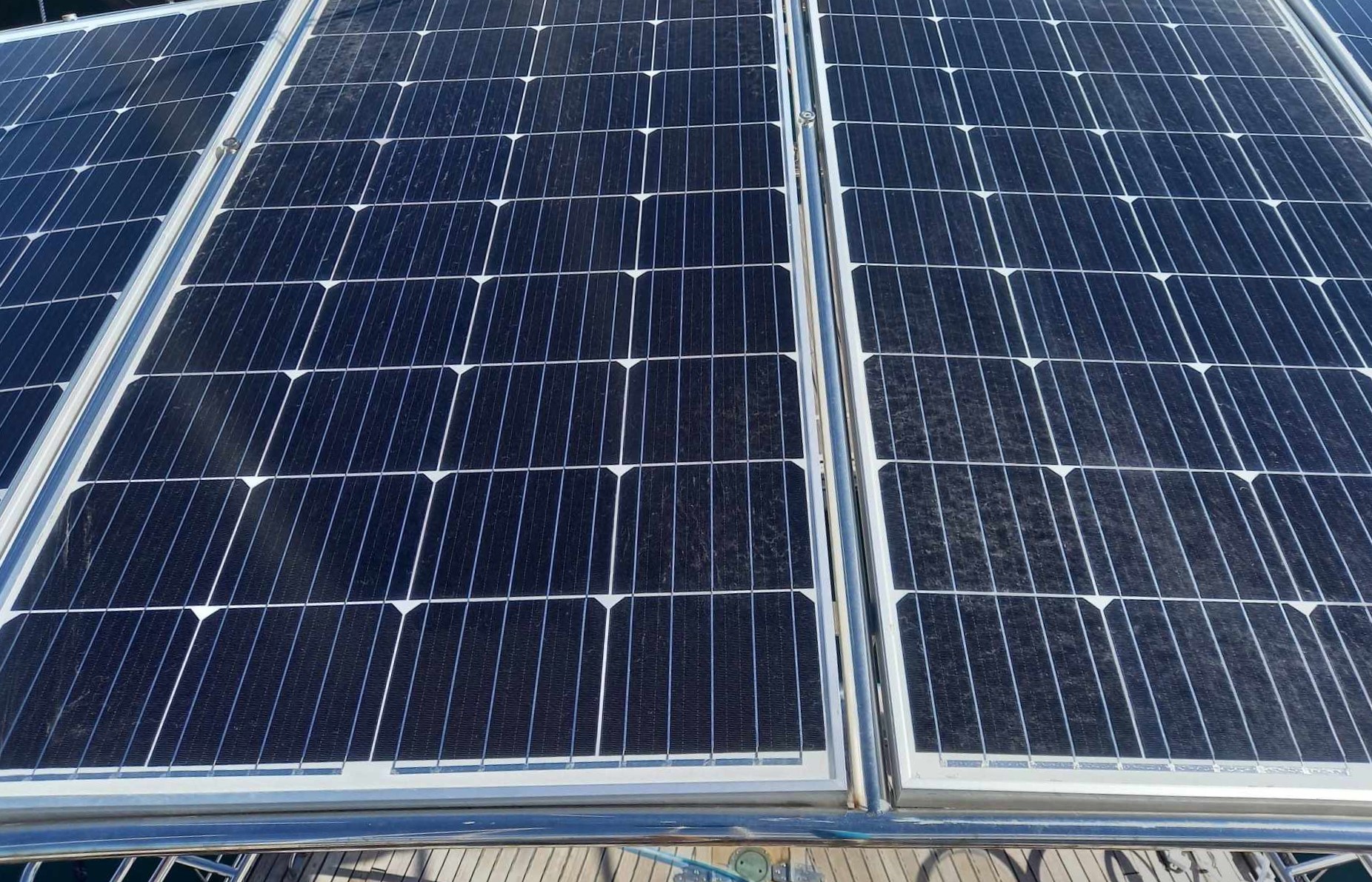
26 November 2023
We’re taking a moment out of our linear travelogue before we reach the Canary islands. In this special guest post, Stefan has wrestled the keyboard from me to bring you an account of the technical upgrades we have done over the past six months to get Pintail ready for her big ocean crossing.
In later life, the seven years of tedium I suffered at both college and university, studying firstly mechanical engineering and then energy engineering, must have been for something! Well, apart from giving me a half decent career, it gave me the knowledge to calculate and undertake the upgrades that Pintail needed for her second power refit.
For a boat to be completely self sufficient, electrical power has to be the main consideration. We have to run navigation and communication equipment, steering equipment and its related computers, lights, a fridge, a freezer, as well as making and then heating water. We also have a washing machine, air conditioning, tv and radio, all needing power.
To run all her basic systems to function under sail, Pintail needs 150Ah (Amp hours) of energy per day. That’s quite a lot.
So, in order to produce this and to get Pintail ready for her Atlantic crossing, anchoring through the Caribbean and up to North America, some significant changes were needed.
Pintail was commissioned as an ocean cruising boat so most of the infrastructure was already in place. It just needed to be rethought, modernised and added to. Fortunately, Emma’s part time job and my delivery of a yacht to Greece whilst in Portugal allowed us to be able to fund the upgrades that were required.
So, what did we do?
Ice from the sun

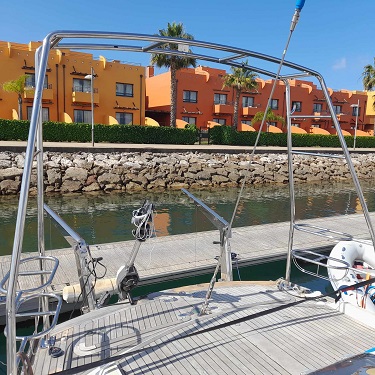

The first job was to remove our old wind turbine and fit new solar panels. The wind turbine was noisy and didn’t produce much energy. Solar panels on the other hand do not make noise and generate even on cloudy days. I had to size the panels to produce as much energy as possible in a limited space and then we had to have an arch made to mount them. We found a fantastic stainless steel welder in Portimão. Rui was just great in giving advice and making an amazing arch. We were worried that an arch would ruin Pintail’s beautiful lines but from day one it seemed like it had always been there.


The solar panels have been a real game changer. They give us all the energy we need. Apart from giving them a clean every now and again, we don’t have to think about them. They just do their thing. We can now make ice in the freezer by the power of the sun!
A new battery bank
But where does all that energy go?
Pintail had nine large batteries for different purposes but four of which were for the day to day systems. Lead acid batteries are the standard battery that have been used for many years. Their ability to accept a charge is not very good and you cannot fully discharge them without damage so each 100 Amp hour (Ah) battery gave us 30 usable Ahs – not very good.

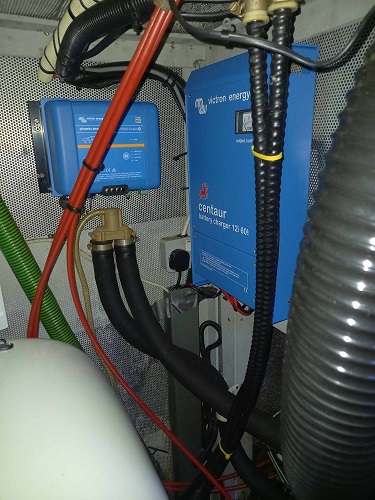
So, out went the lead acid batteries and in came lithium phosphate batteries. They can charge to 100% and discharge to 0% with ease, one battery can take the place of three of the old batteries. They also weigh one third of the lead acid and last 5-7 times longer so, whilst very expensive initially, they will cost the same as lead acid batteries over their life span.
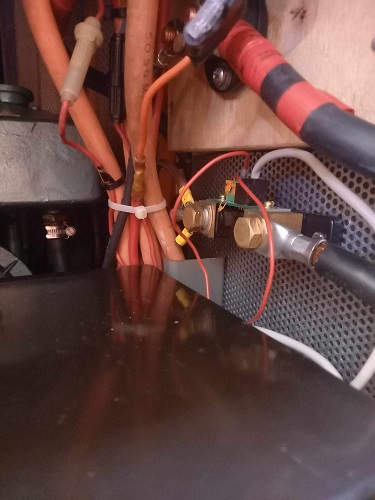


Unfortunately, in the modern world, fitting the new systems was not just a case of joining the wires! Everything now has to be controlled and monitored by various systems. Each battery has its own control system, each solar panel bank has its own controller and much more. All of this equipment has Bluetooth so I can even manage and monitor all of the systems from my mobile phone.

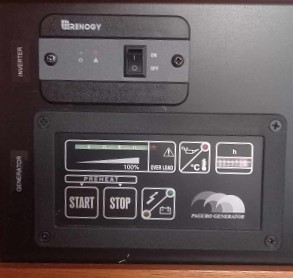
Now we have all this power and storage, we need to put it to good use. In Porto Santo, we installed an inverter that changes battery power to mains power. We can now run any mains power items – washing machine, water maker and, importantly, the kettle and coffee machine – through the inverter. The power being drawn from the batteries, when the inverter is being used, is huge so cables had to be sized correctly and peak power usage has to be managed.
Making water from the sea
During our 8 years living on Pintail, we have never really run out of water. If we were frugal, Pintail could be at anchor for two weeks before her 600 litre tanks were empty and then we just found a marina to fill up. I had fitted a water maker years ago but we never used it. As a water maker needs a very defined management regime and constant usage, our old one fell into disrepair and we decided to replace it.
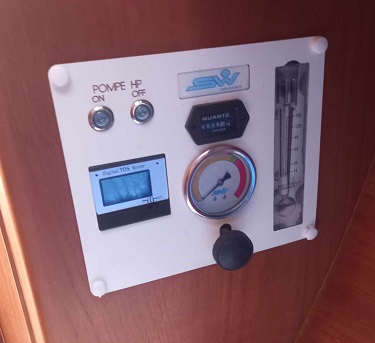
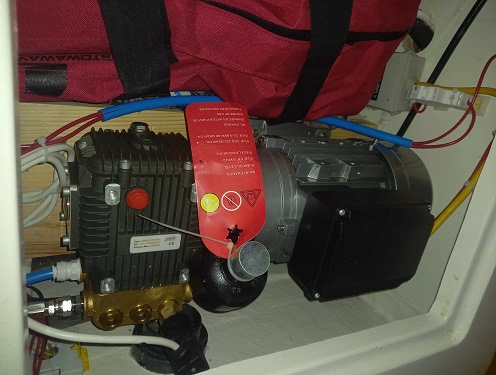

We installed a new unit with a much larger output. As I write, we have been at anchor now for a month and our tanks are full. We can have decent showers, wash our clothes and even wash the boat down. I’m particularly pleased with this installation as Emma and I did it ourselves from a kit with instructions in French!
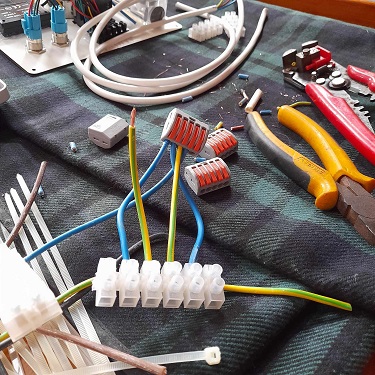

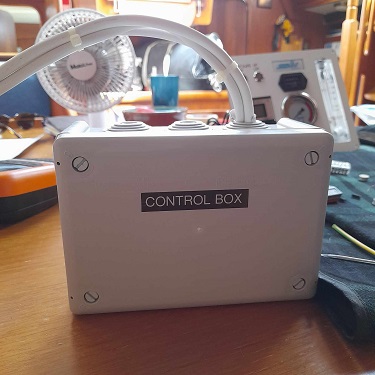
Emma wired the control system and with 60 connections, there was always and chance of one connection not being made. That’s not a reflection on Emma. It’s so easy to get complacent about it but it worked the first time!! And now it never ceases to amaze us that we are drinking water that came from the sea! The water is pure in the scientific sense so no lime scale or any other nasties.
Power free steering and a spare rudder
When I crossed the Atlantic 2 years ago, in very heavy weather, our automatic steering failed. It was at night and we were experiencing 5-6 metre waves. The biggest gust of wind we saw was 69 knots. Somehow, we managed to make a solution that held for the next week and a half. It was, without doubt, one of the most scary and character building experiences of my life and one I do not want to repeat. Whilst in the bowels of the boat for hours, trying to fashion a repair, I thought that Pintail cannot be put at risk where a ‘single point failure’ like this could potentially destroy the boat and us.
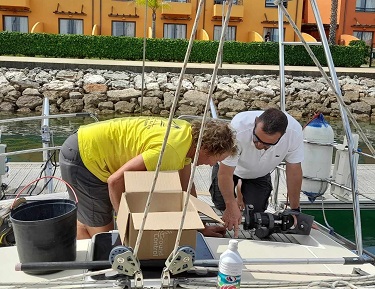
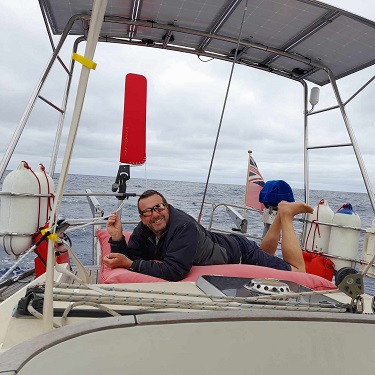
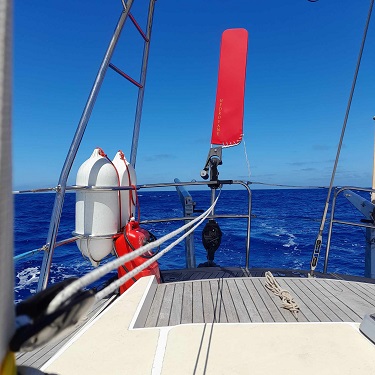
So, after much research, we purchased a Hydrovane. The Hydrovane is a completely independent steering system that is powered by the wind and has its own rudder. We used it on our 500 mile trip to Porto Santo. It is amazing to watch it work and even more so when you look at the boat’s main helm and the computer that controls the automatic steering; the former locked off and the latter switched off.
Communicating and entertaining ourselves at sea
As time progresses, so does communication technology. When we started out on this journey only 8 years ago, we had to go and sit outside restaurants and bars to get WiFi and listen to local radio stations. Our only long distance communications equipment was purely for emergencies and consisted of a satellite phone and a Hi Frequency radio. Both were very expensive to use and very clunky to operate. As time went on, we were able to use our mobile phones on roaming (until Brexit did its thing and stopped that). More recently we have been able to buy local data sim cards in the countries we have visited.
As we move further away from Europe and offshore for longer periods, we need to have alternatives. The main concern for us is receiving weather forecasts. When I crossed the Atlantic before, we were at sea for 3 weeks and 2 days. We had some really horrible weather for a whole week but we were prepared because we knew it was coming and we knew when it was going to calm down again.

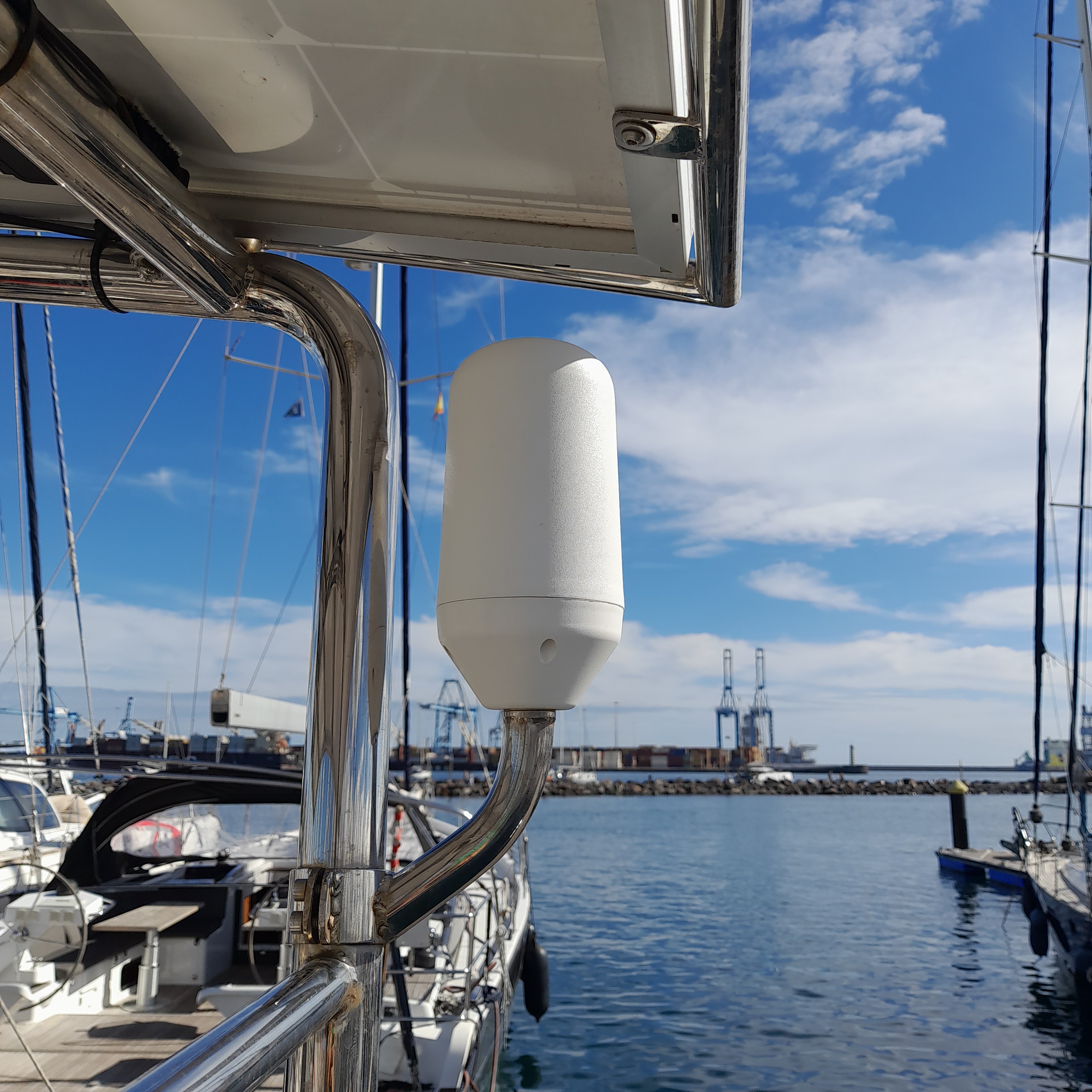
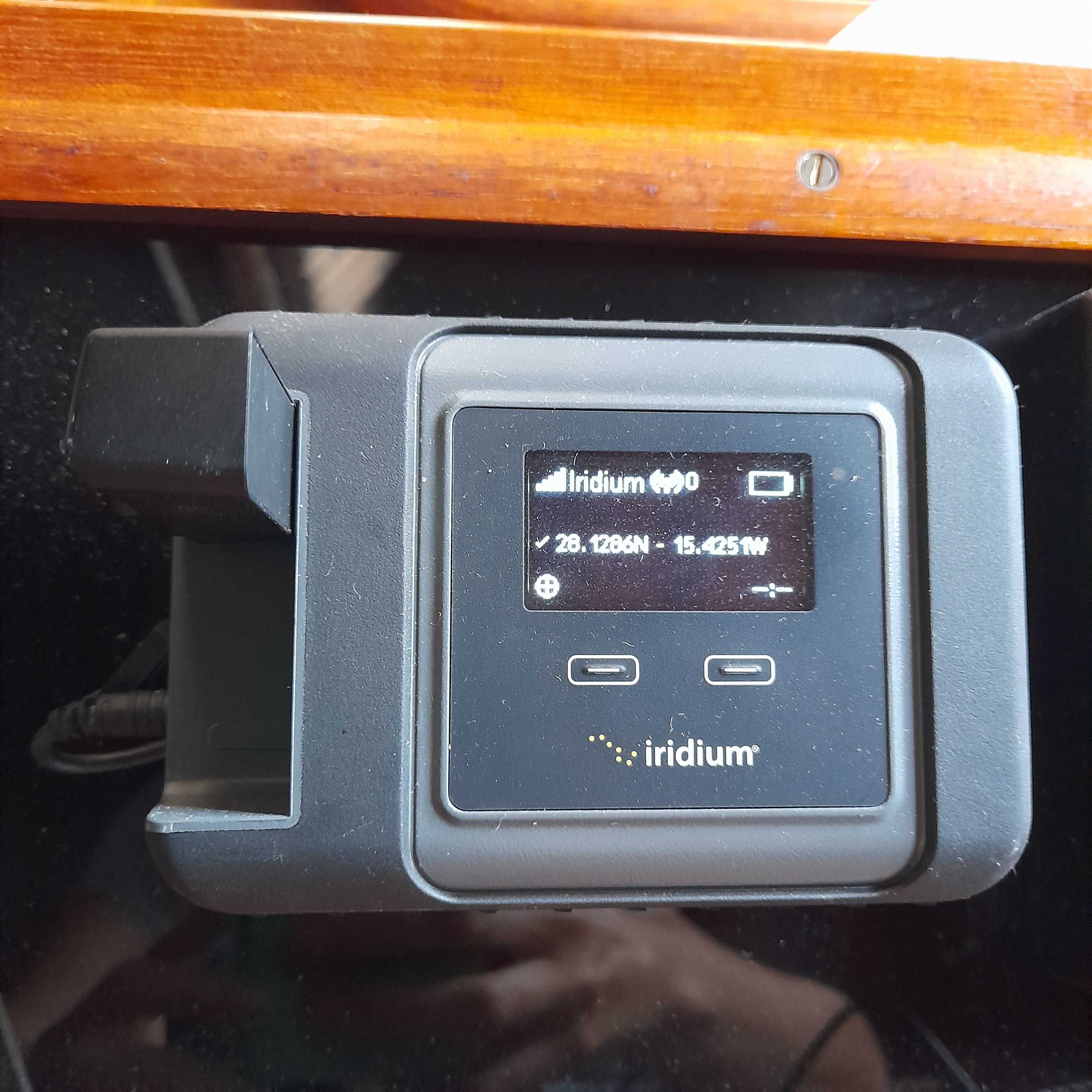
When our solar arch was installed, I also installed an Iridium GO! communication system. This is a satellite communication system that gives us a slow internet connection but one fast enough to download weather forecasts. We can also make satellite phone calls, send texts and most importantly, the head unit has an integral battery and can be taken into a life raft for emergency distress communication.
It is expensive to subscribe and a bit clunky to operate but we thought it a must have for weather forecasting across the Atlantic. It also has the added bonus of enabling anyone who is interested to track us on our journey here
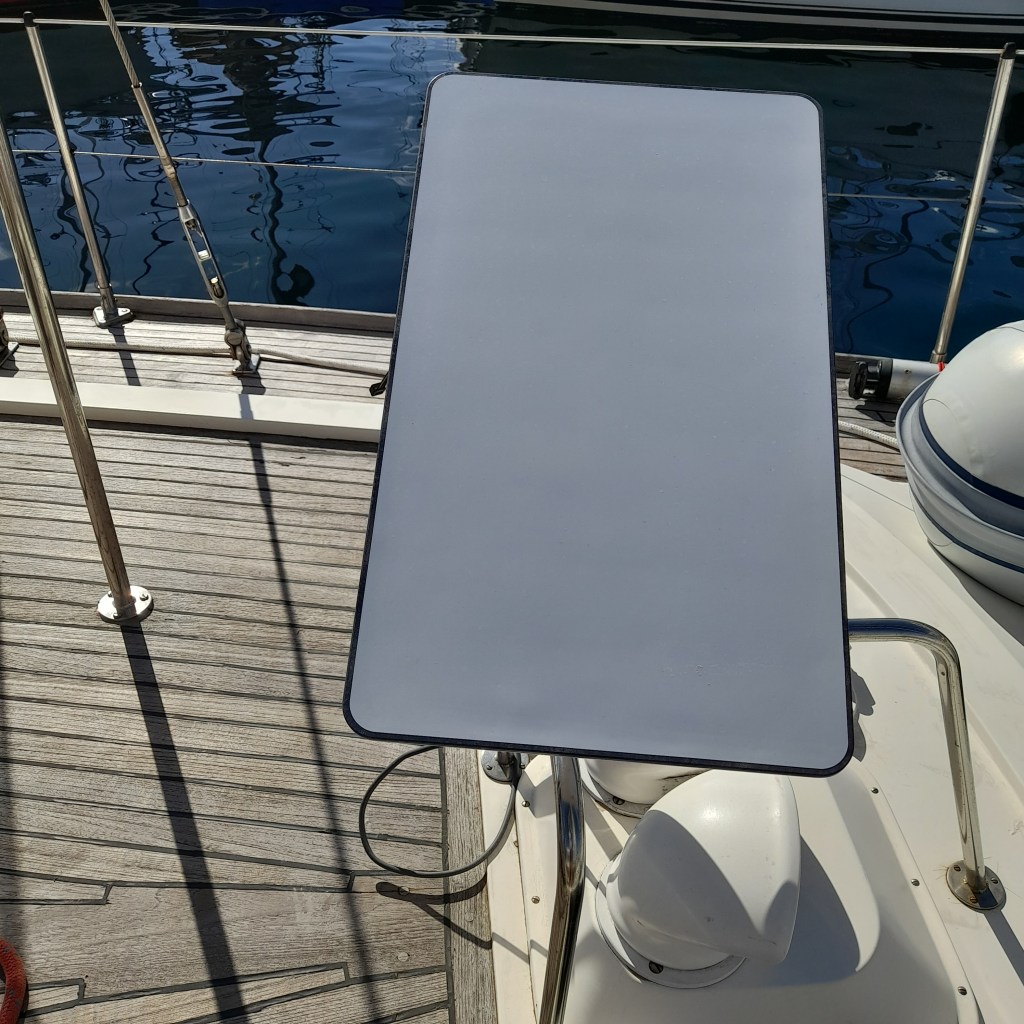
In addition to the Iridium GO!, we recently also took the plunge and got a Starlink system. This is Elon Musk’s satellite communication system which gives us internet on the move. We have used it recently and so far so good but it is more of a leisure installation to replace our data sim cards and not a system to be used in emergencies. Mind you, our testing of it so far has had great results, even in heavy seas, and we’ve been able to stay on top of all the latest series on iPlayer and Netflix, something we could only dream of in 2016 when we set off with only DVDs and CDs for entertainment.
A green agenda

Whilst our solar panels have been a revelation in terms of power supply, it’s important to point out that most of our power used to come from our diesel generator (which we still have as a back up). On a typical day, we would run the generator for three hours using one litre of diesel an hour. Since the panels have been installed we have been at anchor for approximately 142 days so that’s 426 litres of diesel saved.
I hope that we have done everything that is required to make the boat safe and comfortable. If not, it’s not through lack of contemplating!
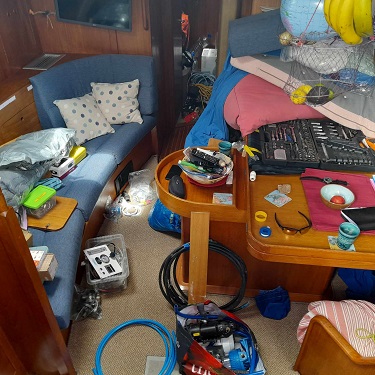

There has been a lot of sweating and swearing, not to mention mess, but I have really enjoyed doing these projects.
 Adventures with Pintail
Gives me, and you, some confidence for your trip across the Atlantic and beyond. Well done. All you need now is good weather!
LikeLike