5 to 12 October 2023
Playa Blanca to Playa Mujeres, 28 51″ 06′ N 13 47″ 74′, 2nm, 1 hour
We had secured a space in the eye wateringly expensive Marina Rubicon in Playa Blanca on the south of Lanzarote to enable us to celebrate Rene’s big birthday (we won’t say how big!). We were already starting to realise just how busy the Canary Islands get at this time of year with everyone preparing for their Atlantic crossings so were only able to stay a few days.


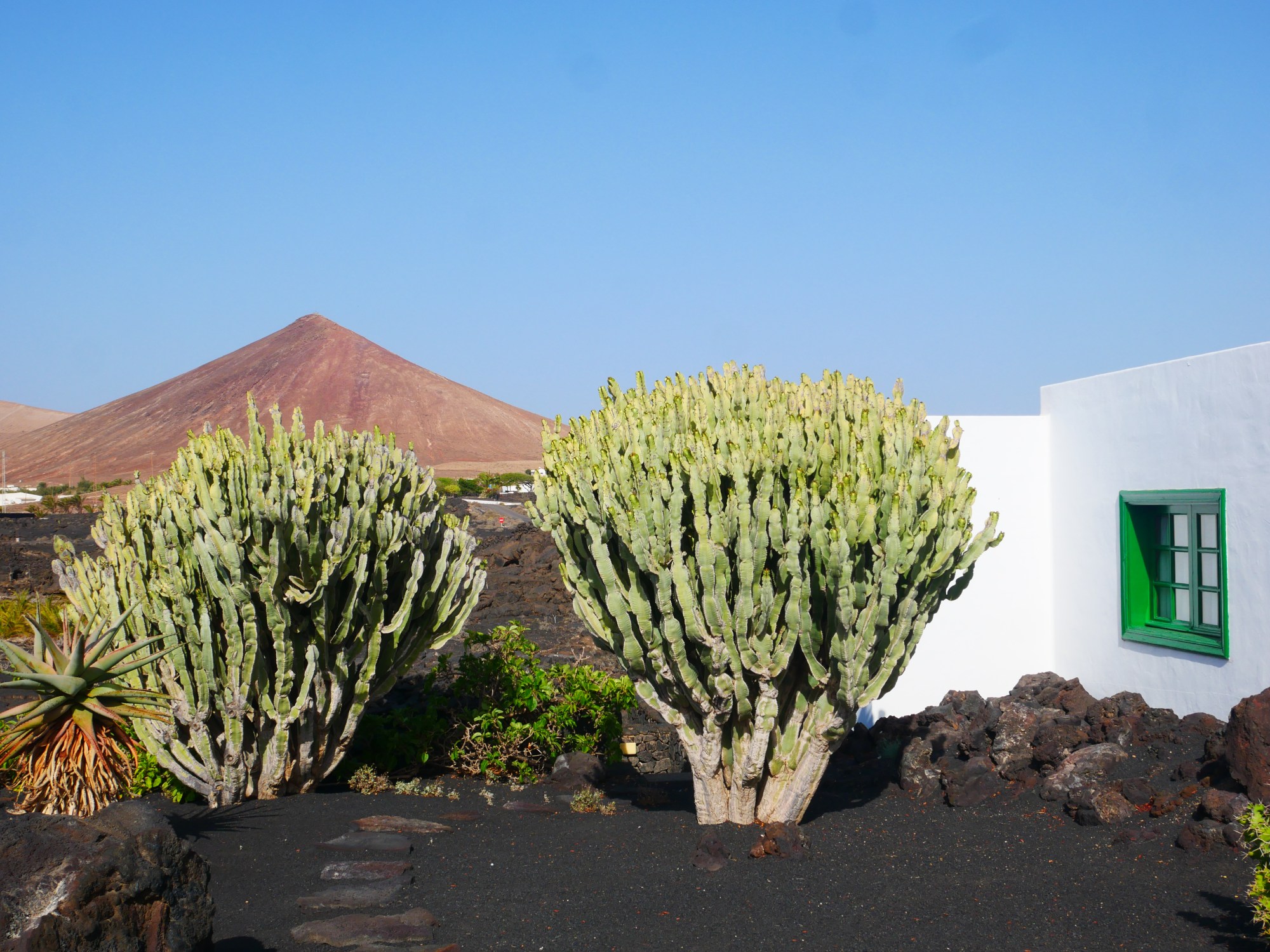
For a major tourist resort, Playa Blanca has none of the high rise buildings one might expect. Everywhere there are low rise, neat white buildings and that, we soon discovered, is all down to one man.


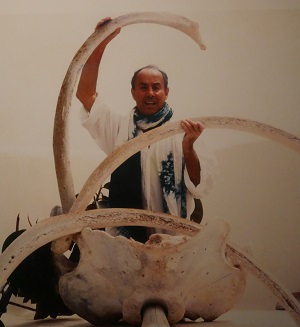
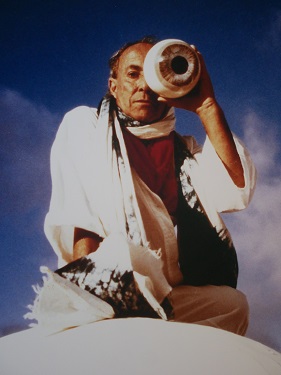
That man was the artist Cesar Manrique. Famed for his abstract and surrealist work, he was also responsible for ensuring that the growth of tourism on his beloved island did not ruin the natural beauty of it. Unless you stay firmly inside your all inclusive resort in Puerto del Carmen, it is impossible not to see or at least feel his influence. His work with the island’s authorities made sure that no high rise resorts were built and those resorts that have been are in the local style, with green or brown shuttered windows inland and blue shutters on the coast. He was also responsible for developing some of the island’s main tourist attractions, designing them in harmony with its natural features.


So, armed with our Lanzarote guide book (bought for £1 in a second hand book shop during our UK visit), we headed out into this very different landscape and on a quest to learn more about the man who has shaped it. As we left the coast the landscape just got darker and darker.

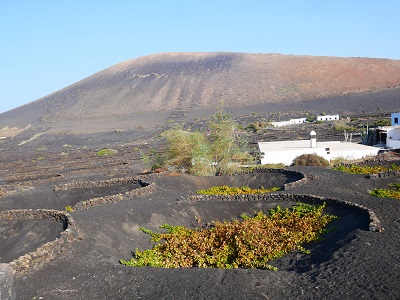

In the jet black earth of the interior, it is very hard to imagine anything growing on this island but in the Geria region circular hollows – gerias – have been dug and surrounded with low walls to grow vines. Stretching for miles in every direction the hollows allow the plants to reach the fertile soil below the volcanic ash, trap moisture from the morning dew and protect the crops from the howling trade winds. We were too early for a visit to one of the many bodegas selling their wine.


Our first planned stop for the day was the former home of Cesar Manrique, Taro do Tahiche. Here he built an extraordinary house amongst the lava flow.


Sprawling subterranean living spaces were created in natural caves of hardened lava


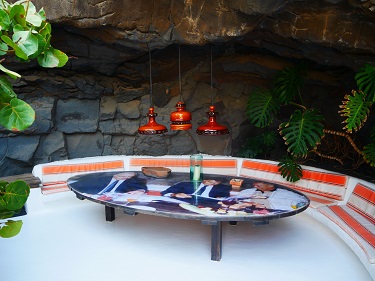
and it wasn’t hard to imagine the bohemian gatherings of artists and creatives he held there in the 1960s.
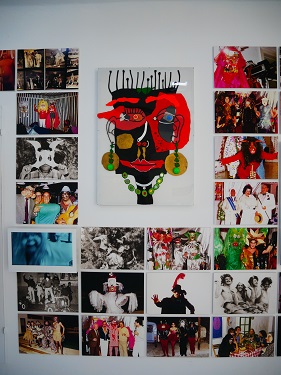


By the 1980s the house had become too much of a magnet for his admirers and he moved to Haria for a quieter and more private life. The house is now home to the Cesar Manrique Foundation and a collection of his art in all its media.


More than a little overwhelmed by this extraordinary architectural and cultural treat, we continued north. Coming down the hairpin bends of the road, it was not hard to work out why the Valley of a Thousand Palms got its name. A palm tree is said to have been planted for every boy child born there.
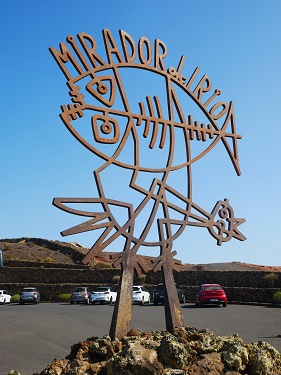


If we had been wowed by Taro do Tahiche, we were not quite prepared for Manrique’s treatment of the humble mirador. As one might expect the views were spectacular down those 480 metre high cliffs we had looked up at from Graciosa. We had a perfect view across the whole of the island.


But it was the interior of the building, built into and not on top of the landscape, that had Manrique’s stamp all over it. It is by far the most stylish viewpoint we have ever been to – all his signature whitewashed curves and geometric art features and all leading you to those views. Architecture working with nature at its very best.


On our way to our final Manrique attraction of the day we drove around the extinct volcano, La Corona. At 609 metres high this is the volcano whose eruption created the lava flows that cover the north of Lanzarote and created two more natural features that were given the Manrique treatment, the Cueva de los Verdes and the Jameos del Aqua. On account of their being favourites for the coach tours of the island we decided against visiting these lava caves and instead headed for the Jardin de los Cactus.


Signposted appropriately enough by an eight metre high metal sculpture of a cactus by the man himself, this is another of Manrique’s brilliant use of nature as the canvas for his art.


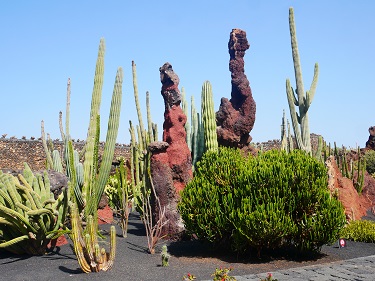

The garden sits in a natural bowl in the landscape and houses around 10,000 living cacti, planted more as works of sculpture than plants alongside actual works of his sculpture hewn from the volcanic rock.


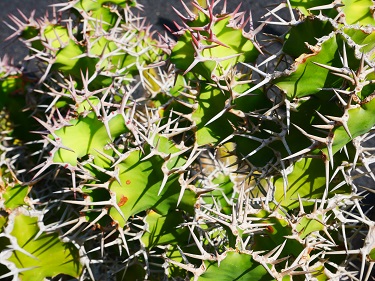

There was definitely also something arty in the geometric shapes of all the different species on display.
We could have spend another day or more on the trail of Manrique’s influence on Lanzarote but we had a birthday to celebrate. More by luck than planning, our paths had again crossed with Rene and Babs, meaning that we could commiserate with Rene on turning… how old??!?


So the following day we started his birthday with cake and presents – from us, a new cycling top and a hat I had crocheted for him in very patriotic colours for our favourite Dutchman!

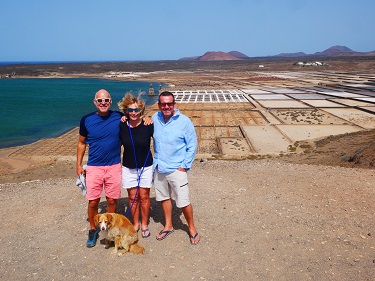
And then we hit the road for a birthday road trip. Our first stop was the very windy saltpans at Janubio


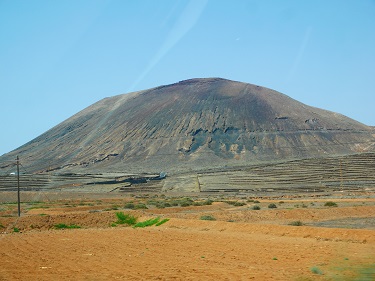
before driving through the Timanfaya National Park and its Mountains of Fire. As well as actually being on fire (there is a restaurant in the park that uses the heat from the volcano to cook the food) the colours of some of the peaks make them appear to glow red hot.


This time we actually stopped in Haria for a tapas lunch. With the pretty whitewashed curves of its public spaces, it’s not hard to see why Manrique felt drawn to the place.
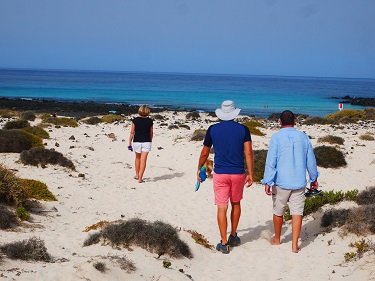


On almost the north eastern tip of Lanzarote we found Playa de Caleta del Mero, a beach where despite the jet black of its rocks the sand was bright white. It was such a sudden contrast to the dark colours of the rest of the island.
A fierce calima wind was blowing through Lanzarote while we were there and it was baking hot. We recorded temperatures of up to 38° in the car. From our time in southern Europe we are familiar with this hot wind that blows from Africa, bringing with it the red sand of the Sahara, but temperatures were so unseasonally hot here that even the island’s schools were closed as a precaution.
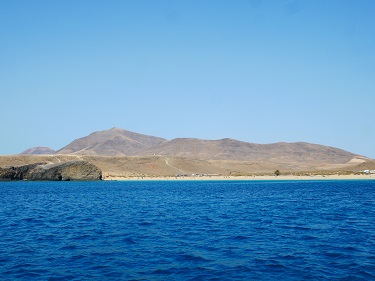


When the calima had blown through we left the marina to try our chances in the notoriously rolly anchorages of the Canaries. All the competing swells of the Atlantic weather systems make it difficult to find the right kind of protection from both wind and waves but we lucked out at Playa Mujeres, just outside Playa Blanca. We enjoyed two brilliantly calm nights and started to wonder what all the fuss was about. Despite being just outside the busy resort we had spectacular views


and were treated to some wonderful sunsets and sunrises. Sitting in the anchorage we reflected on what a surprise Lanzarote had been. It was very far from the image conjured up by the nickname rather unfairly given to it by Michael Palin back in the 1980s. Lanzagrotty it is not.


But the hazy outline of Fuerteventura was so tantalisingly close that we set our sights on retracing our very-memorable-for-all-the- wrong-reasons passage on SV Panache down its coast…
 Adventures with Pintail