
1 November to 15 November 2023
Las Palmas to Pasito Blanco, 27° 44′ 62″ N, 15° 36′ 80″ W, 40nm, 6 hours 30
to Puerto Cementero, 27° 45′ 14″N 15° 40′ 14″ W, 2nm, 45 minutes
to Playa de Chinguarime, 28° 02′ 19″ N 17° 10′ 38″ W, 82nm, 14 hours 45
to San Sebastian, 28° 05′ 33″N 06° 52′ 00″ W, 5nm, 2 hours
We weren’t having much luck finding a marina with space for us on Tenerife, everywhere had a long waiting list. It would be nice to see something more of the Canaries but while we were in Las Palmas we got on with preparing ourselves and Pintail for Atlantic crossing.
Babs and Rene, who had joined us in Las Palmas from Lanzarote, had secured a space in the marina at Pasito Blanco on the south of Gran Canaria so that Rene could travel to the Netherlands to visit his mum. We decided to chance the notoriously bumpy anchorages of the Canaries and join them for a sail to the south coast while we waited to see if we could get a place in a marina somewhere else in the archipelgo.


The sail south provided evidence that this coast has one of the Canaries famous acceleration zones, where the wind whips up around the island creating an exhilarating/terrifying sailing experience. It is a sure sign of guaranteed wind when there are wind farms about and this south eastern coast of Gran Canaria was literally covered in them! We had a great sail down until we turned to the southern end of the island at around Maspalomas where the wind died altogether and we motored on into the anchorage at Pasito Blanco. After a rolly night, we said another goodbye to Babs and Rene. Their plan was to sail down to the Cape Verdes when Rene returned from the Netherlands so we said farewell and see you in the Caribbean!

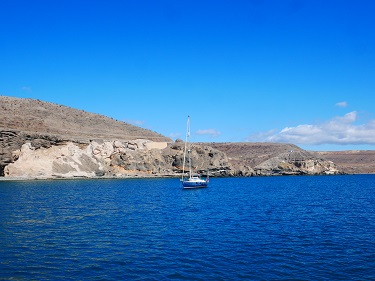

We managed to secure a week in the marina at San Sebastian on La Gomera so killed a day or two in the anchorage of Puerto Cementero, literally the cement port. What it lacked in beauty it gained in protection from wind and swell. We couldn’t work out why it wasn’t more popular. We had only one other boat as company whilst everyone else rocked and rolled in Pasito Blanco. We decided on another overnight passage for the long crossing to La Gomera and left the anchorage in the dark with the glow of the cement works lighting our path.

By daylight we could see the coast of Tenerife and the outline of the island’s volcano, Teide, but we carried on passed to the smaller island directly opposite. It was a very pleasant sail, another taster of the downwind sailing we could expect in the Atlantic.
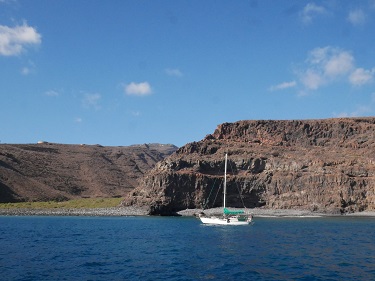
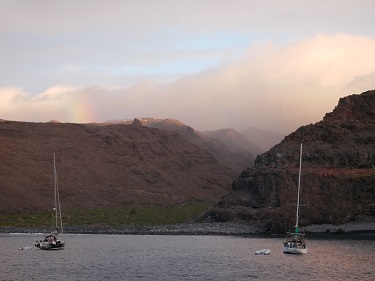


Logic told us that the anchorage at Playa de Chinguarime would be protected from both wind and swell and when we arrived it certainly seemed like a good choice. Strong wind whistled off the cliffs keeping us steady but when the wind dropped an inexplicable swell in the opposite direction to the wind worked its way towards us and we were rolling from side to side. There was nowhere safe to access land so we stayed on board. Still, the view was pretty amazing and with a pair of binoculars we could even watch the crazy, naked hippies who lived in tiny caves in the cliffs!

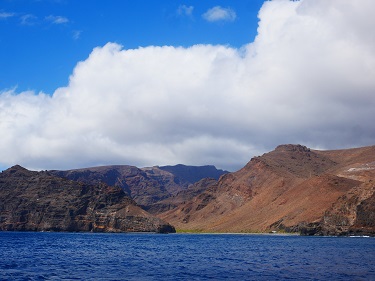

From the anchorage we only had 5 miles to go to reach San Sebastian but leaving its protection we were met by 30 knots of wind on Pintail’s nose. We motored very slowly passed La Gomera’s dramatic landscape towards our berth for the week. Pintail was very salty when we arrived and glad of a hose down.


We arrived in San Sebastian during the three month long Festas Lustrales in honour of the Virgen de Guadalupe. The festival included religious, cultural and sporting events and saw the statue of the Virgin, the patron saint of fishermen, paraded throughout the island.
In peak season for the island there was not a single car to be hired anywhere on La Gomera so, after working out the rather cryptic timetable, we got on the bus. For a small island this was to be an epic journey through all of its different landscapes. The 50 kilometres from San Sebastian to Valle Gran Rey on the south east coast took one and a half hours! And I’m going to go out on a limb and say that it is probably the best public bus ride anywhere.
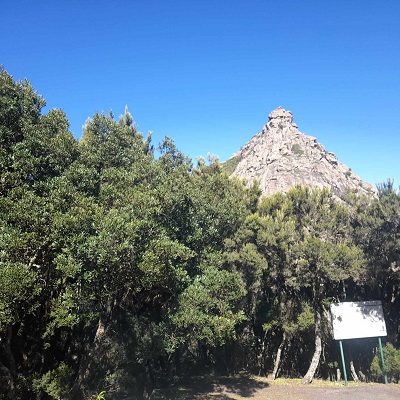

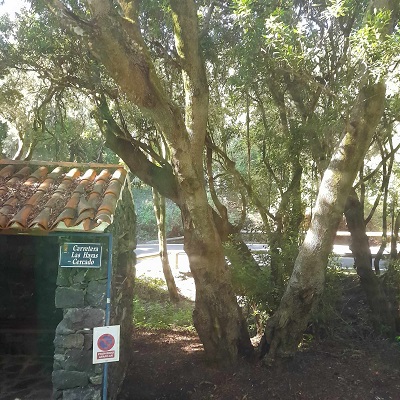
Following the glass case that would carry the Virgen de Guadalupe to her next location, we climbed higher and higher, our ears popping as the bus driver navigated the hair pin turns. Somewhere along the way, without warning, the brown rock became green with palm trees and prickly pears covering deep, deep ravines. Higher again, tangled woods clung to the steep sides as the bus emptied of hikers armed with rucksacks and poles. On we went through ever denser woodland. From the air conditioned chill of the bus, we wondered if it was as cold outside as we were. Trees dripped with lychen and moss the further the bus climbed into the cloud. Mist hung amongst the trees like something out of an episode of Scooby Do. We hadn’t seen so many trees in a very long time and it was captivating.
When we had climbed as high as the bus was going to go the trees gave way to a views into a deep gorge and a spectacular view back down to the sea.

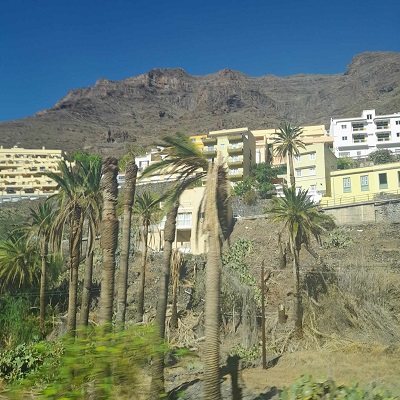

We could see the sea but it would take another 45 minutes to wend our way back down to reach it through tiny settlements clinging to the terraced hillsides full of growing vegetables.


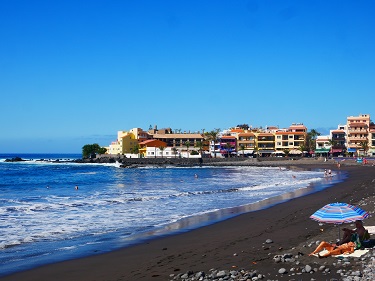
When we reached Valle Gran Rey we found a bustling seaside town fringed with a long beach of jet black sand
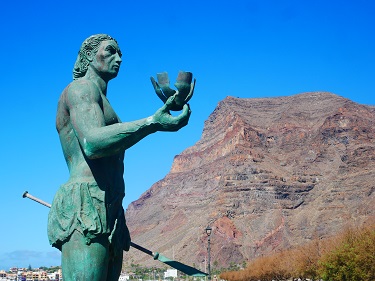


and tucked under the sheer cliffs of the gorge. After a delicious Canarian lunch in one of the seafront restaurants we walked the length of the beach to the harbour at the end and where yachts rocked ominously in the swell. We made a note not to go there!


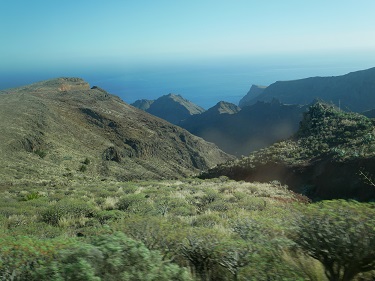

The journey back on the bus took the same route but still awed us with its diverse views. As we approached San Sebastian we had a clear views across the channel to Mount Teide on Tenerife.
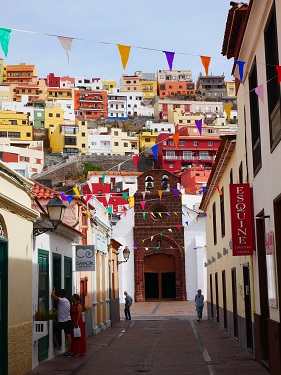


San Sebastian itself was a lovely brightly coloured town to hang out in.
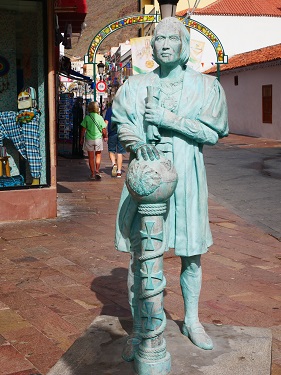
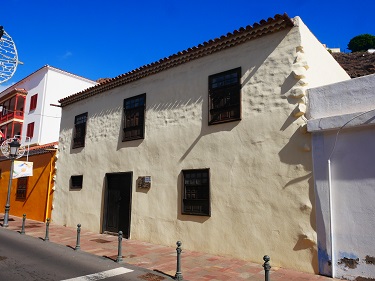
Columbus had, of course, been there and had stayed at a house on one of the bunting clad streets on his last stop before crossing the Atlantic but we found more interest and practicality in the town’s shops and markets including an ice cream shop that we stopped at more than once!
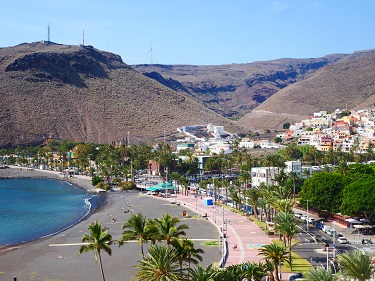


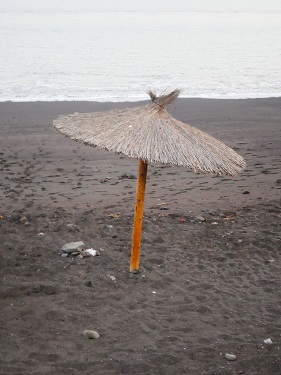
We also had a swim one day off the town beach and climbed to the viewpoint to look down over the buildings and back into the mountains beyond.
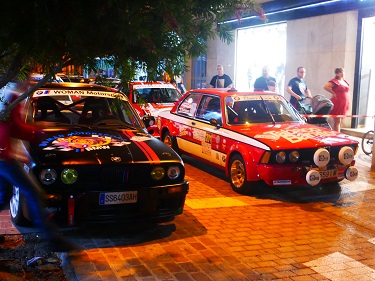

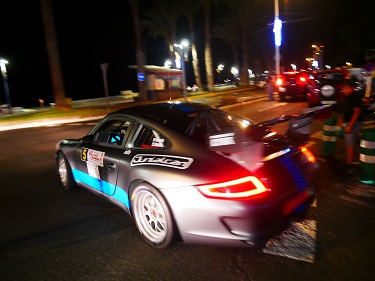
One evening we watched the start of a motor rally held as part of the festival. We weren’t quite sure what the Virgin would have made of the riot of brightly coloured cars revving their engines very loudly as they paraded out of the town.


Before we left I made a solo visit to the local museum next to the church to learn a little bit more about the early people who lived on the island. (Stefan had something much more important to do on the boat!) The original Gomeros, perhaps originating from the Ghomara tribe from Morocco’s Rif Valley, were smaller than the giants of Fuerteventura and divided the island into four kingdoms. It is thought that they invented the island’s unique whistling language in order to communicate across the island’s difficult landscape, a language which is now only really used for tourist demonstrations.

Pintail got quite comfortable in San Sebastian, next to Tyrian of Truro and her intrepid crew, Finn, Zee and young Archie who were also waiting for a berth in Tenerife and getting ready to cross the Atlantic. We weren’t disappointed when waiting for a weather window extended our stay by another day. It gave us the opportunity to introduce Archie to our favourite ice cream shop!
We still hadn’t found a marina space anywhere on Tenerife but we were hopeful we might actually get to set foot on the island somehow…
 Adventures with Pintail
Wonderful pictures!
LikeLike
Check out that rainbow arc!
Also liking new video addition…
X
LikeLike
Miss you Emm. Lovely post.xx
LikeLike