
16 November to 27 December 2023
San Sebastian, La Gomera to Playa del Medio, 28° 02′ 84″N 16° 43′ 41″W, 26nm, 6 hours 30
to El Cementero, 27° 45′ 14″N 15° 40′ 14″ W, 51nm, 8 hours 45
to Pasito Blanco, 27° 44′ 76N 15° 37′ 06W, 2nm, 40 minutes
to Las Palmas, 28° 07′ 65″ N, 15° 25′ 55″ W, 35nm, 7 hours 30
We decided against pushing on to the islands of El Hierro and La Palma partly because they would mean beating into the wind to return to Las Palmas but mainly because we wanted to give ourselves a good amount of time to prepare the boat and ourselves for our Atlantic crossing.

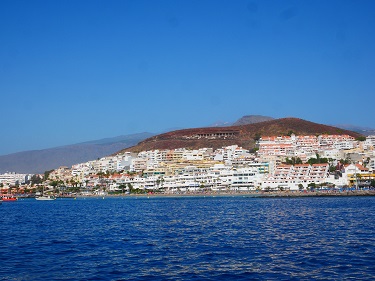


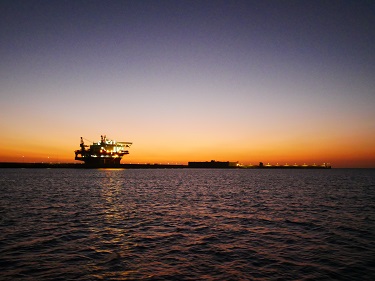
Another call to the marina in Tenerife yielded no success so we decided to make our way back to Gran Canaria. We made do with having lunch in the anchorage at the tourist resort of Los Cristianos on Tenerife before moving round to another industrial but swell free anchorage. We just weren’t destined to set foot on the island!
We had a very fiesty crossing back upwind to the cement works on the south of Gran Canaria and then a couple of nights in the marina at Pasito Blanco where, guess what? Babs and Rene still hadn’t departed so we got to say goodbye and fair winds again!
By the time we returned to Las Palmas and settled in the marina, the truth was that we had already done a lot of the preparation for the crossing. Most of the big technical upgrades were complete and running well but there were a few practical things to sort out and checks to do as well as making sure we had everything on board that we needed for three weeks of self sufficiency at sea.


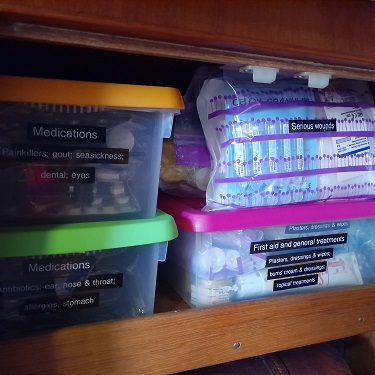
One of the perks of being a ship’s captain is that Stefan can essentially write us a prescription for medication which is not available over the counter so armed with a long list of pills and treatments I headed to the pharmacy and stocked up our medical kit for most eventualities. I spent time translating the dosages from Spanish and putting it all away in an orderly way so we could get to it easily if we needed it in an emergency. I just hoped we would never have to use any of it, especially the skin stapler which is essentially a regular stapler with metal staplers just in a sterile packet!
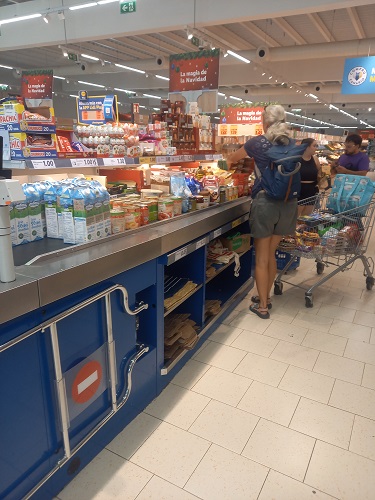
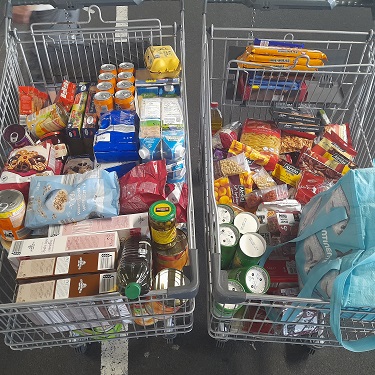


We hired a car for a few days to load the boat up with all the dry provisions we would need for the crossing as well as all our favourite European foods which we wouldn’t find in the Caribbean. We did about three big shops in the end to make sure we had everything we needed and then I had to catalogue, label and find somewhere to store it! Stefan had to give up one of his tool storage spaces to fit everything in.


He also had to build a temporary storage facility for all the drinks, sacrificing the space next to his side of the bed! We divided all our snacks into four bags so that we had one for each week of the passage plus extra in case it took us longer. Woe betide us if we ran out of crisps, nuts and biscuits to power us through our watches. And we made sure we had supplies enough for the copious cups of tea we would inevitably get through in all those hours at sea


While we had a car to do our major provisioning we took the opportunity to take some time out from all the preparations and see some more of the island. One day when a trip to the big hypermarkets took us close by we took a picnic to have up in the Barranco de Guayadeque. After climbing back up there in the car we got out to admire the view that had captivated us so much the first time but that bit higher up, there was a chill in the air which made us decide to take our picnic back down to sea level! We found a tourist free beach on the windy east coast but had to stay in the car to eat it to avoid being sand blasted!


Another day we took to the mountain roads again and climbed up to the pretty hilltop village of Tejeda.


It is supposed to be all about the view of the surrounding mountains with their unique rock formations but our visit coincided with a kalima and the Saharan sand hanging in the air did its best to obscure it!


So we turned to Tejeda’s other attraction, the famous Dulceria Nublo, where we can report that they make exceedingly good pastries as well as all things almonds from the orchards around the village. We came home with a jar of almond spread to add to our provisioning.
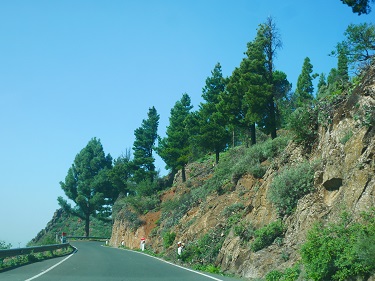


We returned to sea level through the pine clad slopes the cling to the deep gorges




and stopped at the extremely festive town of Galdar. There were Christmas displays everywhere in its streets


with farm animals and poinsettia featuring heavily. With all the sunshine and heat and being so busy it was easy to forget Christmas was coming so this helped get us in the mood.


Before Christmas we had Pintail lifted out of the water so that we could scrub the bottom, change the anodes and check everything else was ok. We were grateful of new crew member Will’s extra pair of hands to get the bottom sanded before we were lifted back in.


We had a rigging inspection and replaced some of the shrouds. The messy stern locker was emptied and everything stowed away properly in case we needed anything in an emergency. Safety equipment including the drogue, danbuoy and lifejackets all got a careful inspection and we lowered the sails to check the halyards and swivels for any wear and tear.

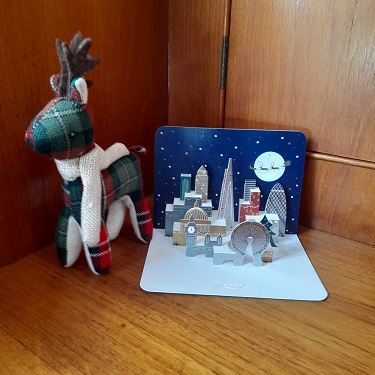


We somehow managed to fit in celebrating Christmas. Will had by then joined us on board so on Christmas Day we shared a festive mushroom wellington and exchanged gifts in between last minute boat jobs. I even had a Boxing Day visit from my friend Mike’s daughter, Meli, who was in Las Palmas visiting her Canarian family with her Mum.
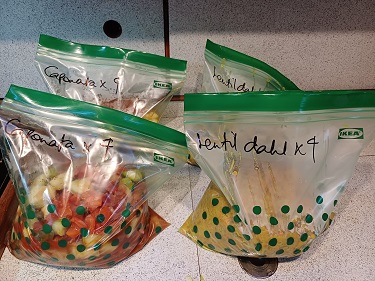

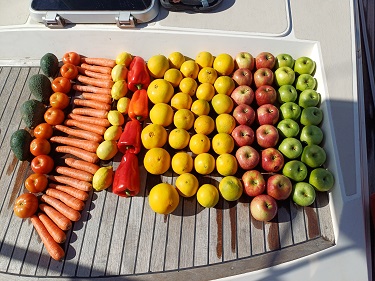


In the week before we left it was time to start preparing a load of meals for the freezer. We wanted to make sure we had things that would be easy to prepare if the conditions made life below difficult. In the end the freezer was packed full of curries, chillies, stews, tagines, pasta sauces – enough for 18 evening meals – ready to defrost and reheat along side rice, pasta or couscous. A couple of days before we left, Will and I headed to the market to get all our fresh fruit and vegetables. We needed to choose the vegetables carefully for their longevity so we stocked up on a lot of onions, carrots, cabbage, sweet potato, squash, tomatoes, peppers, cucumber and avocado. We also got enough apples, oranges and bananas for one piece of fruit per person per day as well as some lemons. All the vegetables were carefully washed and dried to help them last longer and we put up new nets under the solar arch to store all the oranges. There was barely a single space left on the boat that wasn’t filled with food or drink!


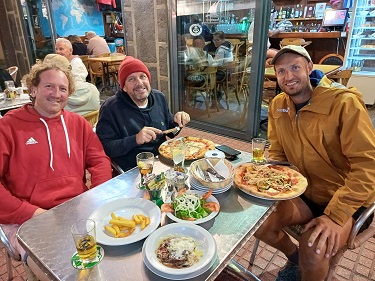
The day before our planned departure date, our fourth crew member, Ben, arrived. He had barely put his bags down from the airport than Stefan had put him to work fitting a new battery charger and checking his installation of the new batteries. There was then nothing left to do but check the weather forecast again and enjoy what was going to be our last meal on dry land for we didn’t know how long.
We were as ready as would ever be to make the jump across the Pond…
 Adventures with Pintail
Fantastic preparations! In hindsight it was all worth it!
LikeLike