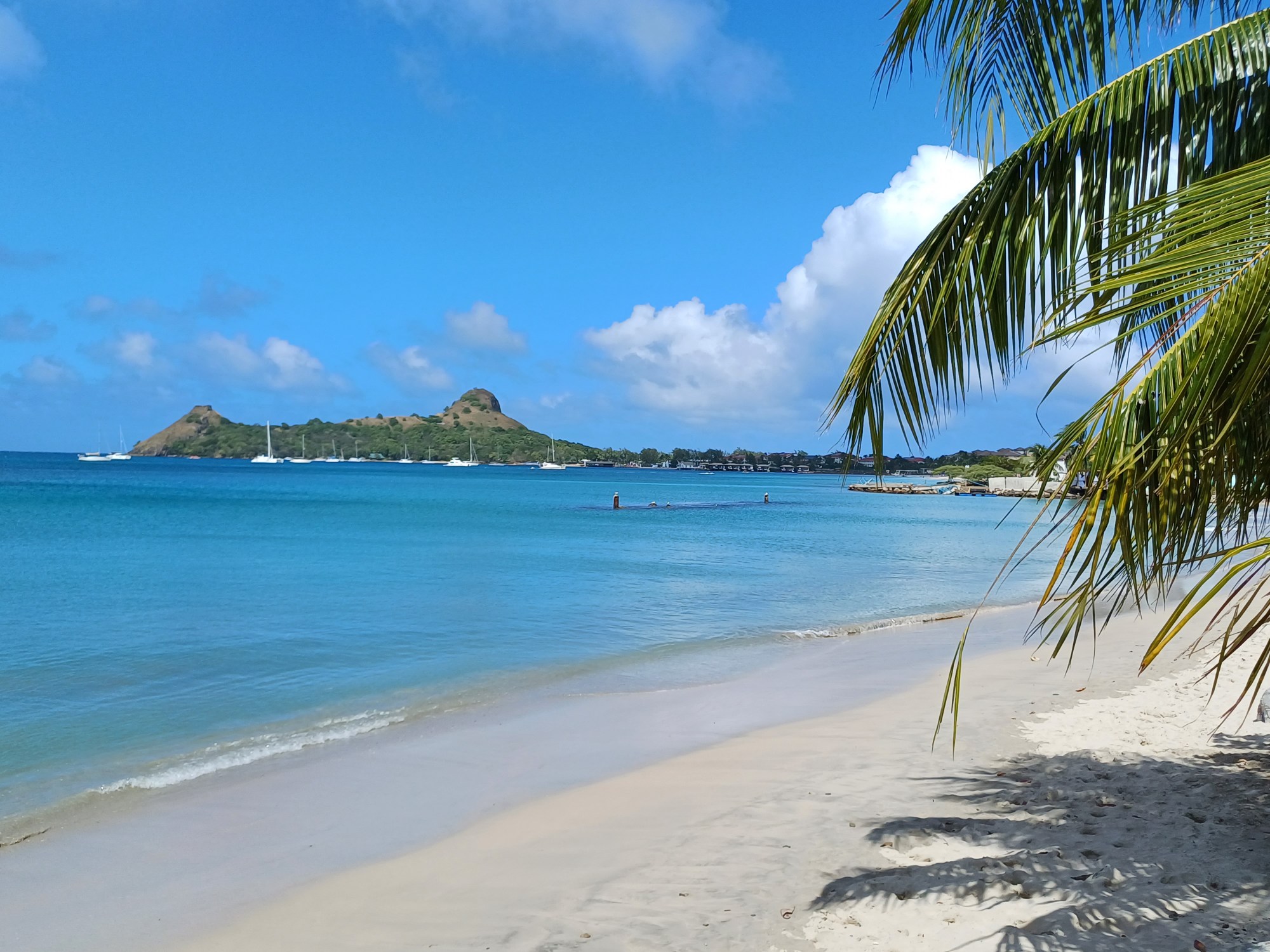
21 to 29 January 2024
Rodney Bay South to Malgretout, 13° 50′ 55″ N, 61° 3′ 87″ W, 17nm, 4 hours
to Rodney Bay South, 14° 4′ 48″ N, 60° 57’48” W, 17nm, 3 hours 30
‘Welcome to paradise’, in a lilt that could only be of the Caribbean, is the universal greeting to all strangers arriving in Saint Lucia. But the more we heard it, the more questions it raised for us. What is paradise? And perhaps more importantly for whom?
We chose Saint Lucia as our arrival point because it had been a paradise of sorts for Stefan arriving after that first Atlantic crossing in 2021. It had been a safe harbour and a refuge literally and metaphorically from the fear and anxiety of those difficult weeks at sea. He had loved its laid back vibes while he processed the challenge and its memories. He grew familiar with the marina and the town of Rodney Bay and those were good enough reasons for us to choose it for our own crossing.

After just over 24 days at sea, rounding Pigeon Island and finding ourselves in the flat calm waters of Rodney Bay was definitely a sort of paradise for us too. With the anchor finally down, the boat barely moved as all four of us enjoyed our first full night’s sleep in very long time, uninterrupted by jolting waves and night watches.
Moving the next morning to a safe berth in a modern, well kept marina was another kind of paradise – allowing us the opportunity to recover and have a bit of a holiday from sailing with easy access to all the cafes and bars, restaurants and shops we could ask for.


And we could tell you that the Saint Lucia we found was like paradise – the palm fringed white sandy beaches, the lush dense rainforest clad peaks, the choruses of tree frogs and other exotic noises through the night – and it’s true, it is all of those things.


We really did have a wonderful few days in Rodney Bay resting and recovering from the crossing. We ate out every night, a real treat after our efforts in the galley the past month. Desperately needing to stretch our legs, Ben, Will and I hiked 11 kilometres of roads and paths to and from Pigeon Island to start to understand a bit about the island and its history.

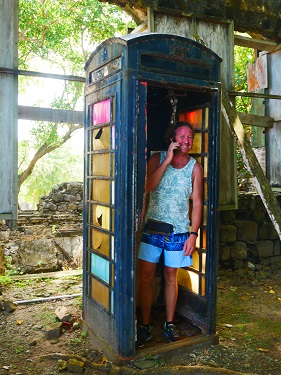


As we walked amongst the ruins of the British built fortifications, we started to learn that Saint Lucia and its people, despite their greeting, probably haven’t experienced the same kind of paradise.
For a while at least it might have been paradise for the Arawak people, who lived peacefully on the island before they were massacred by the invading Caribs long before Columbus got there. Any paradise the Caribs then created for themselves was shattered by the disease and famine brought by the British when they invaded in the 17th century.
And the island was very definitely as far from anyone’s definition of paradise for those transported in chains from Africa as the chattels of our forebears who exploited them and the island’s resources.


It doesn’t take long in Saint Lucia to see that it is still very far from paradise for their children’s children’s grandchildren. With an average wage of not even £10,000 a year, the contrast between the residential streets of Gros Islet and the glossy high end resorts like Sandals and The Landings they sandwich was uncomfortably stark.
After a honeymoon period in the marina, and having said farewell to Will who had embarked on a cycle tour around the island, our relationship with Saint Lucia became more complicated. Set up to cater for the cruise ships and resorts, it was hard to navigate independently by land as we like to. All the main attractions and most of the hikes involved the need for a guide and an over inflated entrance fee. We get it, we really do, and we have no objection to paying if there is a need to restrict numbers to control the impact on the environment or to support the conservation and preservation of sites and the community. We actively want to support the local economy but we love the freedom of doing it independently rather than being forced to join the crowds.
And then there were the reports about crime committed against sailing boats, particularly in the anchorages around Saint Lucia’s famous Pitons in the south. As recently as the week before we arrived there had been an armed attempted break in to a yacht moored off Soufriere.

But, determined to see the Pitons for ourselves, we decided to go anyway.
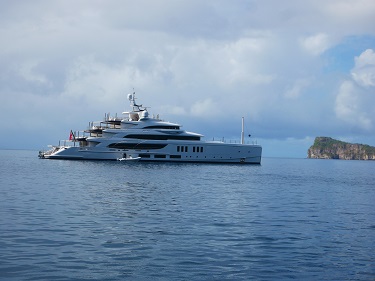
As we sailed south, the haunts of the rich and the mega rich are visible all along the coast of Saint Lucia. Oprah Winfrey reportedly has her own portion of paradise overlooking Marigot Bay and I dare say she looks out over her idyllic grounds to the rainforest beyond and then out to the sunset and believes it really is paradise. But it’s not hard to understand why those with such apparent wealth as being able to buy a yacht and sail halfway around the world might be a target of those living in such close proximity.
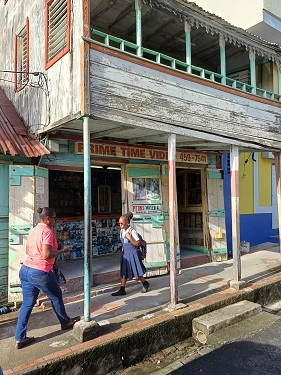


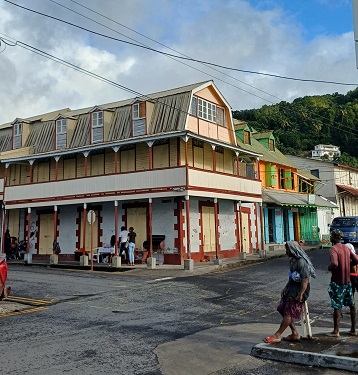
When Ben and I took the dinghy into Soufriere to get some groceries and petrol, we found a town that is probably much more representative of the ones that ordinary Saint Lucians live in and it felt important to us to acknowledge this, not shut it out like the literal high fence between the posh hotel or super yacht and the poverty next door.
The other thing Saint Lucia taught us is that it apparently rains a lot in paradise! If we wondered where all those squalls we encountered in the last few days of our crossing were heading we got our answer pretty quick – Saint Lucia!


There is a reason the island is so green – the clue is in the rainforest! Our days in Rodney Bay and the Pitons were punctuated by a lot of sometimes torrential rain.


They were the kind of downpours that meant getting very wet indeed if you were unlucky enough to get caught in them or were at the helm! It rained hard every single day we were there, sometimes all day, and we started to feel very much like moaning Brits. Being trapped inside a steaming hot boat with all the windows shut was far from paradise.
On the positive side, however, Pintail got the most thorough wash down every day which she more than needed and deserved after three weeks at sea and the rain was always followed by a spectacular rainbow!

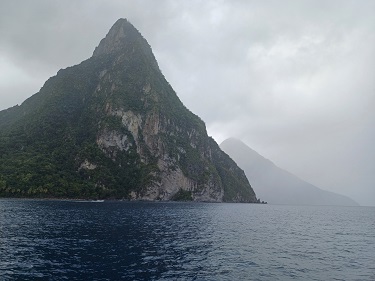


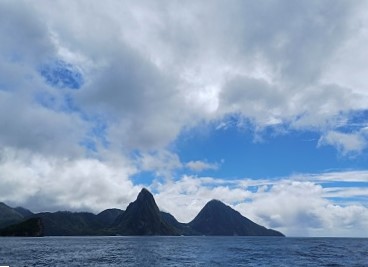
We spent one night on a mooring buoy just outside Soufriere in the shadow of Gros Piton, sleeping on high alert and, for the first time ever, shutting ourselves inside. We said goodbye to Ben, who was heading north for a break in New York on his way back to Portugal, and decided against a second night in the area. We didn’t feel it was safe enough to leave the boat to explore and we didn’t feel safe enough on the boat at night.
With all the rain about we didn’t even get the best views of the Pitons but we were glad we had made the effort.
We started to think that we were destined to get a sanitised, cruise ship kind of view of the Caribbean – all palm trees, white sand and rum cocktails from a distance – rather than any deeper understanding of the islands and their people. During our regular zoom call with friends back home, my wise friend, Sarah, sensed our disappointment and discomfort and the next day sent a message we both needed. As well as reminding us what an achievement just getting ourselves there had been, she reminded us that we didn’t have to like everywhere we visited and that what we are doing is so much more about the journey than the destination.
So arriving in Saint Lucia had taught us an important lesson – paradise can sometimes be very complicated indeed and that to truly understand what goes on behind the palm fringed beaches we would need to delve deeper into these Caribbean islands as we travelled them. So with that, and after another couple of nights in Rodney Bay, we loaded our Kindles with new books about the Caribbean, both fact and fiction, and picked up a hitchhiker for the short sail up to Martinique…
 Adventures with Pintail