
30 January to 6 February 2024
Rodney Bay, Saint Lucia to Cul de Sac de Marin, Martinique, 14° 27′ 20″ N, 60° 52′ 53″ W, 25nm, 4 hours 15 minutes
to Sainte Anne, 14° 26′ 25″ N, 60° 53′ 15″ W, 1nm, 30 minutes
to Anse Chaudière, 14° 28′ 78″ N, 61° 4′ 85′ W, 13nm, 3 hours
to Anse Mitan, 14° 33’55” N, 61° 3’25” W, 6nm, 1 hour
to Étang Z’Abricots, 14° 35′ 75″ N, 61° 2′ 52″ W, 3nm, 1 hour
Before we got back from the Pitons we heard from Will that Saint Lucia had also been quite difficult for him. The roads and traffic were not used to bicycles and he had escaped some very near scrapes. Budget accommodation was also hard to come by and after finding himself locked into his Air BnB in Castries with a large snarly dog and then enjoying the hospitality of some nuns at a monastery in the hills he was also ready to move on.

So we welcomed him and his bike back on board for the day sail to Martinique.
This was our first real experience of sailing in the Caribbean and it seriously didn’t disappoint – strong wind on the beam, flat sea and lovely fast speed. Pintail ate up the miles all the way to the southern tip of the island. We were accompanied all the way by groups of swooping brown boobies, a seabird similar to the gannet but with a much more amusing name!
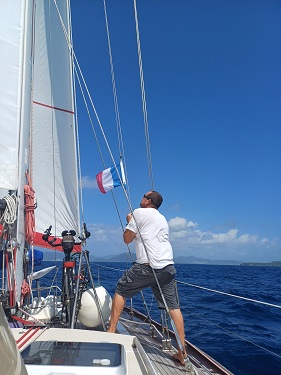

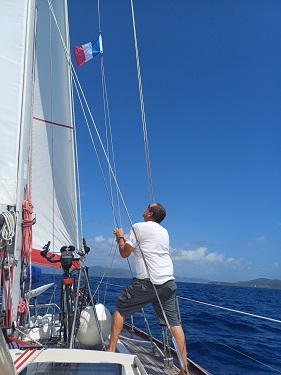
On our approach to our second Caribbean island, we sent the Frenchman up front to raise the courtesy flag. What we hadn’t quite appreciated until now was that whilst most of the other Caribbean islands have been emancipated from their colonial rulers, Martinique is actually still very much part of the French Republic and represented at the National Assembly and Senate.
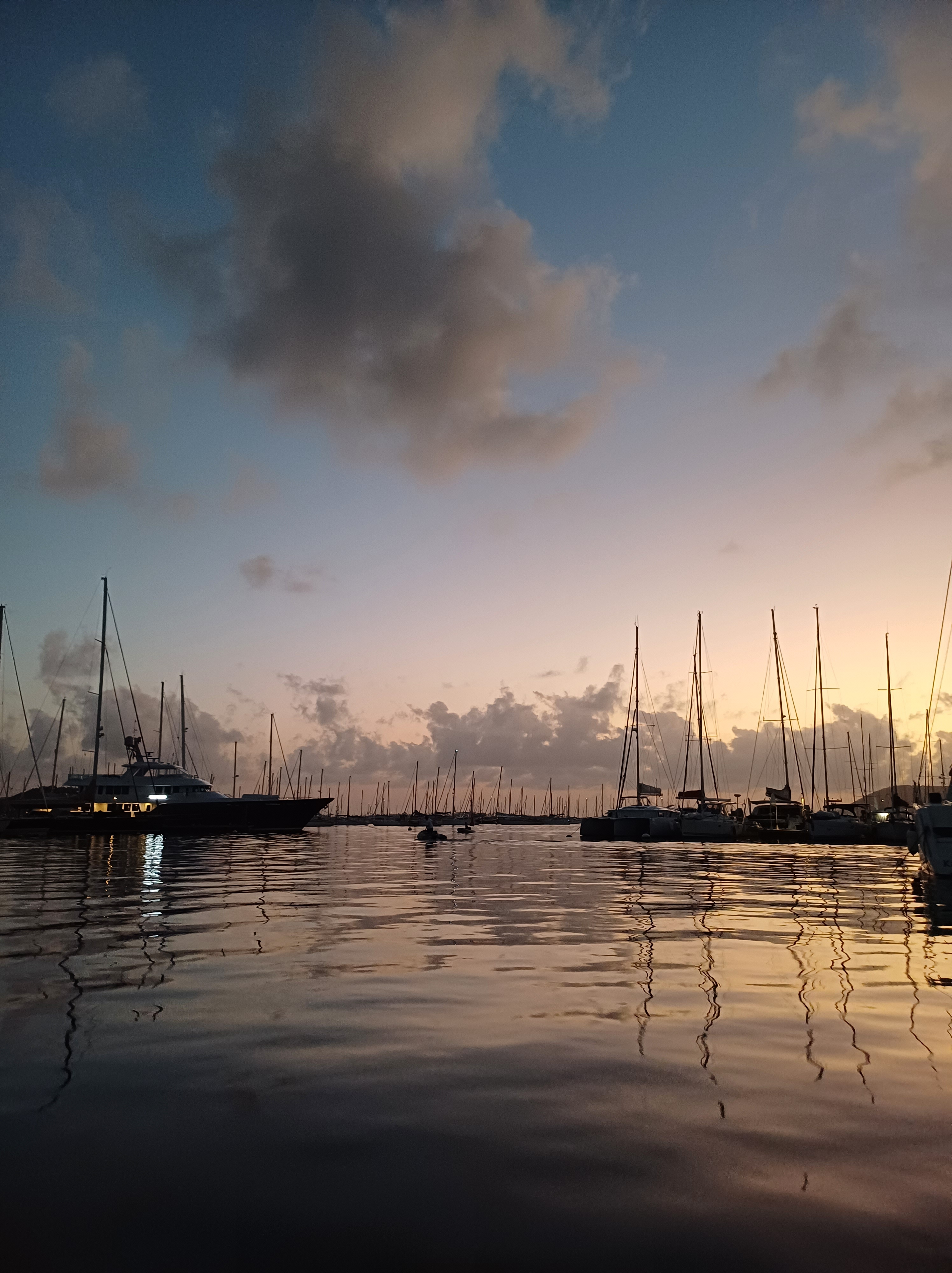
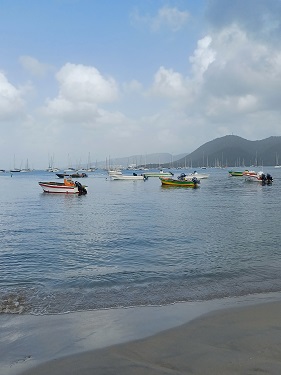
The Cul de Sac de Marin is without doubt the busiest anchorage we have ever seen. There were masts everywhere, hundreds at anchor in areas around the many shoals of the bay, more still in a vast mooring field and there were then the 800 masts of the marina itself. Martinique did not immediately promise solitude!
Marin did, however, provide us with a place to check ourselves and the boat into the island and to check out the Auchan supermarket with its prices all in Euros. Like Corsica, Martinique is self governing but enjoys all the perks of French food imported and sold at much the same price as in France. Not only did this promise cheaper provisioning than other islands but also it promised Will his favourite pain au chocolat for breakfast!
With all the boats about, Stefan was easily able to buy a new belt to repair the autohelm but having discovered that the sail maker would need three weeks to look at our ailing genoa, we saw no reason to stay amongst the chaos.


We said goodbye to Will and his bike again, hoping he would have better luck on the French roads, and headed the long mile to the anchorage at the entrance to the bay, Sainte Anne. This would be Babs and Rene’s arrival point but they were still only half way across the Atlantic. We thought we would check it out for them in any event. It had all the features of the Caribbean we had seen in Saint Lucia – quirky bright colours, palm fringed beaches and abandoned cars. The only real difference was the language.

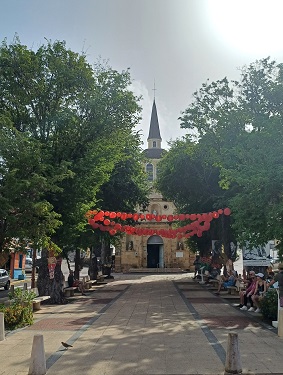
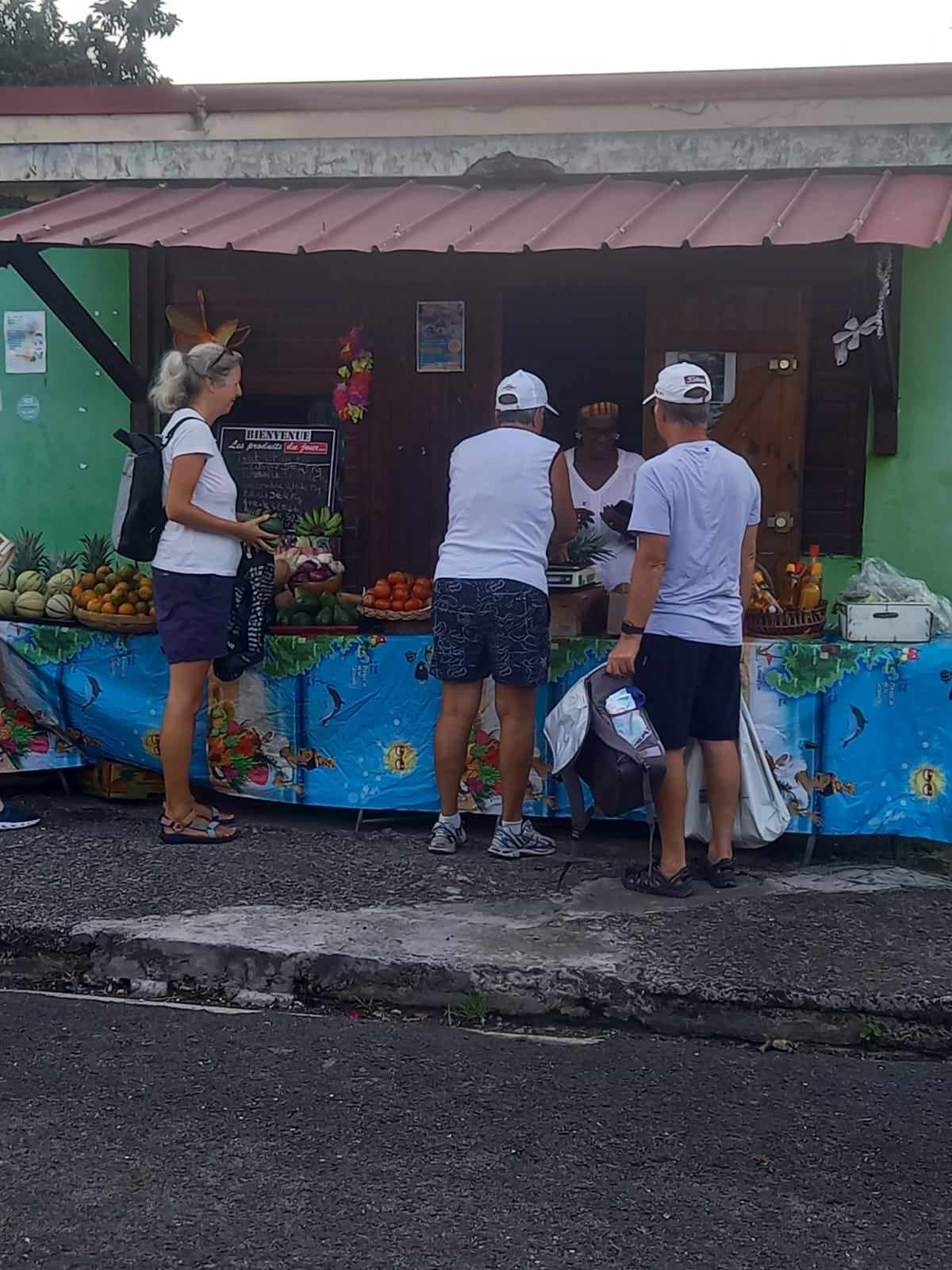

Saint Anne gave us an opportunity to shop for some fresh food and local spices from the roadside stalls, all with the convenience of an excellent dinghy dock.


With the wind always seeming to blow in the right direction we moved on north and enjoyed a lovely sail passed Diamond Rock to anchor off Petit Anse d’Arlet.


This iconic little town seems to be the poster child for Martinque’s tourist industry. The following morning, when we wanted a closer look, a swell had developed which made landing on the concrete quay very difficult and leaving the dinghy foolhardy so we made do with the view from the water. The swell also made life at anchor slightly annoying so we decided to move around the headland into the protection of the big bay at the capital, Fort de France.
We were starting to wonder if we would ever get back on land, let alone explore any of these islands inland. So after a night at anchor in Anse Mitan, we sailed across the shallow waters of the bay and into the marina at Étang Z’Abricots where we hoped that easy access to land would enable us to explore Martinique more easily. We hadn’t, of course, factored in le weekend!
Unable to find a single hire car available on the island we decided to take our chances on public transport, on a Sunday! We checked with the marina office and the internet which both indicated a bus service would run into Fort de France that day.
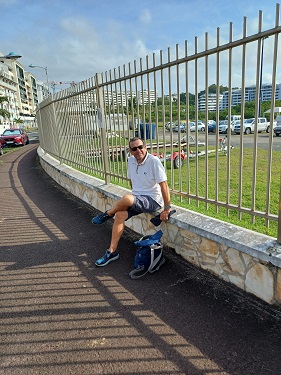


Finding the bus stop was our first challenge. Asking at the supermarket, the woman pointed to an anonymous place opposite along the road. We waited patiently for over half an hour with no sign of a bus so we walked back towards the marina only to spot a bus stop sign helpfully obscured by another sign board. We waited there for a time longer to no avail and eventually gave up and called a taxi.


With half an hour to kill before our next bus, we ignored our taxi driver’s warning that tou e ferme le dimanche, and asked to be dropped in the centre of town. We wandered through the very empty streets. At the cathedral, with its unusual metal spire, we found a few people spilling out of the morning service to a food stall in the square.


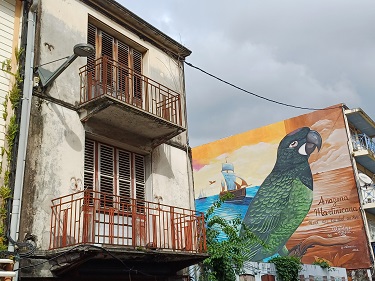

Amongst the beautifully decaying buildings we found pops of colour in the murals but it really had a feel of a ghost town.
Indicated by a group of tourists from the visiting cruise ship, we easily found the bus stop for our next ride up into the hills outside Fort de France and to the Jardin de Balata. The cruise ship passengers were all smugly clutching tickets for the bus pre-purchased at a shop on the way to the stop. With the bus due imminently, we didn’t have time to get to the shop and back, so in my best French I asked a local, also waiting for the bus, if a ticket was necessary or could we get one on the bus. He confidently told me, no, its free on Sunday! Slightly confused we got on the (this time) very punctual bus and the driver just merrily waved us on without paying. A small net gain to our travel costs already dented by an expensive taxi this far!
The bus climbed high up into the hills outside the town, twisting and turning deeper into the surrounding rainforest and to the childhood home of horticulturalist and landscape designer, Jean-Philippe Thoze.

Entering through the traditional Creole house of his grandparents and in between rain showers

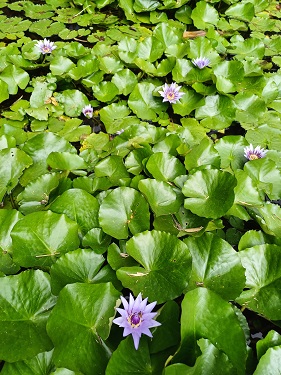


we were then totally immersed into the gardens he has been cultivating since 1982.
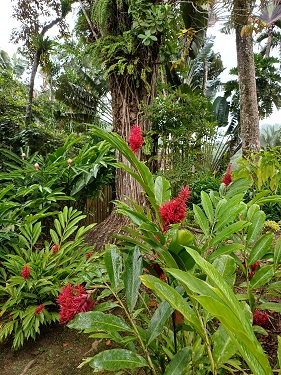


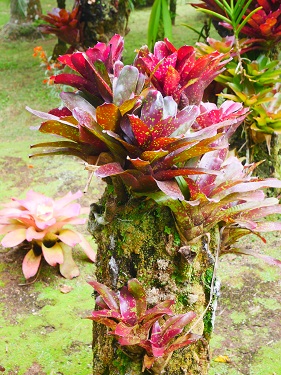
Amongst all the lush greenery were splashes of vibrant reds
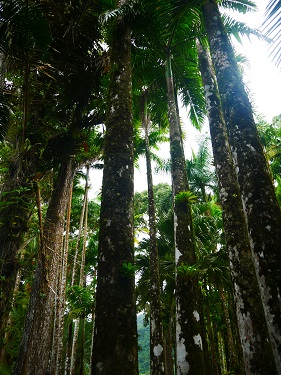
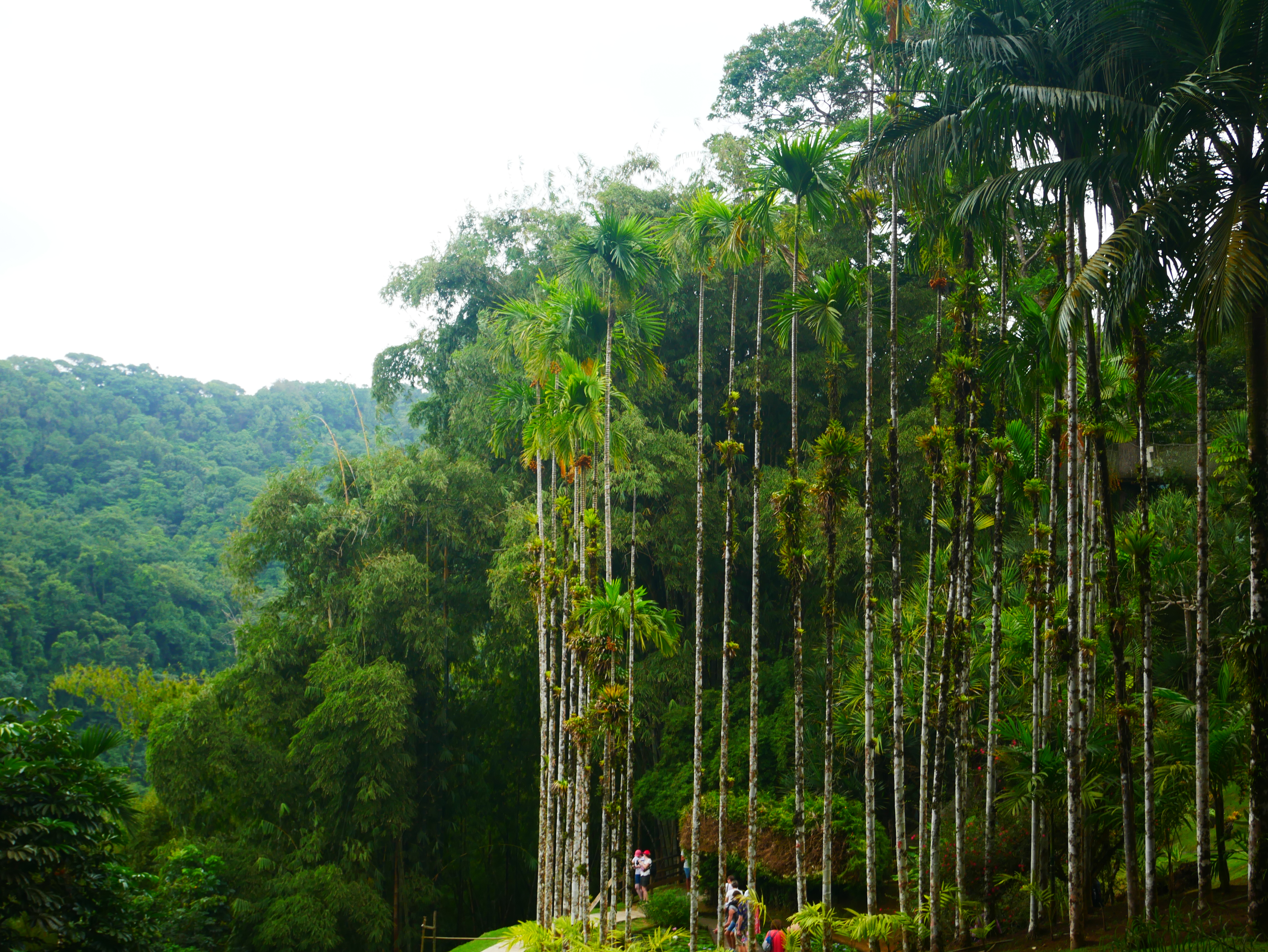


and the tallest, straightest trees.
We had to shelter from the rain a couple of times whilst walking around the gardens but there was plenty of entertainment including these beautiful hummingbirds with an interloping yellow breasted bananaquit.
The heaviest downpour, however, saved itself until we were about to leave and wait for the bus back! We passed time chatting to Karen and Kevin from Wadhurst, who were on a 90 day cruise on the Aurora. Whilst waiting for the bus in this most tropical of places, we incongruously discussed the demise of Tunbridge Wells’ shopping centre and the joys of grocery shopping in my birthplace, Crowborough!
Much like our first phantom bus, the return bus to Fort de France did not materialise and after nearly an hour of waiting and chatting, we finally took up the offer from one of the opportunist taxi drivers to return us down to the town with our new friends and another couple from the ship.


Included in his over-inflated fare, the driver stopped to let us have a look at the mini replica of the Sacre Coeur in Paris and the view from there back down to the bay.
Back in Fort de France we said goodbye to our cruise ship companions but soon bumped into Kevin and Karen again in the small streets of Fort de France. They told us they were going in search of the Schoelcher Library, one of the town’s few landmark buildings. They gladly agreed when we asked if we could join them and on the way they explained their motivation for visiting the building.

It turns out they shared a name with this ornate building’s benefactor, Victor Schoelcher, although theirs had long ago been slightly anglicised to Shelcher. I was able to tell them from my reading about Martinique that Victor Schoelcher was a French politician who had been responsible for bringing slavery to an end on the island in 1848. For this he was hated by the French aristocracy who made their fortunes from the island’s sugar trade, but he still has hero status amongst the island’s present day population. They even renamed the little seaside town just north of Fort de France after him. Karen and Kevin were very relieved to learn that he had been on the right side of history!
(In another complete coincidence, it turned out too that the Schoelchers were Huguenots and that therefore Kevin’s ancestors had joined Stefan’s in fleeing persecution in France to make a home in east London in the 16th century.)


We left the Shelchers to return to their ship and continued to enjoy the town’s empty but bright streets
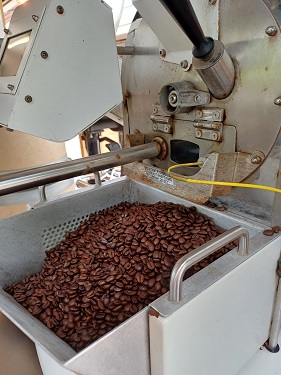
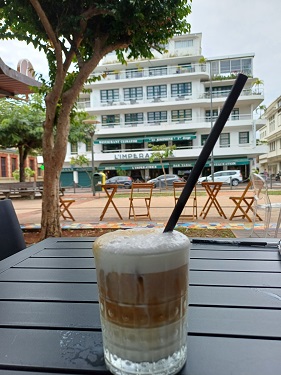
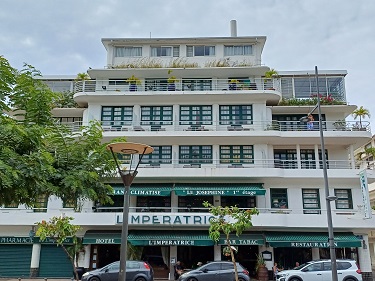
and settled opposite the art deco L’Imperatrice hotel. We sat reflecting on our first almost successful day out in the Caribbean whilst enjoying an iced coffee from a quirky stall . We didn’t even try to catch another bus back to the marina and instead jumped in a taxi, just happy to have been able to spend the day exploring a little of Martinique without worrying about Pintail or the dinghy.
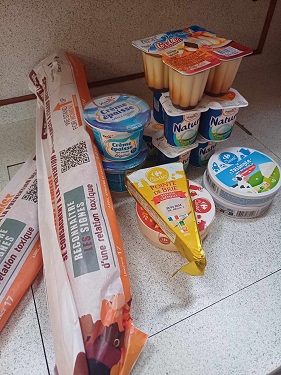
Back at the marina we took the opportunity of the nearby Carrefour to stock up on some of our favourite French foods and started to think about moving northwards…
 Adventures with Pintail