
18 to 25 February 2024
Portsmouth, Dominica to Marigot Bay, Les Saintes, 15° 52′ 60″ N, 61° 34′ 63″ W, 23nm, 3 hours 30
to Marina Bas du Fort, 16° 13′ 25″ N, 61° 31′ 83″ W, 21nm, 6 hours 45
to Îlet du Cochon, 16° 13′ 08″ N, 61° 32′ 27″ W, 1nm, 30 minutes
to Bouillante, 16° 7′ 78″ N, 61° 46′ 28″ W, 35nm, 6 hours 30
to Deshaies, 16° 18′ 43″ N, 61° 47′ 82″ W, 12nm, 2 hours 30
Our dinghy dock frustrations had been tempered by booking ourselves a three night ‘holiday’ in Marina Bas du Fort on Guadaloupe. Unfortunately that meant we had to leave Dominica before the famous Sunday night cruiser’s barbecue in Portsmouth but it did give us an opportunity to stop for the night in an anchorage in the archipelago of Les Saintes, a cluster of islands south of Guadaloupe’s two main islands.
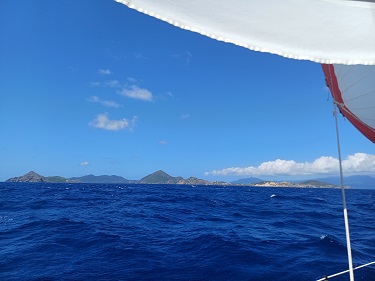
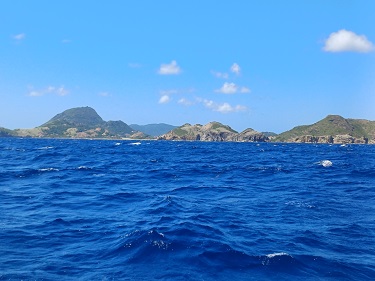
We had another fast and furious sail on a beam reach and arrived in Marigot Bay shortly after lunchtime. The colonial powers seemed to lack much imagination in place names, either naming them after places back home or recycling other place names. There is a Marigot Bay in Saint Lucia, Dominica and Les Saintes and I’ll bet there are others too!
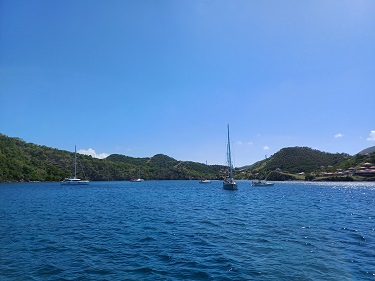
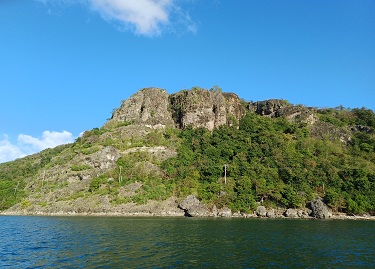

We were immediately greeted by another British flagged boat who had just anchored in front of us and the crew later swam passed for a chat. Steve and Carol are 20 years into their liveaboard life and it was great to hear about all their adventures over drinks that evening. We liked them a lot and hoped to catch up with them again somewhere on our respective trips north.
We were very excited to be arriving in Guadaloupe. We were excited to have a safe and secure berth from which to have the opportunity to hire a car and explore the island and I was particularly excited to visit the filming location of one of my favourite Sunday night TV shows, Death in Paradise. We did not, however, anticipate that we might actually witness a real death in this paradise.
Every now and again, something happens to give us a timely reminder of just how precarious life on the water can be. Having just escaped the swell that had grounded so many boats on Martinique and Dominica we weren’t anticipating another lesson quite so soon. But as I checked us in at Marina Bas du Fort, a very distressed woman came into the office. I could make out the words blessé and grave and could understand that she was asking for the car park barrier to be opened for the ambulance.
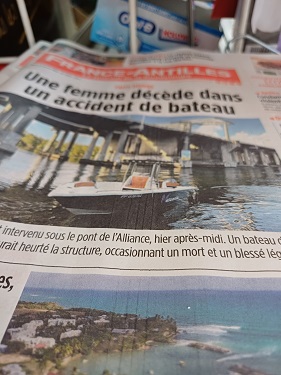
Walking back from the office we saw a small motor boat alongside the dock and several very shocked and upset people. There were a number of police officers around a small motor boat and a pair of very pale legs sticking up in a very unnatural way. We later learnt from the local media that a young Belgian tourist had died when the boat had hit the pillar of a bridge. It was shocking to see and another reminder that life on the water can sometimes be very dangerous indeed.
Happy to have a few days on land, we were able to hire a car and take a day trip around the island of Basse-Terre, which despite its name meaning low land, is actually 1400 metres above sea level. We drove on the Route de la Traversée across the centre of the island into the rain forest clad mountains.
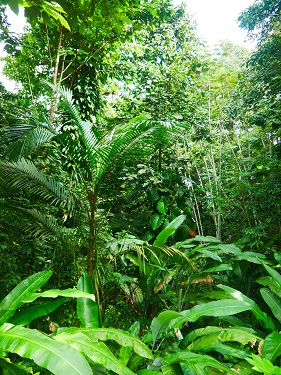
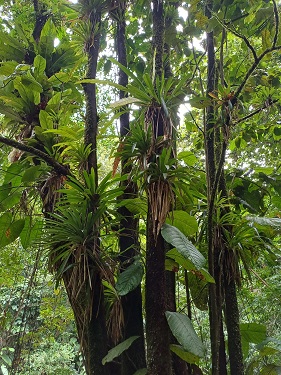

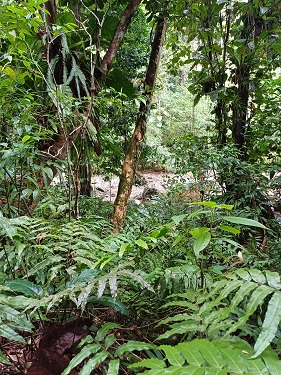
We stopped and took the short walk to La Cascade aux Ecrévisses – Crayfish Falls.

We were, however, very far from alone at the falls so we took another path to a picnic area beside the river
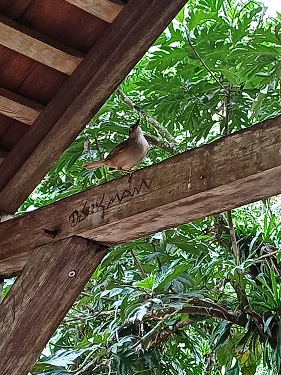
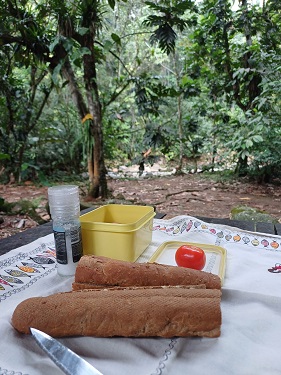
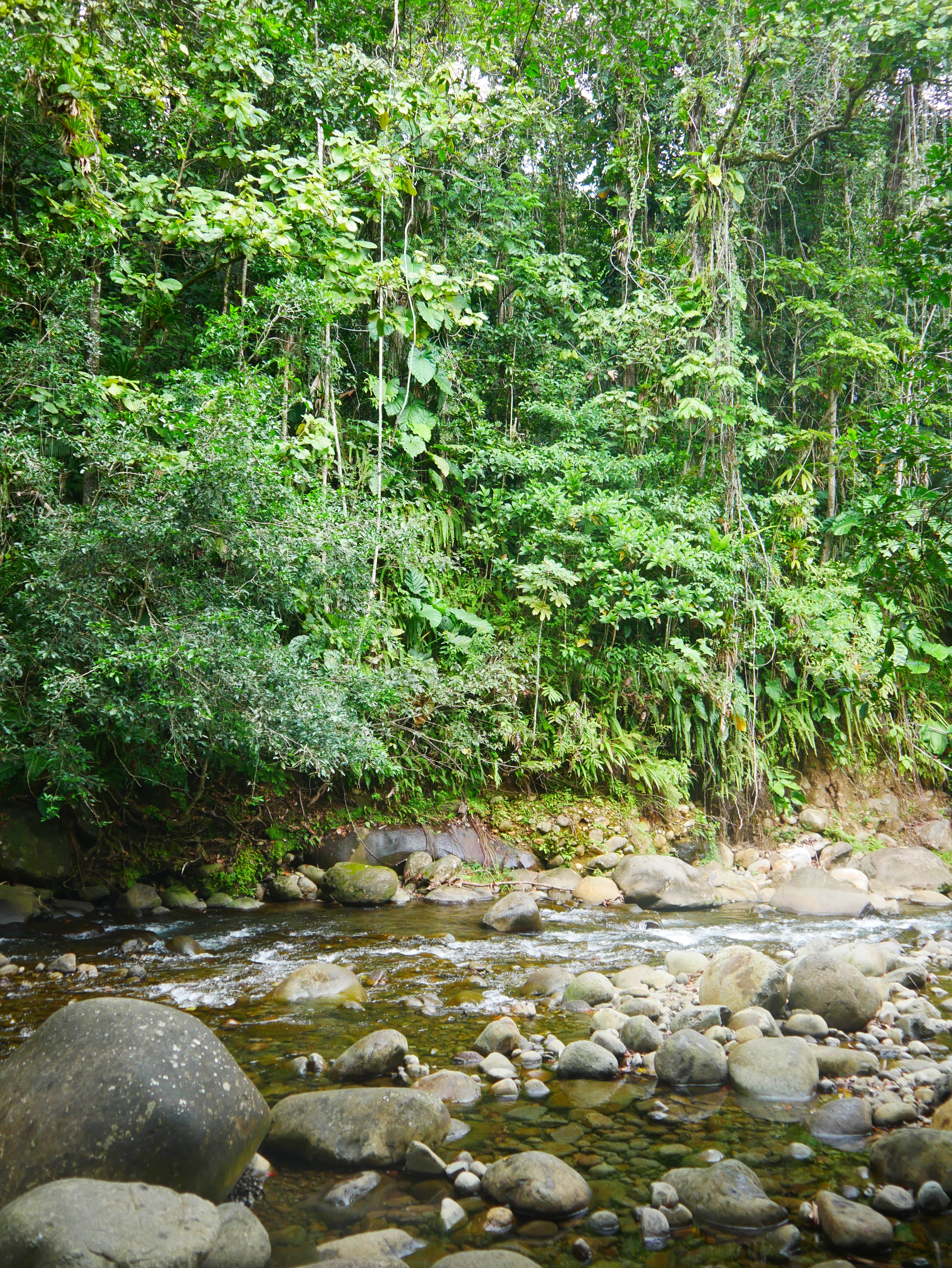
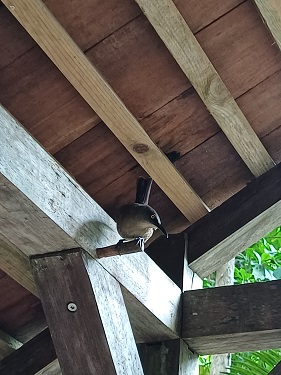
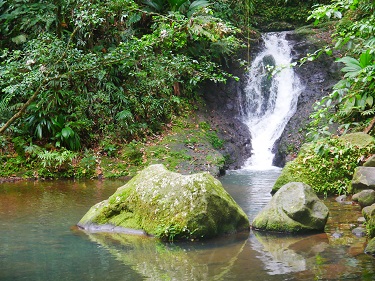
where we enjoyed our breakfast completely alone except for the company of the unique trembler birds. A blackbird sized bird with a long curved beak, it is their odd wing flickering gives them their name. A short distance away from our picnic table we even had a cute little waterfall all to ourselves.
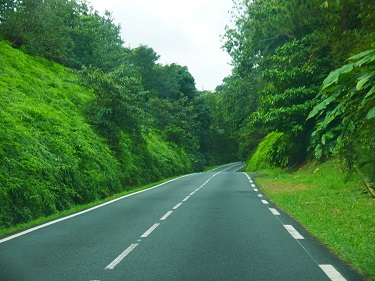
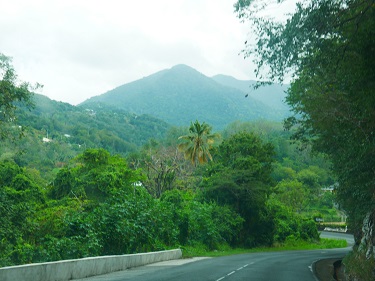
We continued back down the mountains, through the lush landscape, to the west coast of the island and then turned north to head to the top. Just outside our planned stop at the town of Deshaies, we saw a sign to a botanical garden. Never known to turn down an opportunity of some gardens, we made an unscheduled stop.
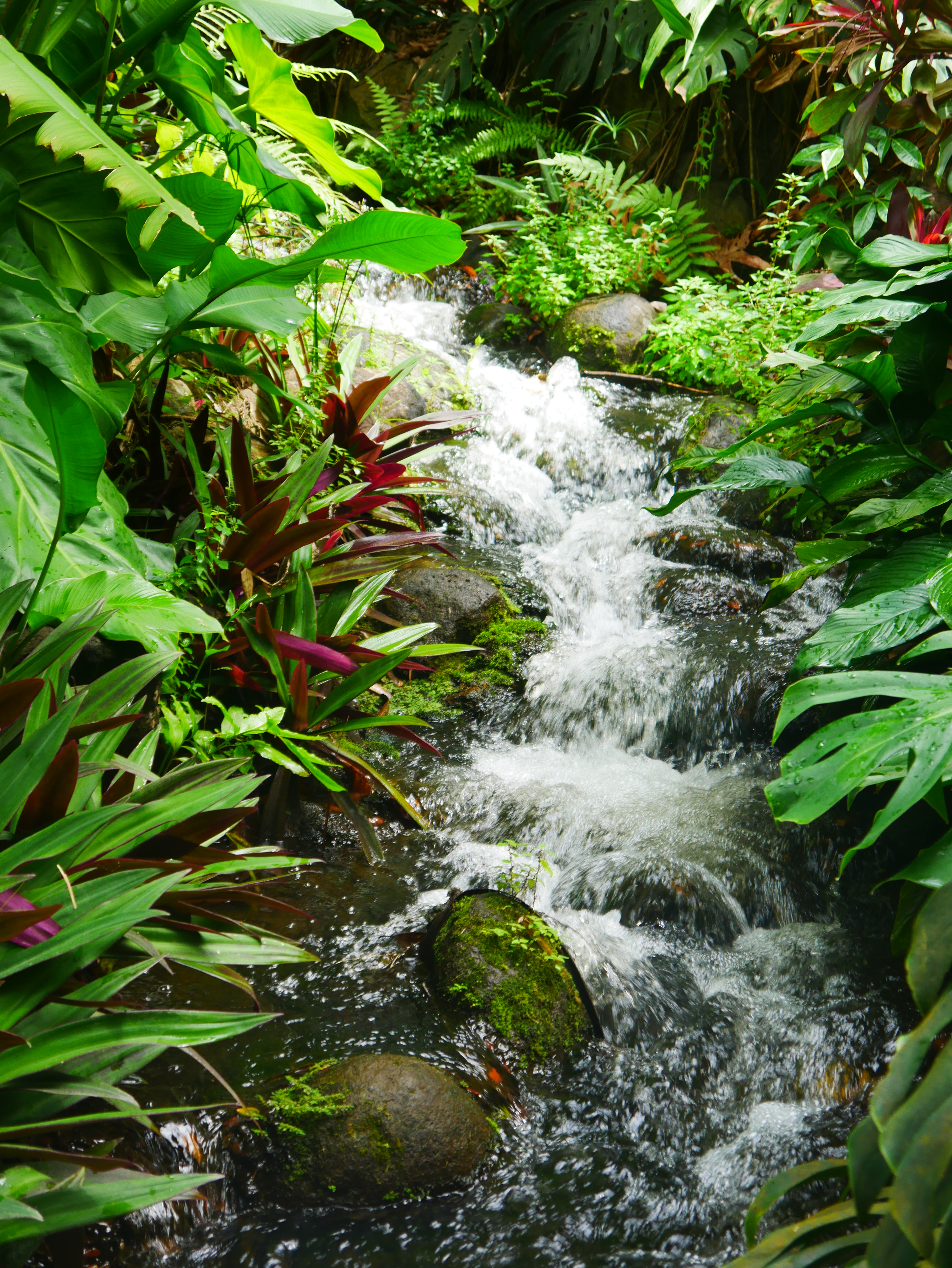
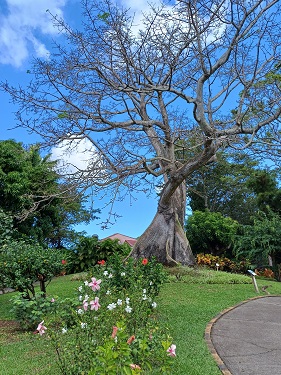

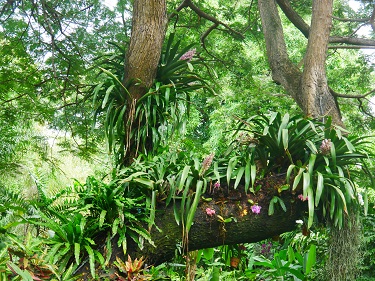
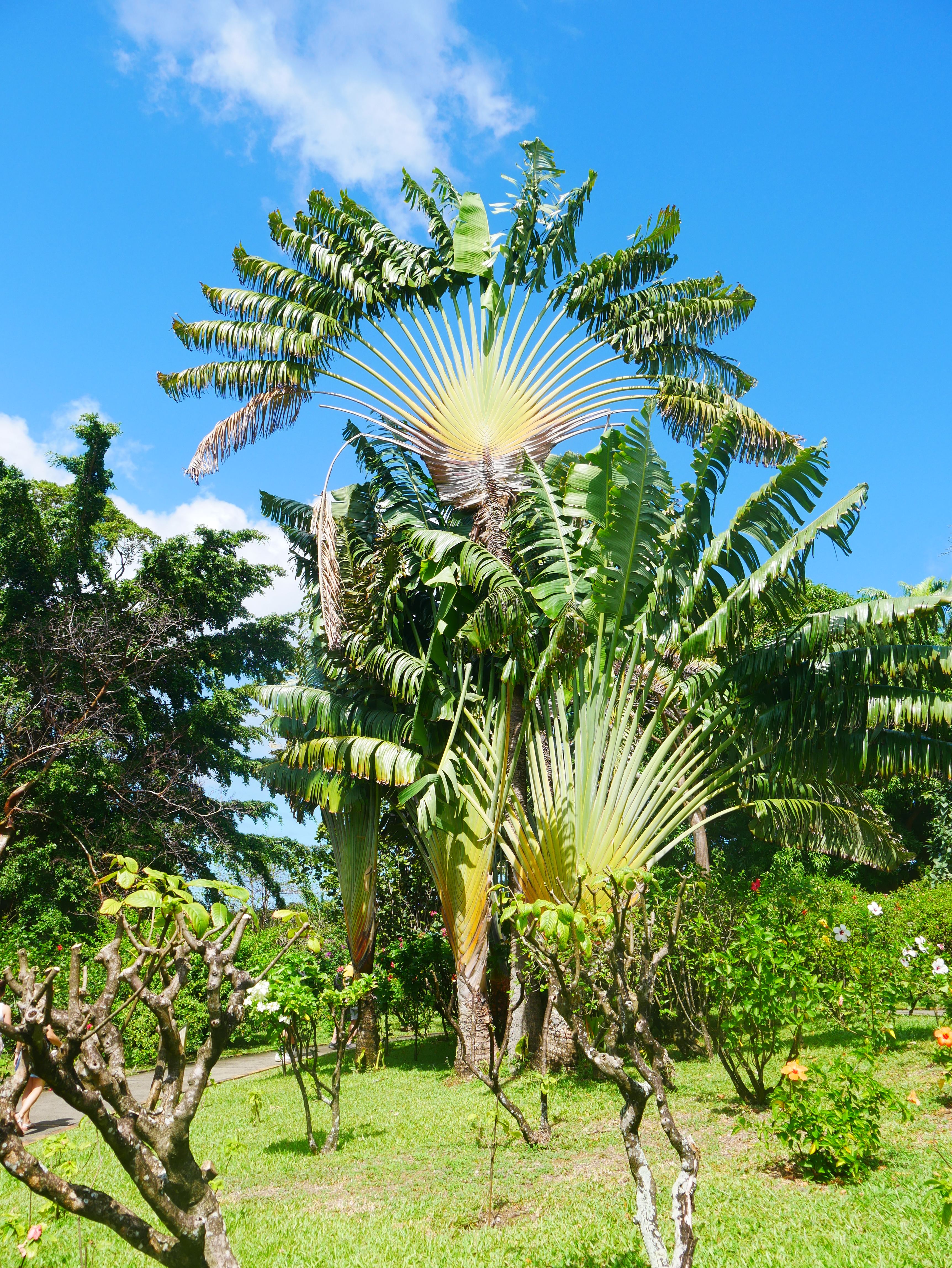
The gardens were stunning, full of interesting trees and wonderfully cooling cascades.
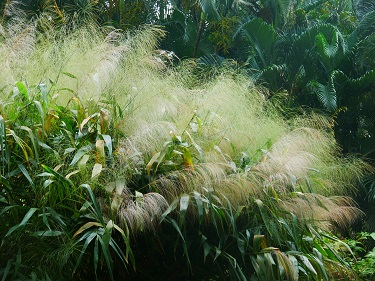
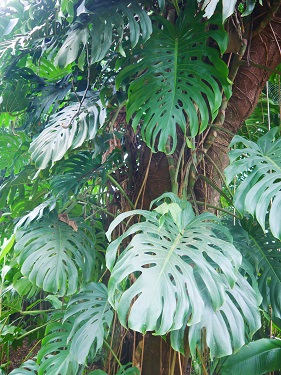

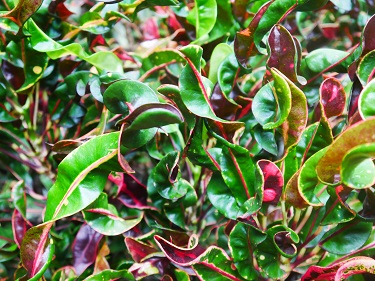
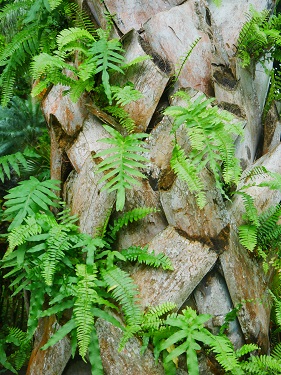
There were so many different textures and patterns amongst the plants
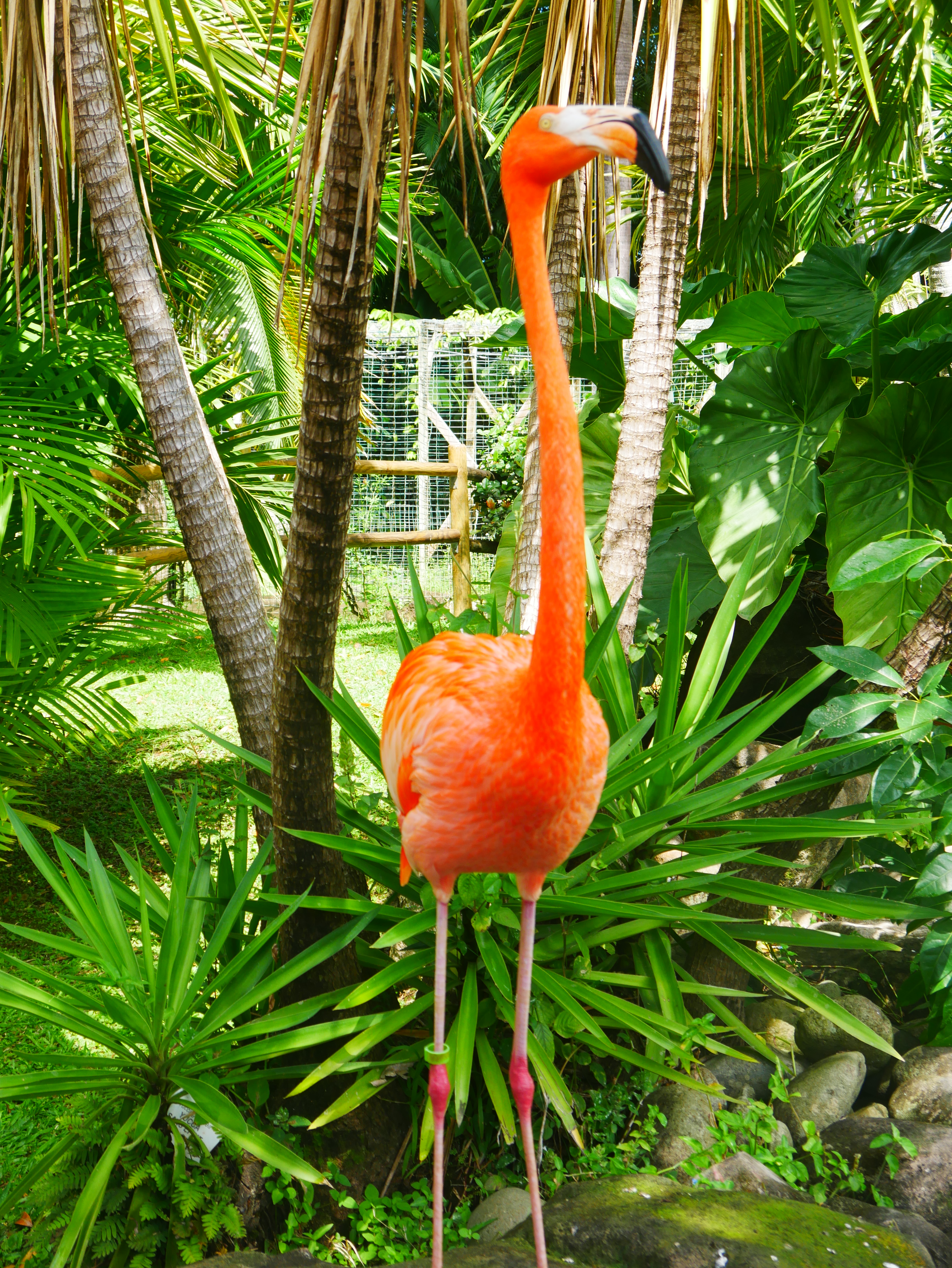
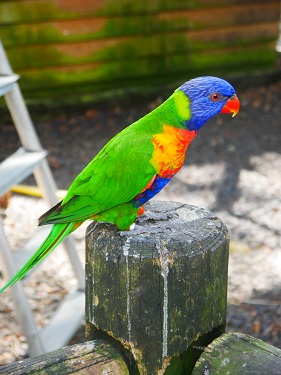
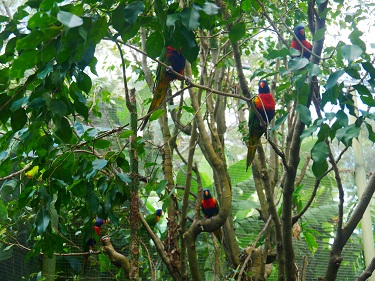
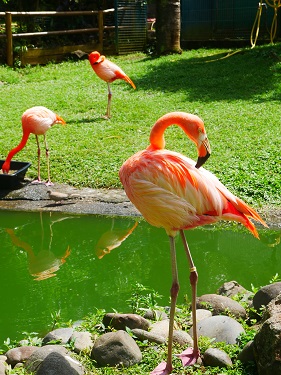
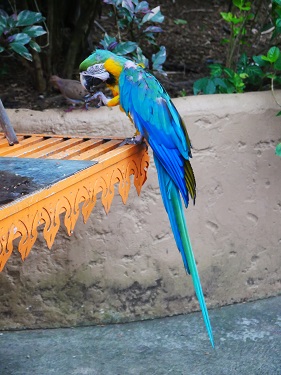
and lots of brightly coloured birds.
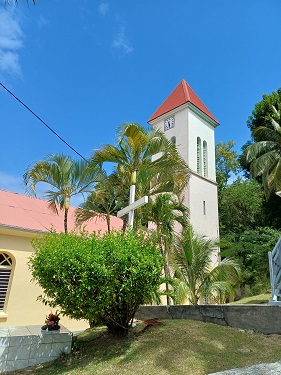
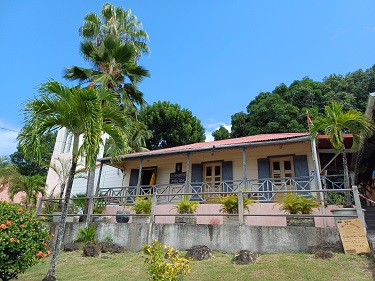
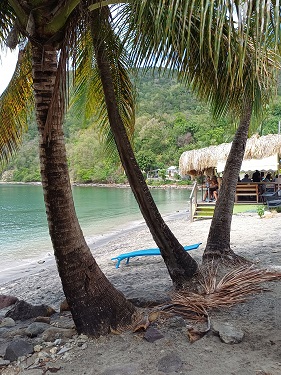
From the gardens it was a very short drive downhill into the small town of Deshaies (pronounced without the sh in the middle!). Instantly it felt familiar, to me at least. Used as the fictional town of Honore in the BBC’s Death in Paradise series, the police station, church and Catherine’s bar are all there.

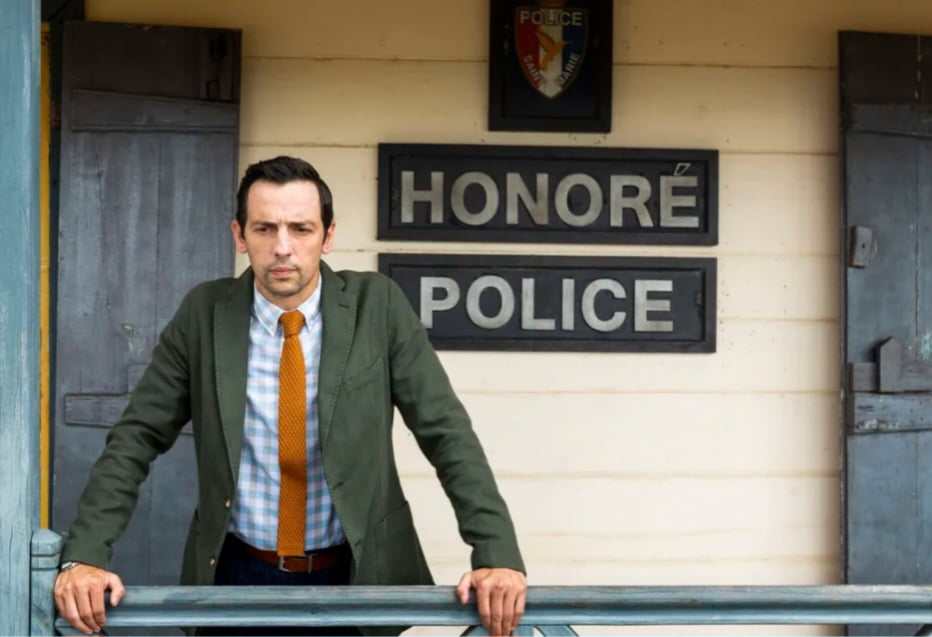
While Stefan mumbled things about ‘colonial nonsense’, I had a nose around the police station which opens as a museum when they are not filming.

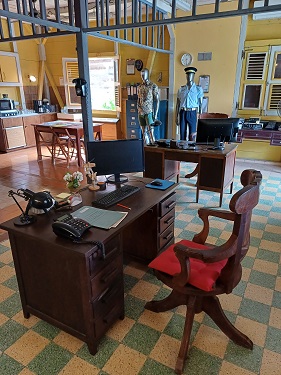
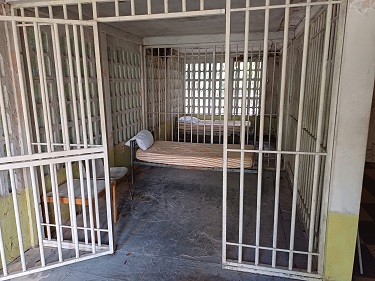

Inside are all the desks so familiar you expect the Commissioner, Marlon or Florence to walk in at any moment. The cells were empty, awaiting the next suspect.

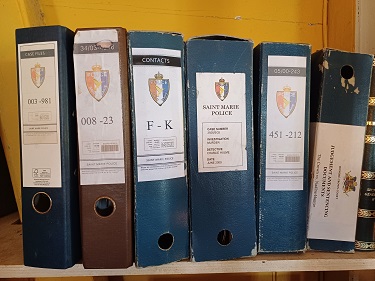

The attention to detail in the props was exceptional. The only inside scoop I got from the woman selling the tickets was that the BBC are committed to two more series after the current 10th and I look forward to watching them with a whole new perspective.
I do agree with Stefan that there is more than a touch of the white saviour about the casting of Death in Paradise so sitting at the Inspector’s desk I had a quiet little word about how they might improve their recruitment and perhaps look more locally for the next one!
We hadn’t had a good walk for a while so the next day we decided to walk from the marina to the centre of Pointe-à-Pitre. We wanted to visit the highly recommended Memorial ACTE museum.
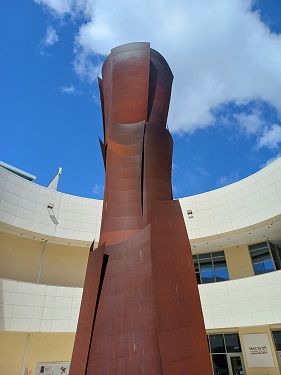
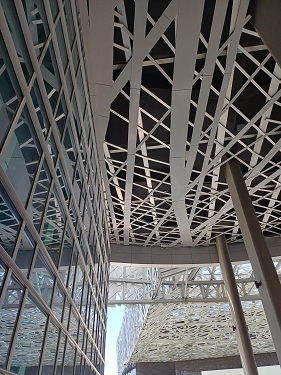

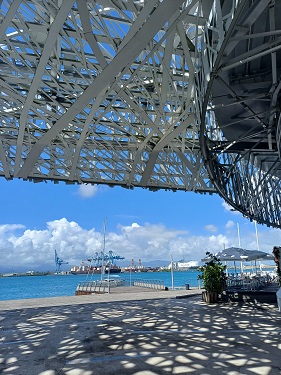
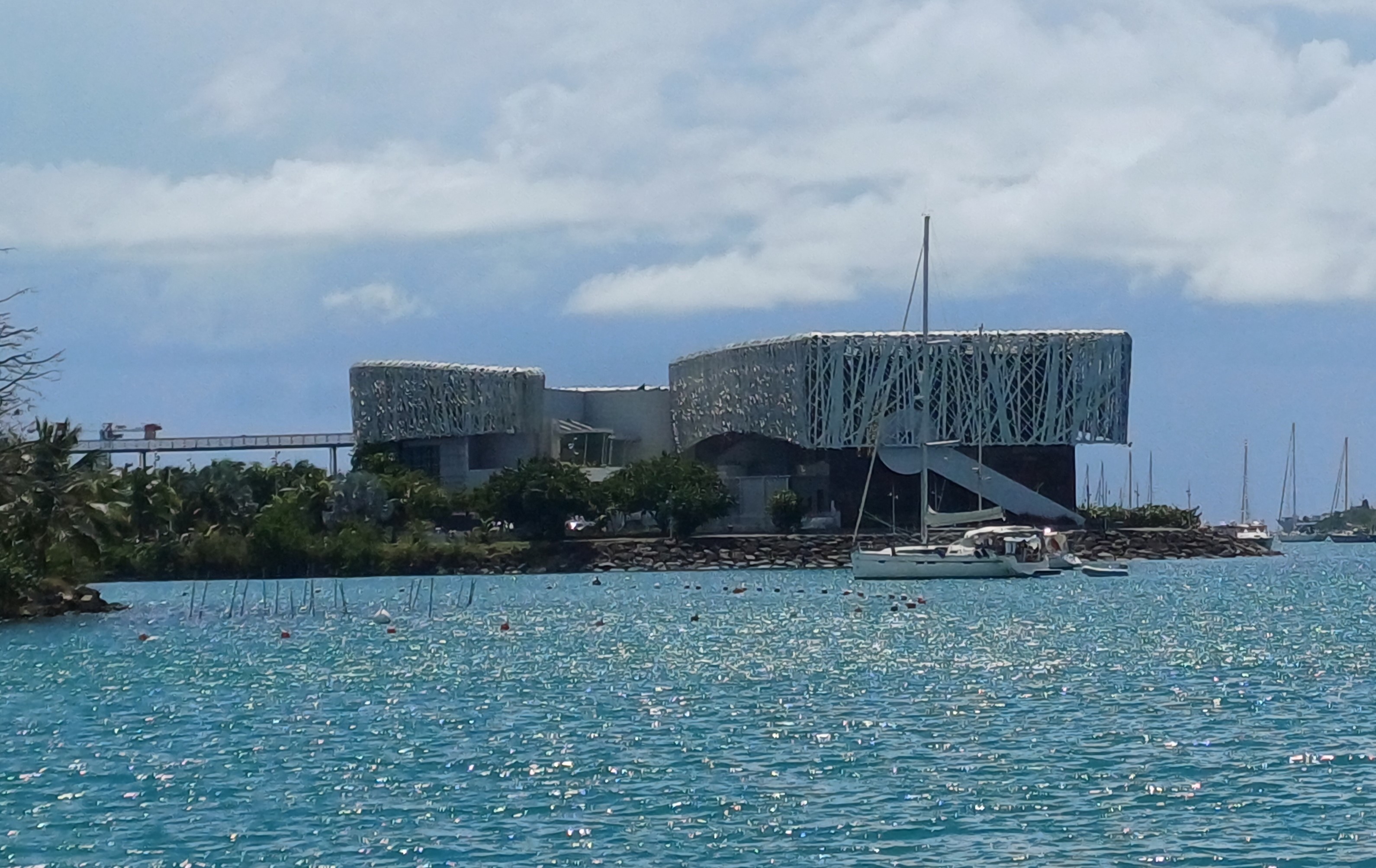
A stunning piece of architecture built on the riverside site of an old sugar processing plant, this was the first place we had found that addressed the reality of slavery head on. Through incredible multimedia artworks and music, sometimes surprisingly beautiful, always arresting, it told the story of the millions of men, women and children transported in chains from Africa to work in the plantations of the Caribbean. It addressed the roles of monarchy, government and church in enabling, even encouraging, slavery. It was as brutal and confronting as it needed to be. Photography was not allowed inside this important space but the imagery created by its sculptures, films and artifacts burned images that will remain long in our memory. Importantly, it felt as though this was a place that honoured the lives and the memories of enslaved people not just in the French colonies but throughout the Caribbean and beyond.
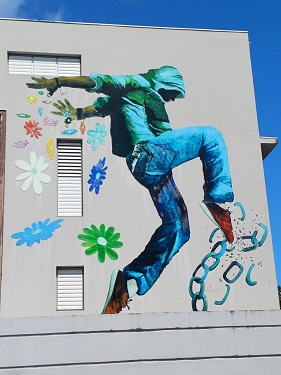
Freedom from chains was a theme that continued outside the museum as we continued our walk from the museum into the centre of Guadaloupe’s capital.
It’s fair to say that the town has a bit of a reputation.
“Pointe-à-Pitre is a fairly uninviting place – a graffiti-sprayed concrete jungle of art-deco and socialist-style architecture, decaying traditional houses and terrible traffic” says the Lonely Planet
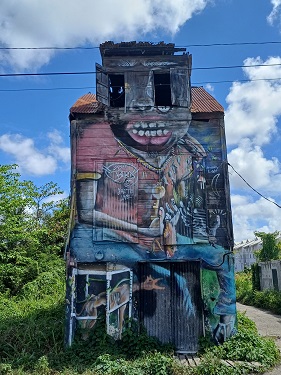
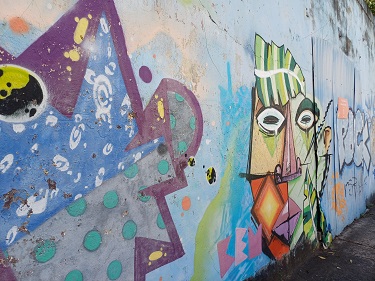

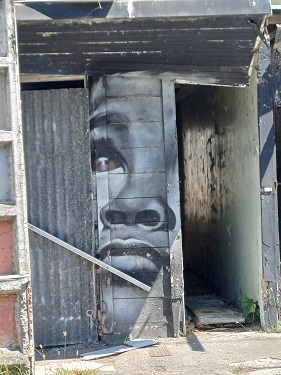
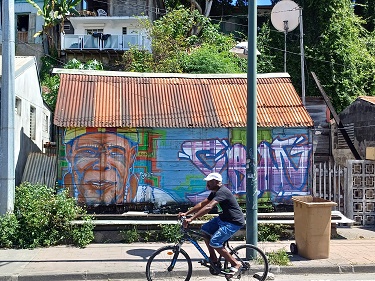
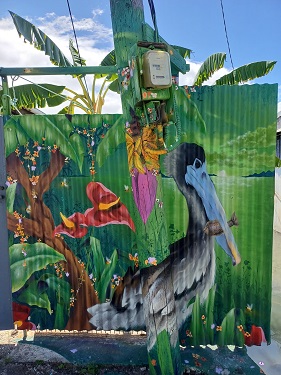
But one person’s graffiti is another’s street art and the city’s street art game was strong! We loved the bright murals along the way.
We also found this very evocative sculpture in Place de la Victoire.
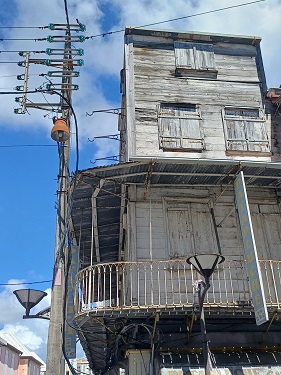
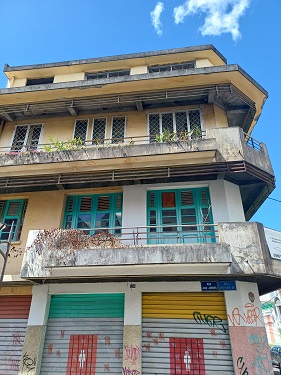
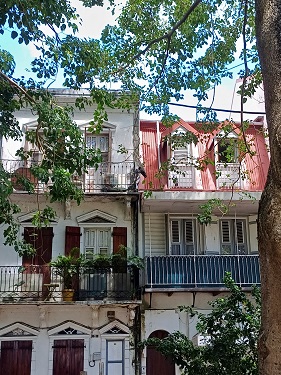


Balconies too were a defining feature of Pointe-à-Pitre. Whether on the wooden colonial buildings, the 1930s concrete blocks or the thoroughly modern metal facades, they all had a charm of their own despite their sometimes weather beaten appearance.
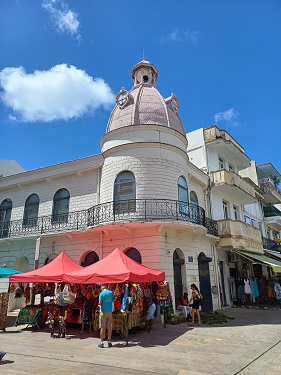
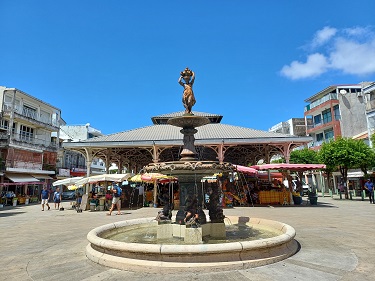
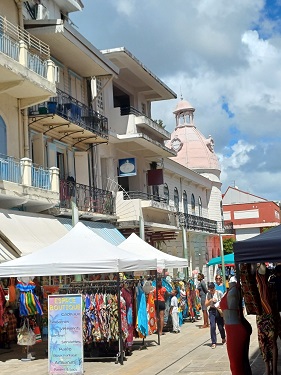
We stopped for a drink amongst the market stalls serving the cruise ship passengers in a square that felt very French.
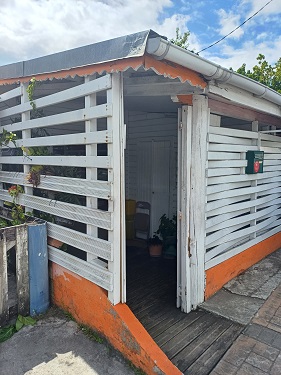


Walking back to the marina Stefan spotted an almost hidden doorway to a restaurant and we decided to stop for lunch. We hadn’t eaten out since Saint Lucia and even then we hadn’t really sampled any real Caribbean food so this was our chance. We enjoyed beautifully cooked fresh fish dishes and a selection of local root vegetables over looking the harbour.
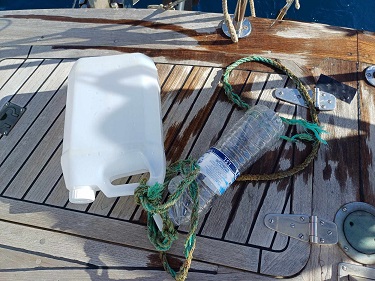
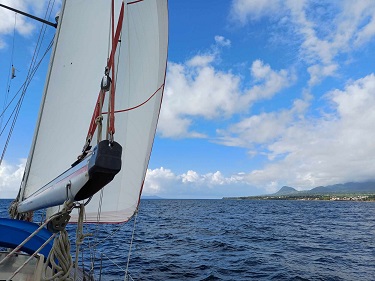
Our holiday in the marina was over and when we got some favourable but light wind we left to return to Deshaies, by boat this time. We had some drama on the way. After years of managing to avoid getting caught up in the fishing pots of Europe, we heard a repeated clunking sound on the hull. In thankfully very calm conditions we were able to stop the boat so Stefan could get in the water to release the rope and recycled buoys.
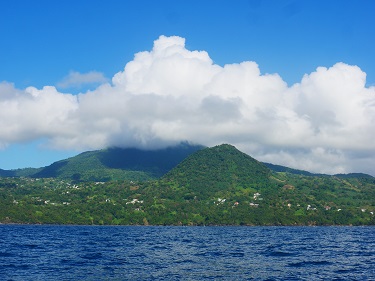
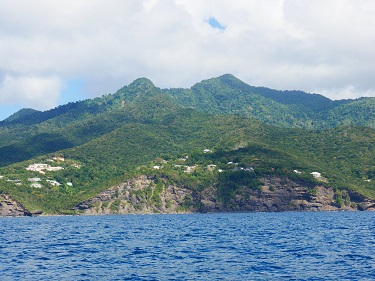

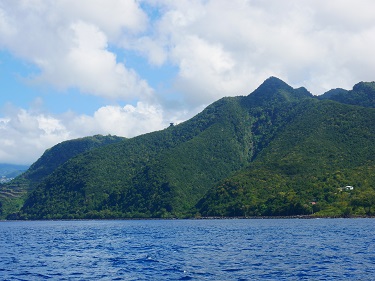
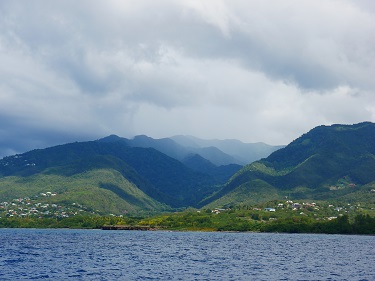
Drama over, we could enjoy the spectacular scenery of the southern tip of Basse-Terre.
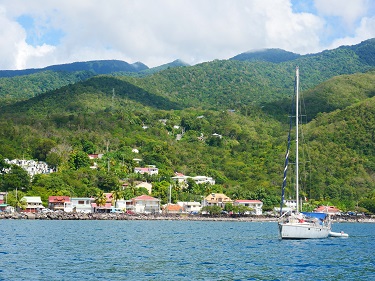
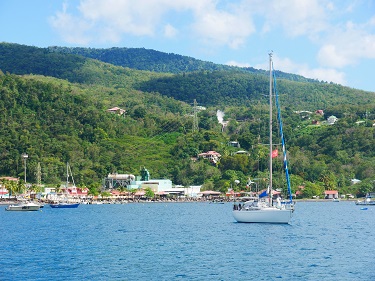
We broke our journey with a night at Bouillante. This small town’s name means boiling in French because it sits besides a geothermal spring. As well as fuelling a geothermal power plant, the hot springs are a big tourist draw but we didn’t have to join the crowds. Just swimming around the boat we found the water was, if not boiling, very warm indeed.
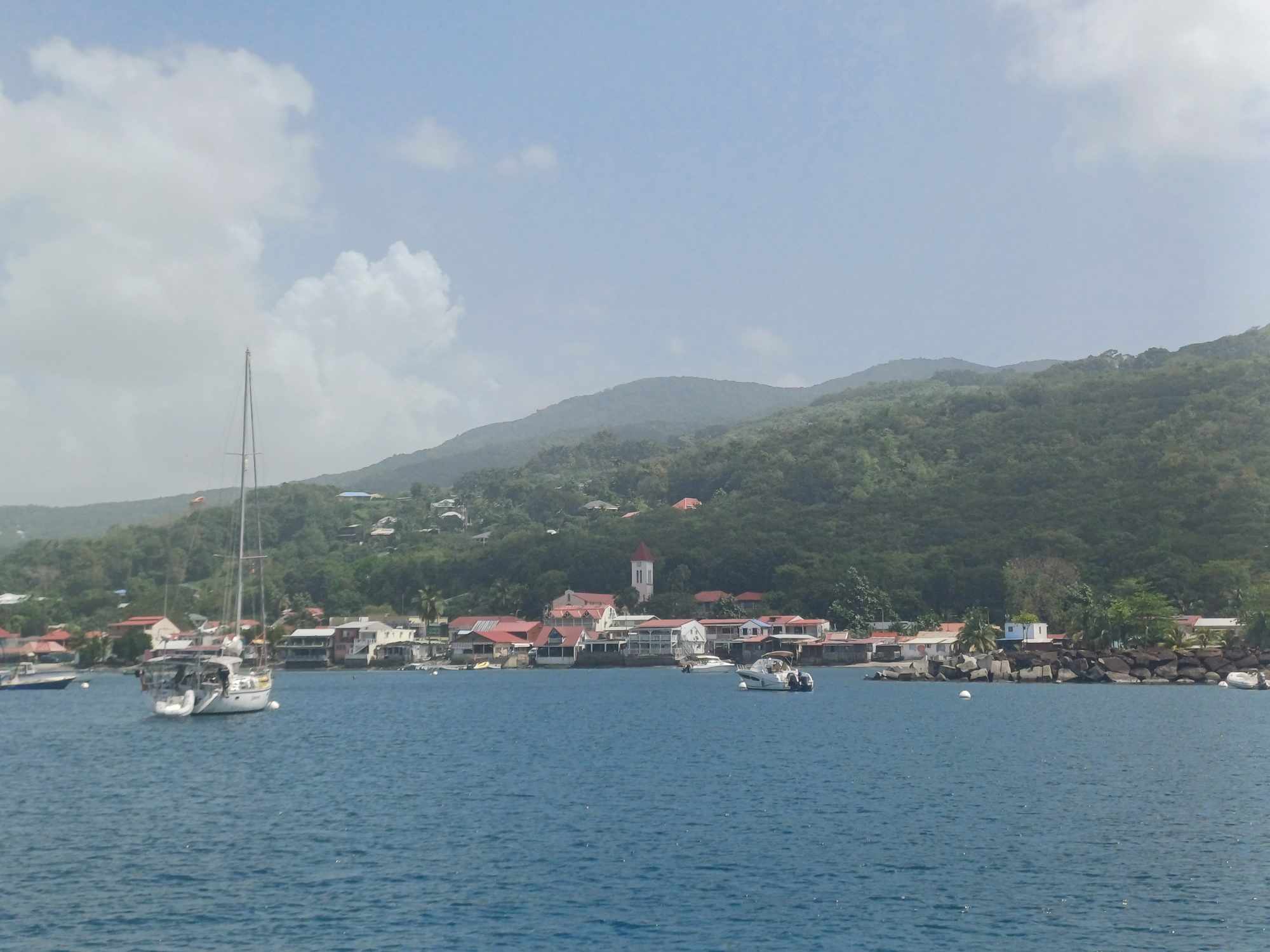

We continued up to Deshaies and took a mooring buoy in the well protected harbour.
Death in Paradise location aside, this cute little town had captured our hearts and we dinghied into the fishing harbour and had another walk around.
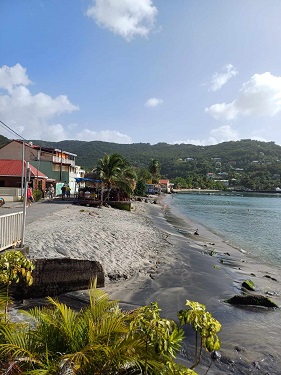
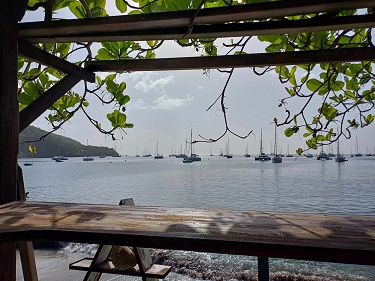

We stopped for the most delicious, homemade coconut sorbet and a drink at the café that looked out into the bay.
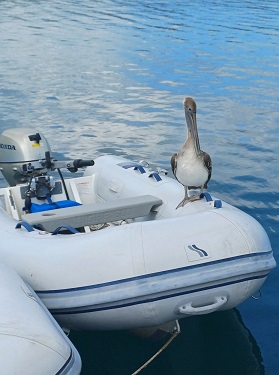
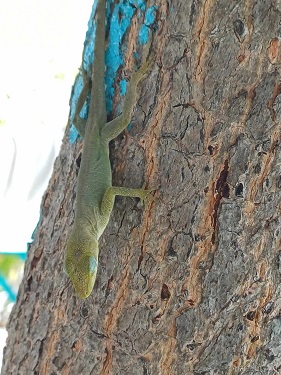
Returning to the dinghy we found a friendly local guarding it for us!
Deshaies was the perfect place to end our stay in Guadaloupe before checking out of the island and heading up to Antigua. We had planned to sail overnight in the cooler temperatures to arrive in the morning but in our impatience we left a little earlier than we should have…
 Adventures with Pintail
some great pics. Love all the vegetation and balconies and graffiti!
LikeLike