
14 to 17 February 2024
Saint Pierre, Martinique to Roseau, Dominica, 15° 17′ 12″ N, 61° 22′ 63″ W, 36nm, 6 hours 30
to Portsmouth, 15° 34′ 73″ N, 61° 27′ 77″ W, 20nm, 4 hours 30


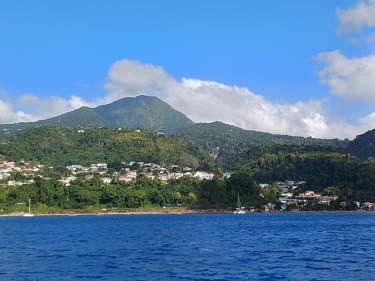

We had another wonderful sail over to Dominica, a fast beam reach at sometimes 8 knots. It’s fair to say that Pintail is loving the Caribbean even if her crew are finding it a bit challenging!
We were greeted at the Seacat moorings outside Dominica’s capital, Roseau, by Roots who tied us up with an incredibly relaxed Caribbean charm. We jumped in the dinghy and whizzed up to the ferry terminal to check in to this new country. We had heard they charge overtime after 4pm but we couldn’t find anywhere to safely tie the dinghy so we returned to speak to Seacat.
Their dinghy dock was another precariously high concrete dock and the swell was causing the dinghies to move around a lot. I was just about able to climb up but Stefan wanted to stay with the dinghy just in case. Whilst I confirmed we could go to customs in the morning, and even with Stefan being there, the dinghy still got bashed around on the rough concrete. As we tried to leave the swell caused the dinghy to lurch into more shallow water, catching the propeller on the rocks and then nearly tipping Stefan and the dinghy upside down on the beach. Despite an initial good feeling about Dominica, once again the absence of a safe place to leave the dinghy left us seriously wondering what we were doing here. What was the point of being in the Caribbean if we couldn’t safely get off the boat and leave the dinghy to explore? We were at the end of our very frayed tethers.
As though he had heard our thoughts our Danish neighbour came over in his dinghy. He wanted to tell us the secret to finding the customs office at the ferry terminal. We were grateful for the information but also, as we got chatting, grateful to hear that it was not just us who was finding the Caribbean a challenge.
We decided we didn’t want to risk leaving the dinghy on the pontoon to return to customs the following morning so we asked Roots to collect us. He arrived promptly at 9am and cheerfully delivered us the few hundred metres to the dock. Without the worry of the dinghy getting bashed on concrete and rocks we felt so much more relaxed as we walked along the main road to Roseau, the island’s main town.

Just along the road,we found this house with an affirmation we decided to adopt after the gloom of the night before. This would be a good day!

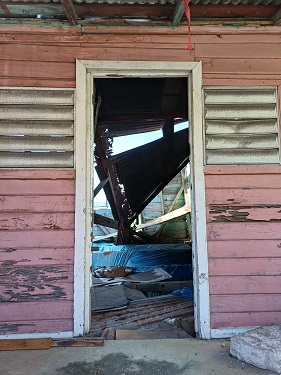


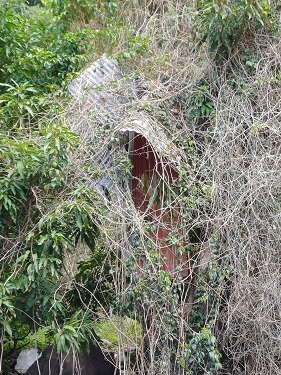
It doesn’t take long on Dominica to see the impact of hurricanes on the island. Hurricane Maria stripped the island bare in 2019 and the damage from her forces is still only too visible. Look up in the trees and you can see the corrugated iron sheets that had once been roofs.
A cruise ship dominated the town dock of Roseau and we were mistaken for German passengers by the many taxi drivers hawking their tours. Having politely declined their offers, we found the busy ferry terminal and the metal gates our Danish friend had told us about to find Customs. In efficient fashion we got our entry and exit papers enabling us to spend up to 14 days on the island.


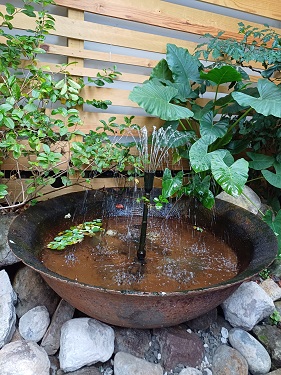
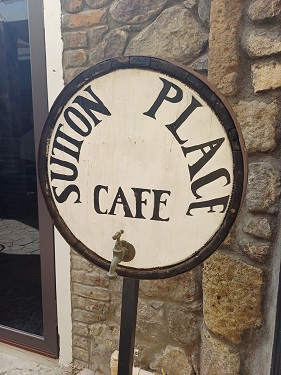
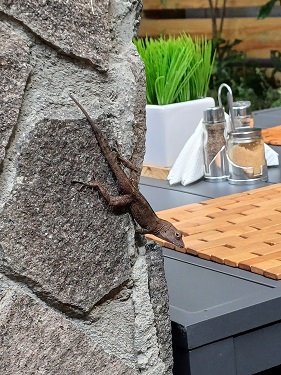
Legally in the country, we wandered away from the waterfront and into back streets with familiar names, Drury Lane, Old Street and Bow Lane. (No prizes for guessing who the colonisers were here!) In Sutton Place, we found an oasis of a place hidden away, a tiny courtyard cafe with a cooling fountain and delicious iced coffee. We loved it so much we stayed for French toast and a breakfast toastie respectively. And we even made a friend of the tame lizard! It gave us the perfect respite from the trials of dinghy docks.
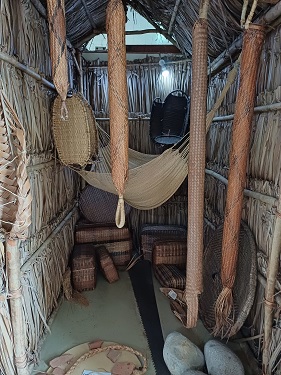
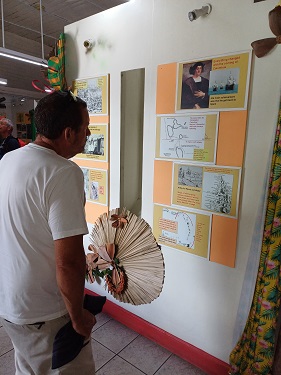


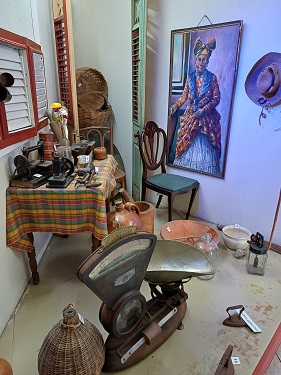
Enjoying our new found carefree freedom we walked back towards the waterfront to the much recommended local museum. There in a series of wonderfully low tech tableaux and wall displays we learnt the potted island’s history, geological, social and political, from the eruptions that formed the island and the original Kalinago people through colonisation by the British, the sugar trade and the emancipation of the slaves to today’s political leaders. There were even coins, much to Stefan’s disdain!
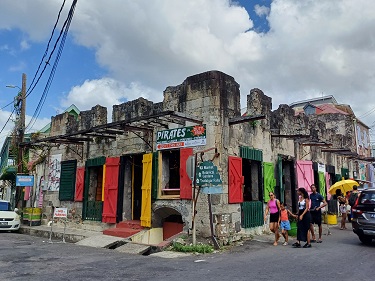
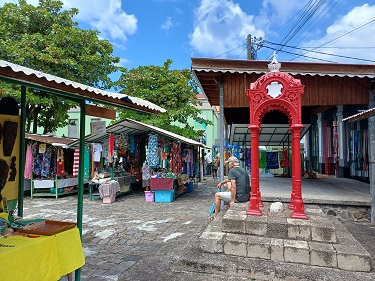
Outside again, the old cobblestone market behind the museum which once sold men, women and children to the colonial plantation owners, now sells tourist tat and handicrafts.
But we had other shopping plans. We had learnt about local author, Phyliss Shand Allfrey, in the museum but also in our research about Caribbean writers so our next stop was a book shop promising a chance to buy a book of hers or another local author.


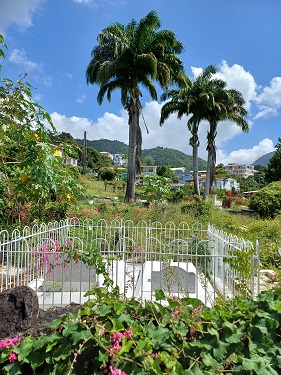
As well as delivering a copy of Allfrey’s The Orchid House, the bookshop had a surprising selection of 100th birthday cards and one thing we learnt about Dominica is that is has the largest number of centenarians, each having near celebrity status on the island and publicly mourned when they die. At the cemetery in town, the first grave we came across was a woman who died at 103!


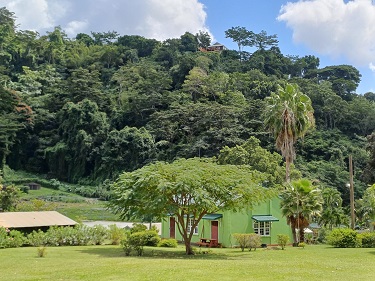
We ended our stroll at the botanical gardens where there was another reminder of the power of the wind but despite a couple of enormous trees there was not much shade so we headed back to the boat.
This simple walking tour of Roseau truly lifted our spirits. Roots, spliff in mouth, returned us to Pintail. We’re not sure he appreciated just how much his lifts had meant to us.
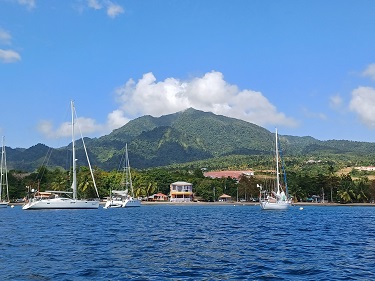
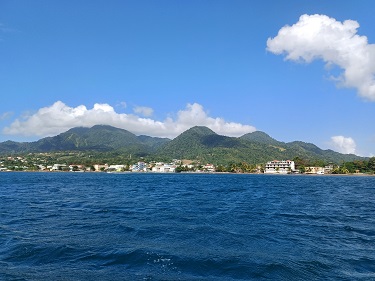

The following day we sailed north to Prince Rupert Bay and the town of Portsmouth. It looked nothing like its namesake, surrounded by lush green mountains, but seemed just as popular for boats!
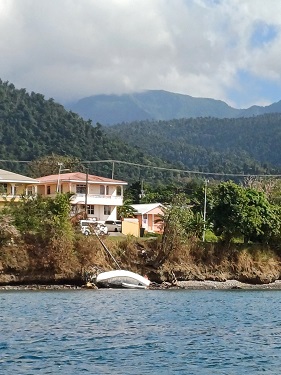
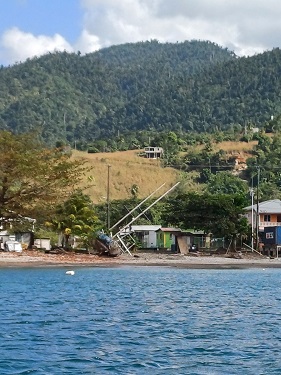

It didn’t take long to find out that the swell we had experienced on Martinique had also reeked havoc here. It seems it had caught everyone just as unaware.

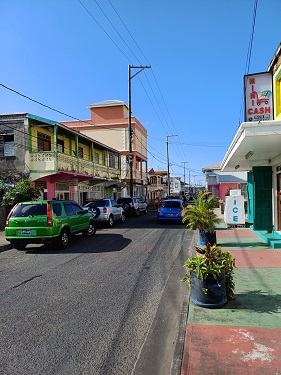

Apart from being a popular spot for cruisers, Portsmouth is an everyday town not touched much by tourism. Able to leave our dinghy at the fishermen’s dock close by, we picked up some vegetables at the market and wandered along the main street, bemused by all the recycled gas bottles fashioned into barbeques! There was something instantly warm about the people of this little town. They were without exception so friendly and welcoming.

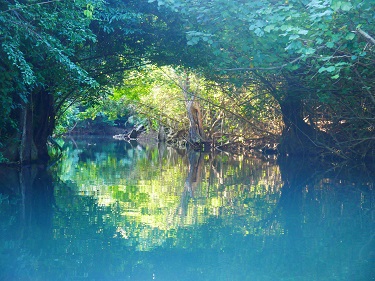
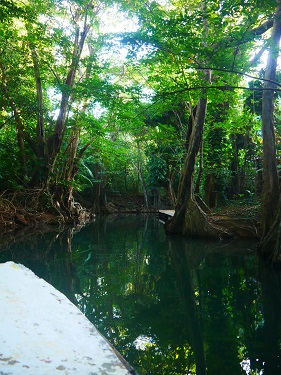
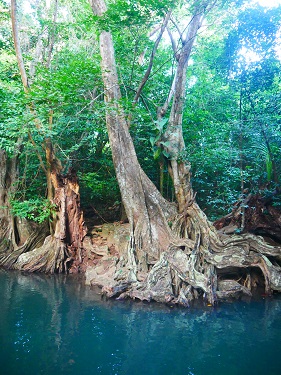
At sunrise the next morning we took a tour of the Indian River with local guide, Providence. As he rowed us silently through the shallow waters we saw two of the three endemic species of heron, egrets, bananaquits and hummingbirds catching spiders for their young. Lizards and crabs darted around on the banks.


Providence taught us an incredible amount about not only the flora and fauna of the island but also its history and culture. On a walk through the swamp area he started to talk about the devastation caused by hurricane Maria in 2017. It was obviously an incredibly traumatic event for the island and its people. He said it had stripped every tree of its leaves and destroyed just about everything.
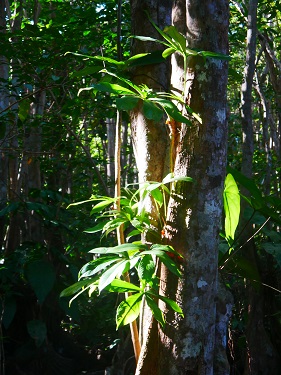


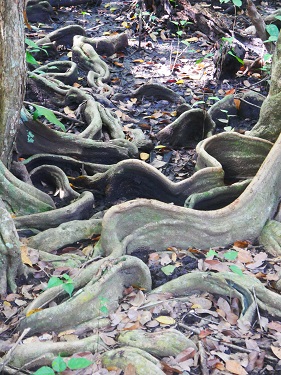
It was hard to believe standing amongst all the roots and shoots. Nature has certainly bounced back.
On our return down the river, Providence broke into a rendition of Dominica’s national anthem.
Isle of beauty, isle of splendour,
Isle to all so sweet and fair,
All must surely gaze in wonder
At thy gifts so rich and rare.
Rivers, valleys, hills and mountains,
All these gifts we do extol.
Healthy land, so like all fountains,
Giving cheer that warms the soul.
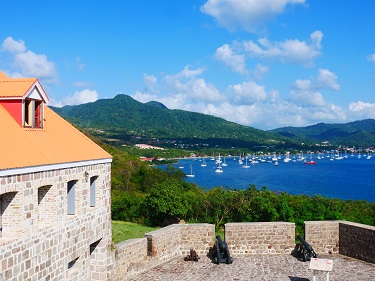


Later in the day, we hiked over to Cabrits National Park, the peninsula in the north of the bay which provided a strategic defensive post for the British in their ongoing skermishes with the French for supremacy in the region. From the rather over-renovated Officer’s Quarters there were wonderful views over the bay and surrounding area.
In 1802 the fort was the site of revolt by the 8th West Indian Regiment. The soldiers bought as slaves took control of the fort for three days in protest at living and working conditions. Their brave action resulted in the freeing of all serving Black soldiers purchased as slaves by the British throughout the Caribbean.


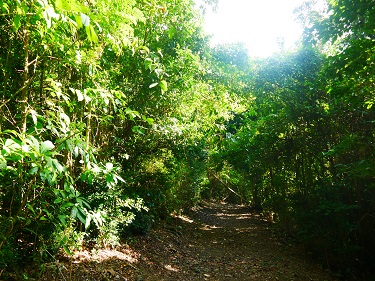
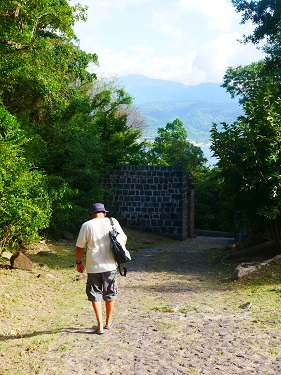
Along the trails of the park there are the ruins of other buildings, abandoned since 1854 and disappearing amongst the jungle plants.
We were very tempted to stay on longer in Dominica. The interior promised so much to see and even in our short time there, it had become our favourite island by far. As the song promised, it had really cheered us up and warmed our souls.
But in order to have a bit of respite from the trials and frustrations of constantly being at anchor, we had booked ourselves into a marina on Guadaloupe and so we had to move on.

We did so, taking with us a little reminder of our short but sweet stay – a reed bird made by Providence…
 Adventures with Pintail