12 to 22 May 2024
Charleston, South Carolina to Wrightsville, North Carolina, 34° 12.13′ N, 77° 48.12′ W, 157nm, 27 hours
to Beaufort, 34° 42′ 90″ N, 76° 39′ 97″ W, 75nm, 13 hours 30 minutes
In the anchorage at Yorktown in the Ashley River opposite Charleston we got our first taste of the extreme and unpredictable weather of this part of the world.
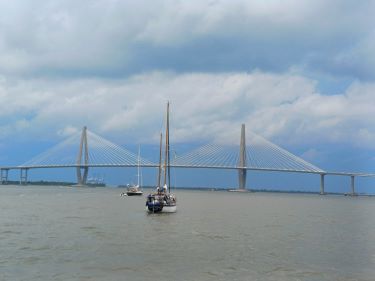


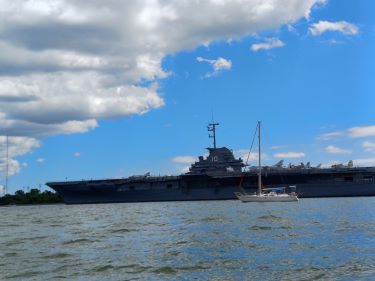
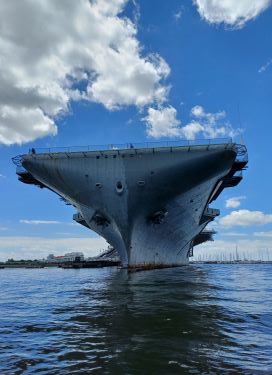
We anchored in the shadow of USS Yorktown, a former aircraft carrier now museum, just down from the Ravenel Bridge. It was nice and calm despite the strong current of the river and the thousands of little motor boats coming and going.


Then one evening, apparently out of nowhere, we suddenly got a tornado and severe thunderstorm warning and just as quickly the boat was hit with huge gusts of wind followed by a deluge of rain and thunder and lightning all around. Mercifully it was over quickly and there was no tornado but the lightning map revealed just how close one strike had been. Although we were working hard to avoid hurricanes, we were obviously going to have to learn to live with some other extreme weather.
We waited a few days for the thunderstorms to pass through before we went to sea again but when a window appeared we took the chance to get further north and ahead of the hurricanes.
After an uneventful night and day navigating around Cape Fear (no sign of a psychopathic Robert de Niro!), we arrived at the inlet at Wrightsville Beach. The inlets on this coast are notorious for their shallow waters, shoaling and fierce currents so arriving at slack water at the top of the tide was a priority.

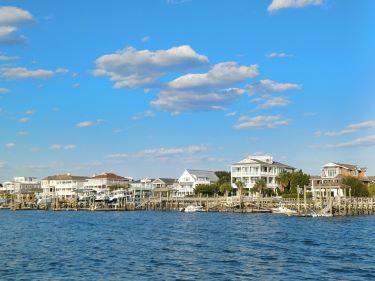

With a little help from the engine we arrived at bang on high tide and breezed through the entrance without any problems and round the long thin island where families were playing on the inside beach. Suddenly we were in a completely different place to oldy worldy Charleston. Here the waterfront was lined with multi million dollar homes with boats to match on their personal docks. Inside the island we found a wonderfully calm anchorage tucked in amongst all those houses.


The town of Wrightsville is sandwiched between the ocean beach and the Inter-Coastal Waterway (ICW) which allows boats with shorter masts than Pintail’s to avoid open ocean passages. We took the dinghy up to the ICW to see what we were missing. It was like a busy motorway of motor boats running up and down. We weren’t sorry to be missing it. We also spotted our first Trump flag in this Republican leaning State.

We were delayed in Wrightsville for a couple of days. Firstly, Stefan went down with a nasty throat infection. And then the sky turned dark and another thunderstorm hit!
It was very dramatic!
When Stefan didn’t feel better, I prescribed him some of the antibiotics we had on board from the Atlantic crossing and he started to recover. He wasn’t feeling 100% when I declared we had a window to make the long 75nm hop up to Beaufort. We were starting to get a bit worried about time and needed to keep pushing on.
Luckily it was a straightforward day at sea and Stefan could continue his recovery whilst I took over temporarily as skipper. We arrived in the creek opposite Beaufort in the early evening and felt we were caught between two very different worlds.
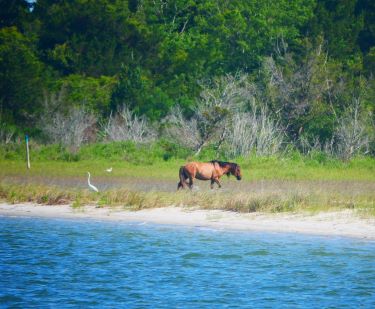


We anchored just outside the channel in Taylor’s Creek, almost close enough to step off the boat onto the beach of the Rachel Carson Reserve, an area of coastal wetlands teeming with wildlife – birds, dolphins and wild horses. On the other side of the creek, however, was the pretty waterside of the town itself with its docks housing some very nice super yachts. That night we could hear live music from one of the restaurants along with the machine gun battle of the popping shrimp beneath us.


Pintail nestled very happily in her spot in the creek for four days whilst we waited for a weather window to tackle our last big hurdle before the Chesapeake Bay, Cape Hatteras. We even became a feature on the boat trips around the creek when we overheard one tour guide say “And here we have a boat that has sailed all the way from England”!!
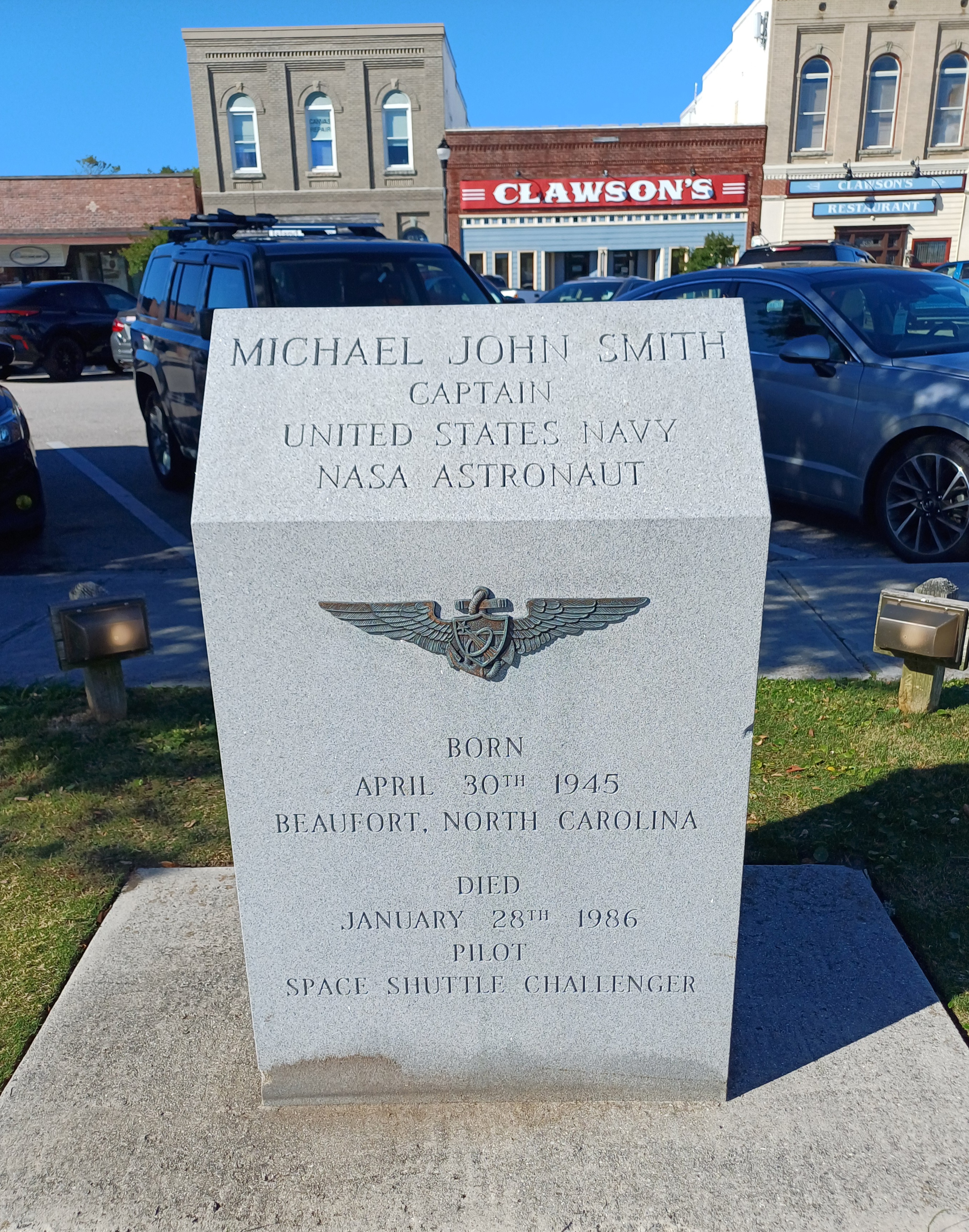

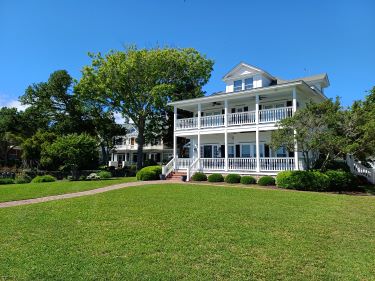

Now, this is Beaufort, North Carolina. Not to be confused with Beaufort, South Carolina. We confused a lot of people in Charleston, telling them we were heading for Beaufort and it wasn’t until someone pointed out that the two places are pronounced completely differently that we learnt why.
For your reference, should you need to, Beaufort, South Carolina is pronounced Bewfort whereas Beaufort, North Carolina is pronounced Bowfort.
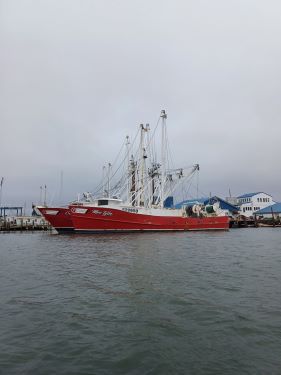
Pronunciation sorted, we set about exploring the latter. Established as Fishtown, a fishing village and port of safety in the 1600s, it became a town in 1709 and was named after Henry Somerset, Duke of Beaufort. It retains a sizeable fishing fleet today and, amongst its fancy colonial homes, the town does not forget that before the British arrived the land was used by the Coree tribe of First Americans and that after they did it was very much involved in the transatlantic slave trade.


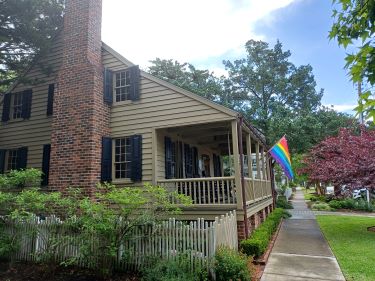


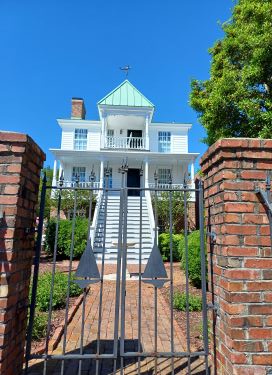
We had time to thoroughly explore this lovely town with its gorgeous homes dating back to the late 1700s. There was even a red, open top bus to make us feel more at home.
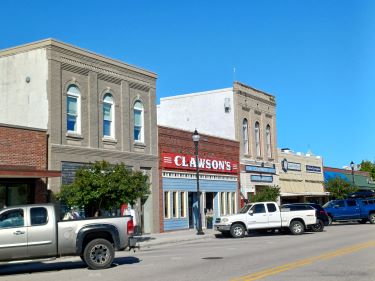


Its civic buildings were pretty, even if the pizza restaurant was lacking in imagination! And once again, here we found the friendliest of welcomes. It was impossible to go into town and not get into a conversation with someone. On the waterfront, we chatted about travel to a young couple attending the local music festival. We were inspired by the recovery story of a former fentanyl addict who we met fishing off the dinghy dock. In the launderette, we heard from the book lover who had taken shelter in the local library when Hurricane Florence came through. And we enjoyed our first visit to a dive bar at the invitation of our neighbour, Chris.


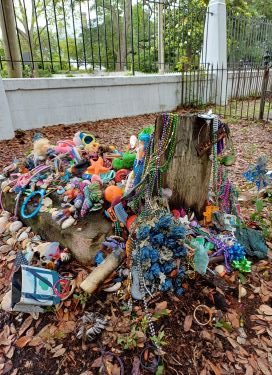
There’s nothing like a good old graveyard for learning more about a place’s former residents! A self guided tour of Beaufort’s burial ground introduced us to Revolutionary and Civil War soldiers from both sides, the British naval officer buried standing in salute to King George III and the crew of the Chrissie Wright who froze to death in the wreck of the ship in January 1886. But it’s always the children’s graves that are the most poignant. Like young Vienna Dill who died aged 3 of yellow fever and was buried in a glass top coffin and the unnamed English girl who begged her parents to be allowed to visit England but died on the return voyage and whose body was returned home in a barrel of rum. She is known simply as The Girl in the Barrel of Rum.


There were some practical things to do in Beaufort. We walked out of town to the hardware store and the legendary Piggly Wiggly supermarket. When we read about this store in Delia Owen’s Where the Crawdads Sing, we thought it was as fictional as her story set in the North Carolina wetlands. We were delighted to find it is a real chain of supermarkets in the area and a very good one too. The choice of baked beans alone was overwhelming!

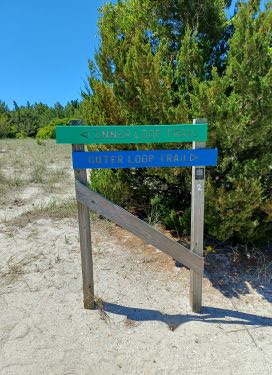

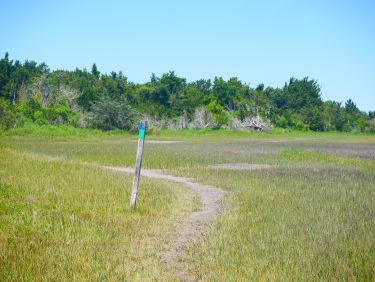
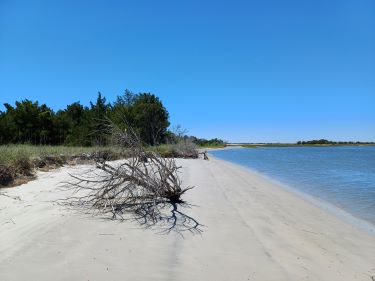
While Stefan stayed on board to fix an issue with the generator, repair the navigation lights and scratch his head about the leak from the stern gland, I hopped across to the nature reserve at low tide to follow one of its trails.

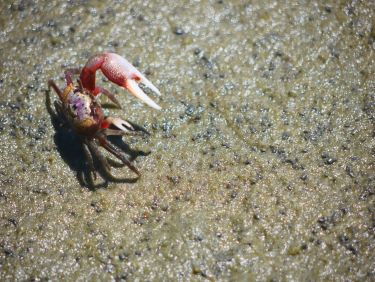
I was fascinated by these tiny fiddler crabs with one huge claw almost the same size as their body!
There were so many of them that they seemed to make the sand move.


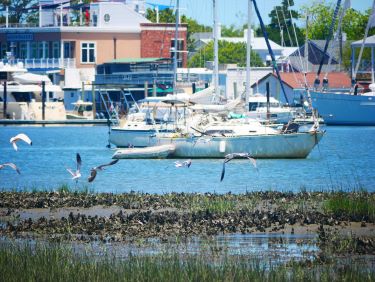

The wetlands were teeming with all sorts of wading birds – ibis, egrets, herons and plovers.
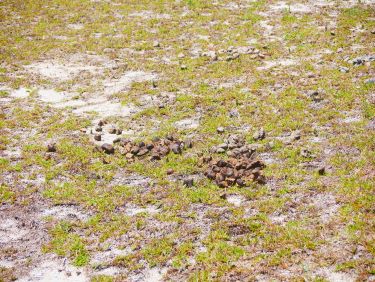

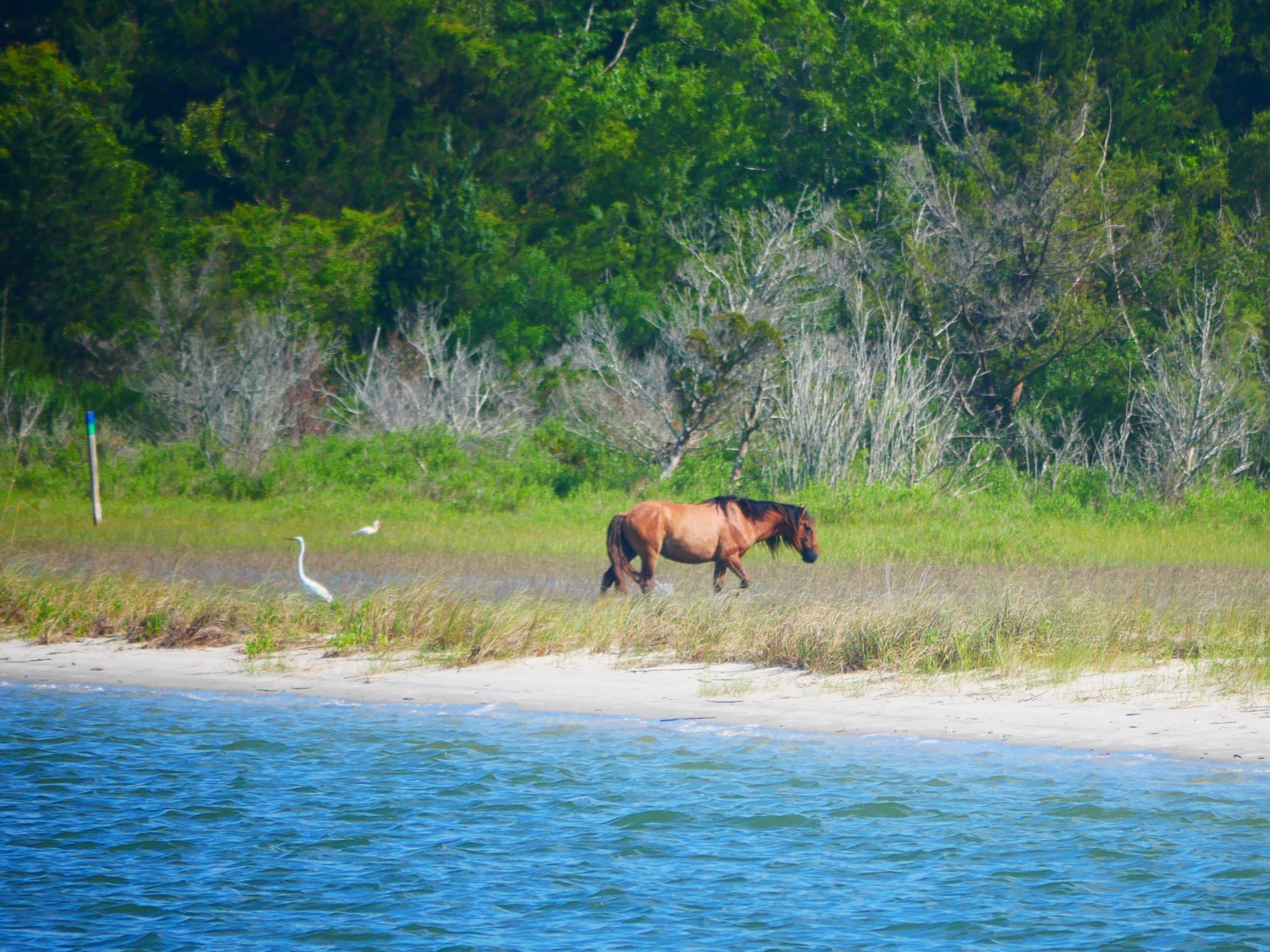
But it is the wild horses that this reserve is famous for and, although, there was plenty of evidence that I might have got a closer look, I only managed to see them from a distance.
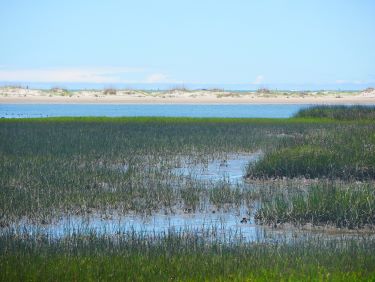
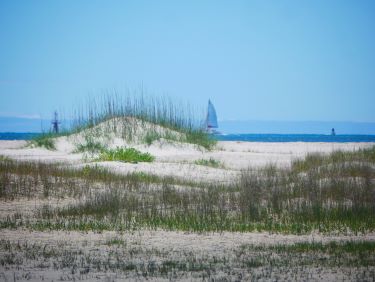
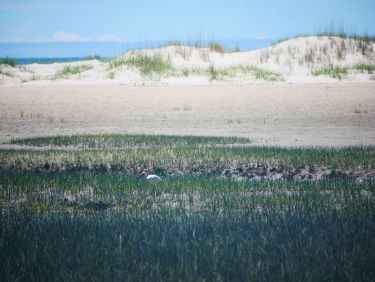
I returned from my walk with very muddy feet but to find that Stefan had everything fixed, enabling us to leave on our final long passage into Chesapeake Bay.


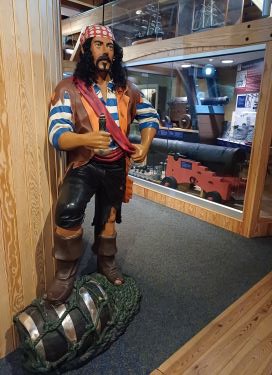

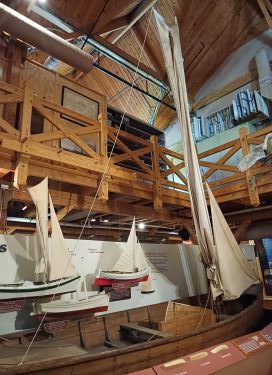

While we waited for the perfect weather to leave Beaufort, we also visited the local museum. It was full of tales of Blackbeard, the English pirate who plundered the seas of the Caribbean and North American colonies and whose ship, the Queen Anne’s Revenge, was run aground at Beaufort Inlet. As we contemplated our next passage, it also taught us just how dangerous Cape Hatteras could be and we rather wished we hadn’t seen the map of the number of wrecks in its shallows.


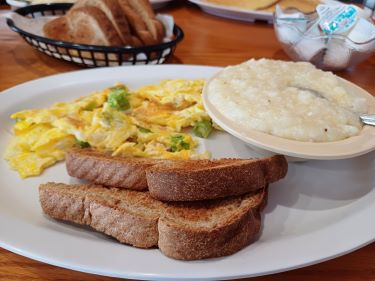
On the day of our intended departure for the Chesapeake Bay we woke to this – thick fog. We learnt the lesson of sailing in fog hard on one of our early passage in Pintail from Dunkerque to Ramsgate and we weren’t going to repeat that around Cape Hatteras so we delayed leaving for a few hours until the fog had lifted. But this gave us time to go to the local diner for our first taste of grits, a sort of savoury porridge made with ground corn. I liked it a lot.
Bellies full and fog lifted, we were ready to go…
 Adventures with Pintail