
30 July to 4 August 2024
Fishing Bay to Little Bay, 37° 38′ 07″ N, 76° 19′ 08″ W, 16nm
to Reedville, 37° 50′ 27″ N, 76° 16′ 57″ W, 15nm
to Potomac Beach, 38° 16′ 59″N, 76° 59′ 40″, 55nm
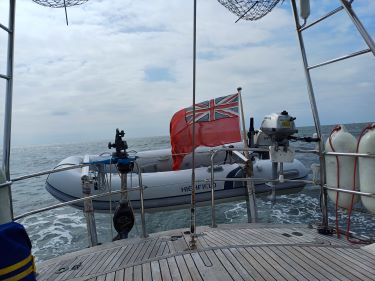
The weather was still unsettled and hot and humid and there was a hurricane potentially developing in the Caribbean and heading towards the States but if we didn’t leave we might never leave Velcroville to explore the Chesapeake Bay. We had a rough plan to cruise north up to Annapolis, criss-crossing from the western to the eastern shores of the Bay, so we struck out for a short day sail to Little Bay, known as the Bahamas of the Bay.
In an area between the Rappahanock and Potomac rivers is the penisula known as the Northern Neck, another rural Virginian backwater full of familiar sounding places like Kilmarnock, Lancaster, Farnham and, somewhat incongrously, Warsaw. It’s mostly small farms, vineyards and fishing, recreational and industrial.
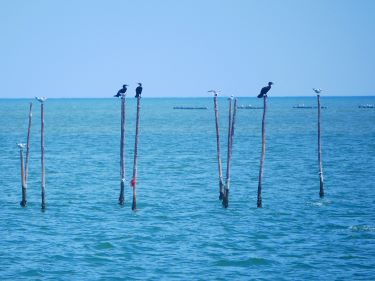
To get to Little Bay we navigated the shallow waters of Fleets Bay, carefully making our way around lines of old fishing stakes, long ago abandoned by fishermen and their nets and now used solely as convenient perches from which communities of seabirds can watch for prey. We settled behind the stakes in an area of water just about deep enough for us.
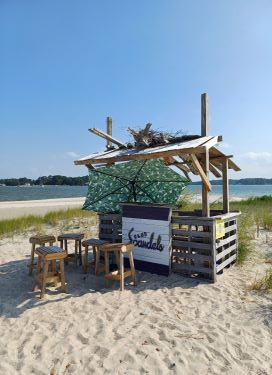

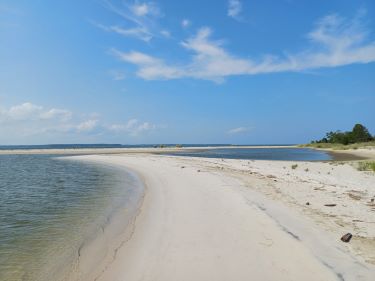
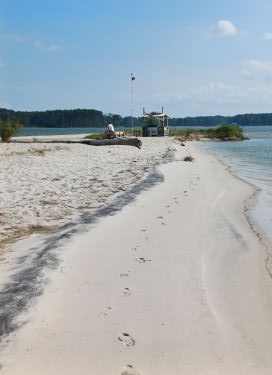
While the skies were clear we took the dinghy to a popular cruiser’s beach which that day we had entirely to ourselves. Some other visitors had built a bar and seating. We could see why the parallels with the Bahamas – it’s just missing those stunning clear waters and the sharks!
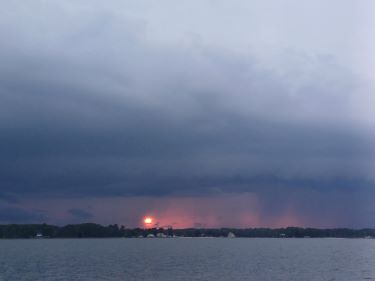

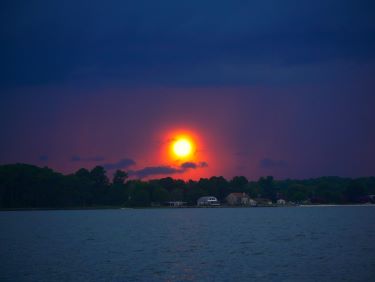
The clouds returned and by sunset there was heavy rain on the horizon and distant lightning.
With nowhere to get to shore and explore more, the next morning we left Little Bay in search of civilisation and better protection from the weather.
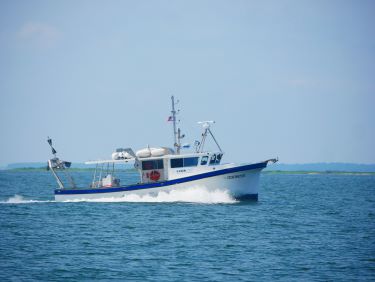

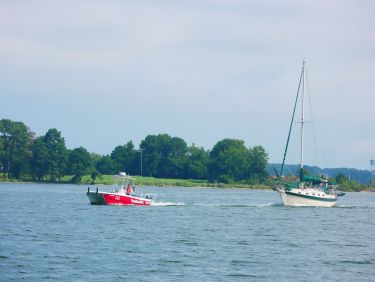


We sailed the length of Fleets Bay and up towards the town of Reedsville. On our way we encountered the ferry that takes tourists to Tangier Island, across the Bay, and a stricken yacht being towed to safety but mainly just lots of fishing boats of all shapes and sizes.
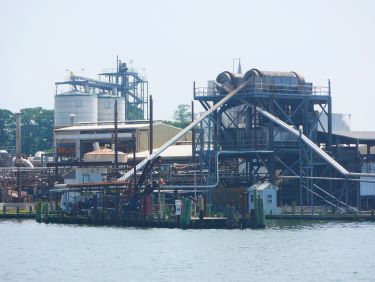

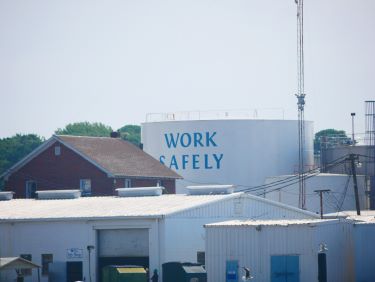
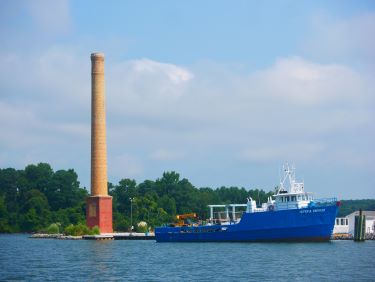

Entering Cockrell Creek there was no mistaking that this area was an important centre for fishing. A huge fish processing plant belched out some very fishy smells and all along the shore were the ruins of more ancient industry. For a century and a half, from the waters of this tiny creek, fishing boats have struck out into the Bay after a fish we had never even heard of – the manhaden. There were once 18 factories along the shoreline. These fish are not for eating though. They are too oily and too boney but long before the Europeans arrived, the First Americans recognised their properties as a fertiliser for growing their corn. Soon the colonists developed this idea into an industry and since 1878 factories have been processing the manhaden for their valuable omega 3. So valuable was this product that there were once more millionaires per capita here than anywhere else in the United States
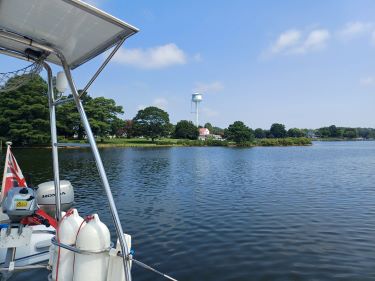
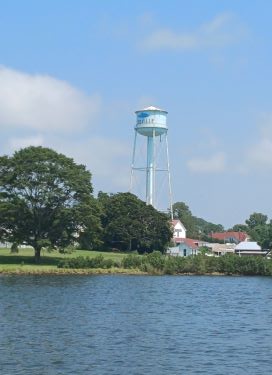
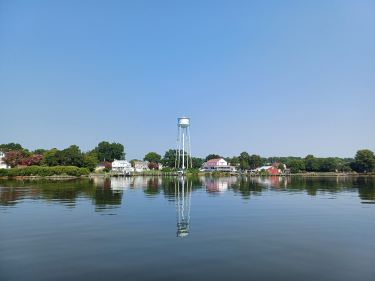

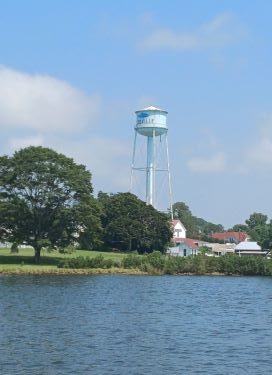
We settled in the creek beside the town, not much more than a number of grand houses and an imposing water tower.

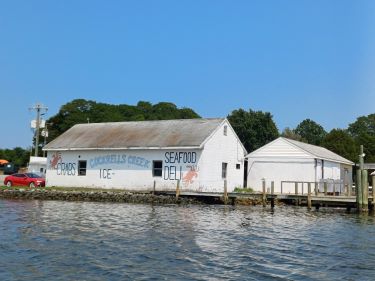
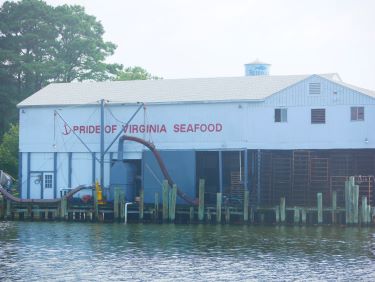
But everywhere in this quiet backwater, there was evidence that fishing is still what makes this place tick.
So we took the dinghy passed all the waterfront properties to the Reedville Fishermen’s Museum to find out more about the importance of this unassuming place.
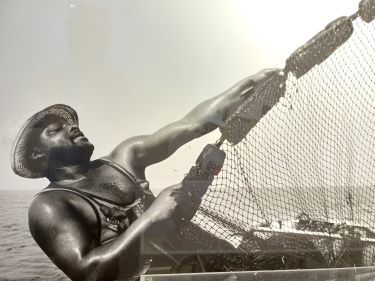


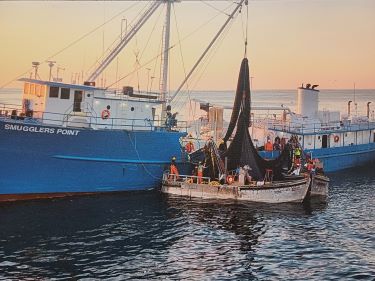
The museum taught us a lot about the industrial nature of manhaden fishing, the network of nets laid to trap huge schools of fish and the, almost entirely, men who work the boats. We learnt that if you take an omega 3 supplement it is more than likely it comes from the processing plant owned by Omega Protein here in Reedville. We also learnt about the impact of the industry on the environment. Omega Protein has been fined millions of dollars for discharging toxic waste into the Bay and is accused of impacting the natural balance of Chesapeake’s ecosystems because of the scale of its operation.
This fishermen’s museum was, however, so much more than just that. There had been a plan to build a train line to Reedville to transport the products from the factories. Opposition from those who made a living transporting it by water put pay to the idea


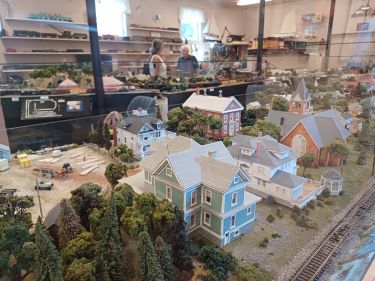
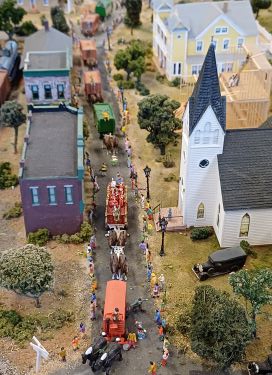
but that did not stop a group of volunteers imaging the “Railroad that never was” in small gauge. They have recreated in incredible detail the local towns that the railway would have stopped at.
It was a really unexpected pleasure and a treat to chat to the enthusiasts who built it.
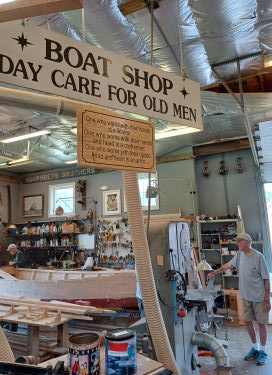

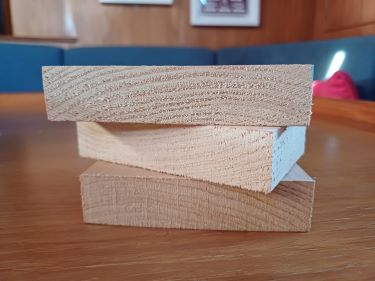
Next door we found more enthusiasts in the Boat Shed, this time building beautiful traditional wooden boats. We enjoyed a chat with them, telling them in turn about our own boat anchored in the creek. When we left the shed, one of the men chased after us to gave us three pieces of cedar from the offcuts of their boat building. He invited us to smell them and said “put them around your boat, they’ll make it smell lovely”. He was right!
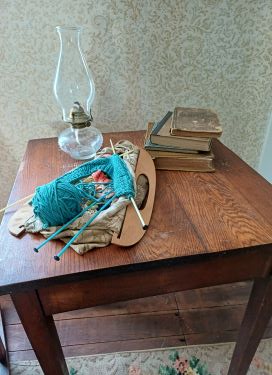
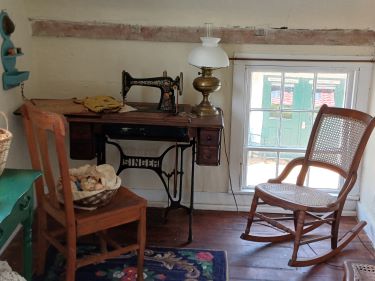

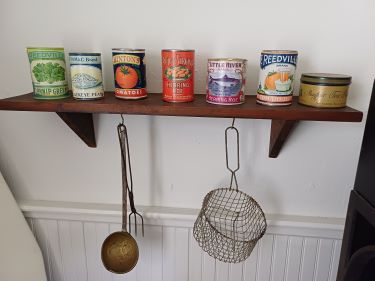
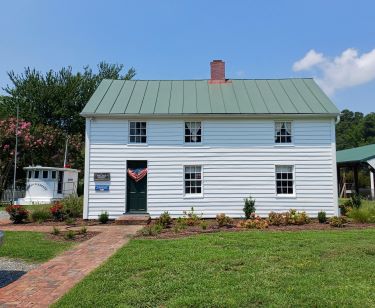
The museum hadn’t finished with its surprises. Out the front was a white weatherboard house, the Walker House, which was apparently built in just 24 hours in 1875 and now recreates the domestic life of a 19th century waterman.
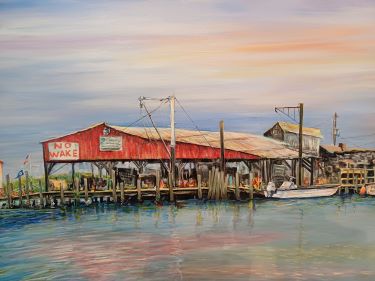


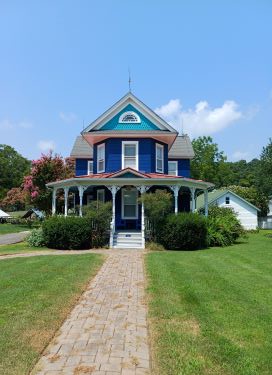
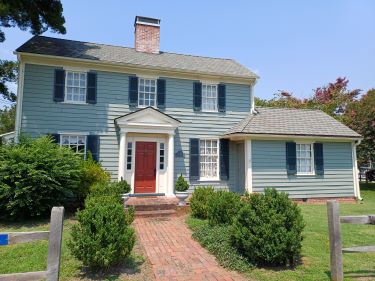
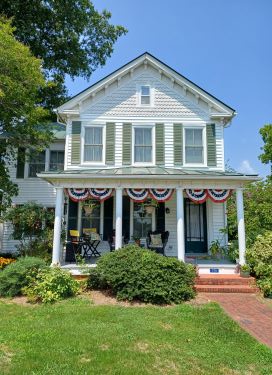

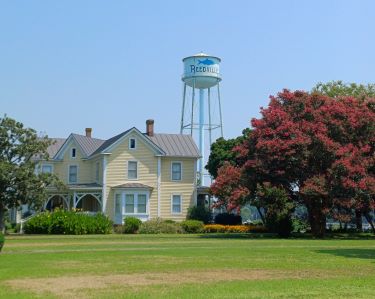
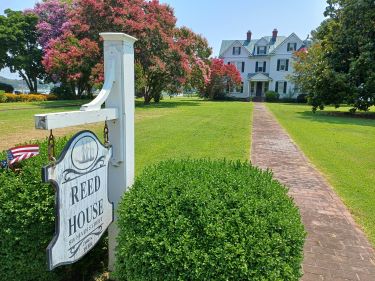
From the museum we took a walk down Reedville’s main street, actually its only street, and passed its pretty, historic homes including the Reed House. Elijah Reed moved his manhaden fishing operation from Maine to the Chesapeake Bay in 1874 and bought land at Cockrell Creek which became Reedville. Now, the streets are eerily quiet, almost like a filmset. Today most of the houses are holiday homes or Airbnbs. There are no shops or services beyond an ice cream shop and a seafood cafe where the road runs out and falls into the creek. Both were closed on the day of our visit.
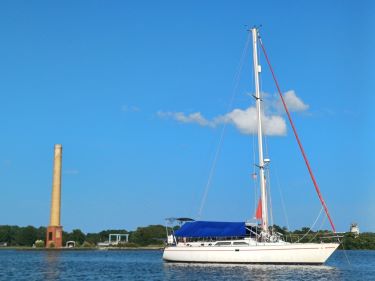
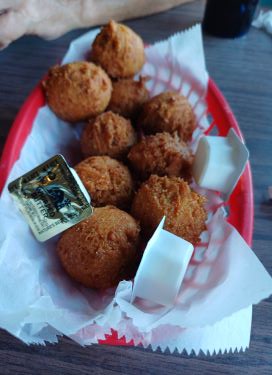

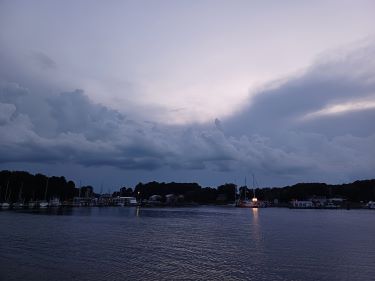
On our second night in Reedville, the wind changed direction and the smell from the factory was so bad it literally woke us up. In the morning, we decided to move to an anchorage closer to the entrance of the creek and, importantly, south of the factory. In the shadow of the 130 foot smoke stack from a long gone factory, we had a quiet and odorless night. We even enjoyed a meal at the nearby marina which introduced us to hushpuppies – a deep fried ball of cornmeal. Not entirely healthy but tasty all the same!
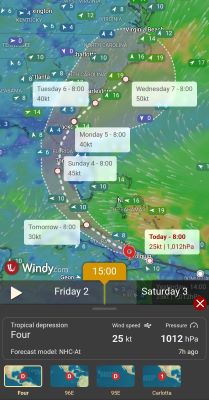
You’ll remember that we mentioned that hurricane brewing in the Caribbean. By the time we sat in Reedville it was still only known as Tropical Storm Four and looked like it would sweep around the east coast over Charleston and Beaufort and the end of Chesapeake Bay. Now, we know enough about hurricanes now to know that they can be unpredictable and we were a little worried about being in an isolated anchorage in the Bay if it did change path. So we changed ours.


We were just around the corner from another river, one that leads, after around a hundred miles, to the capital of the US, Washington DC. After so long since the hustle and bustle of a city and promising a reunion with my dear university friend, Meredith, it was too tantalisingly close. Confident that a hurricane wouldn’t follow us that far inland we changed course and set sail for the mouth of the Potomac.
Someone had warned us to expect to burn diesel if we planned to navigate the Potomac but with wind from the south we romped along at nearly 8 knots in the river. No doubt we had help from the tide but when we reached our intended first anchorage we decided to carry on and make the most of the speed.
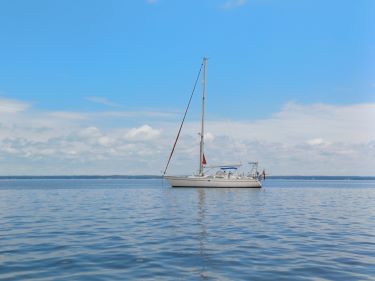
We finally settled for the night amongst the fishing pots at Potomac Beach off the town of Colonial Beach on the northwestern shore of the Northern Neck, close to the birthplace of George Washington. Our next two days up the Potomac river would take us passed his home, Mount Vernon, to the city they named after him, Washington DC …
 Adventures with Pintail