
4 to 9 August 2024
Potomac Beach to Mattawoman Bar, Indian Head, 38 33′ 49″ N, 77 13′ 81″ W, 33nm, 5 hours
to Washington Channel, 38 52′ 30″N, 77 01′ 18″ W, 25nm, 4 hours 30
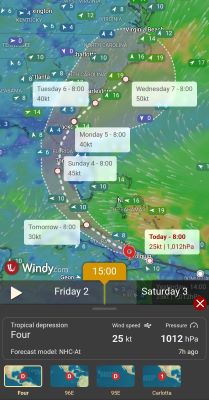

As we set off further up the Potomac we had an eye on the tropical storm that was threatening to develop into a hurricane along the east coast of the States. They called her Debby and it seemed as though she would head back out to sea before reaching the Chesapeake but knowing hurricanes have minds of their own we knew to keep watching it. The weather above us was still very unsettled and, as we left Colonial Beach, we watched lightning on the horizon and waited for the coming rain.
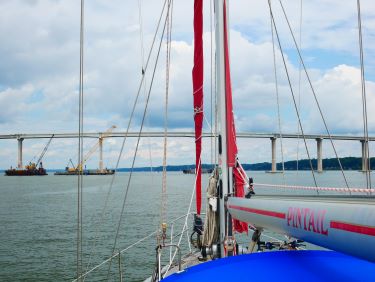
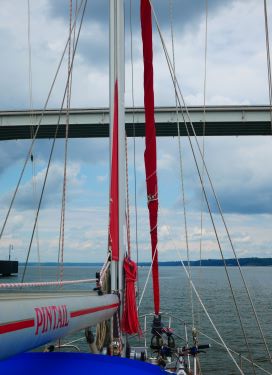
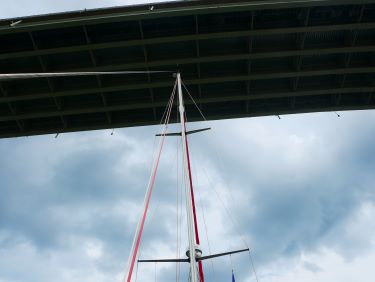

We had a more pressing hazard ahead of us though – our first bridge to navigate, the Governor Harry W. Nice Memorial Bridge. It only opened in 2022. In fact, there were two barges still undertaking the deconstruction of its predecessor. At a height of 135 feet its highest span was no trouble for Pintail’s 69 foot mast but it never feels like that as you approach!
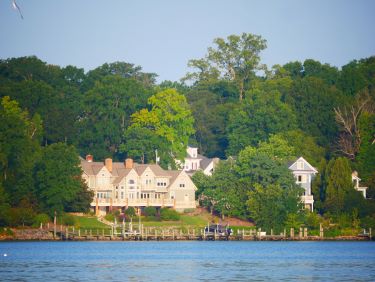

We spent another night in a creek off this very peaceful river before heading up to the capital. The houses got bigger and bigger the closer we got
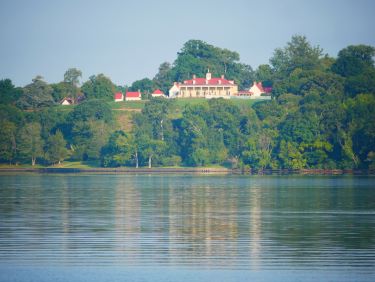
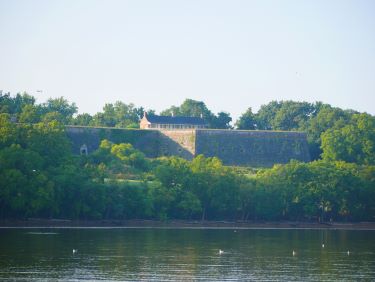
and we passed not only George Washington’s grand home and final resting place, Mount Vernon, but also Fort Washington, built to defend the city during the War of 1812 (we still need to work out what that one was all about!)
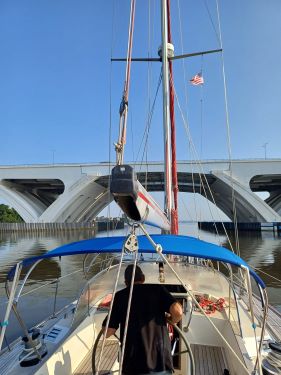

Just before the city of Alexandria we had another bridge to go under and one that was much lower this time. The Woodrow-Wilson Memorial Bridge has a clearance of only 70 feet at the highest tide, giving us just a foot to play. That’s a narrower gap than going under the Guardiana bridge in Portugal and that was nerve wracking enough! As we approached the bridge, the measuring gauge told us we had 72 feet of clearance
and we made it through safely.
From Alexandria we could start to make out some of Washington DC’s famous landmarks in the heat haze – the Capitol Building to the right and the Washington Memorial to the left.


We settled in the anchorage almost in the shadow of the Memorial. It was an incredible feeling. When I last visited DC over ten years ago, I could never have imagined that for our next visit we would sail ourselves there from Europe. It felt like such a huge achievement and my friend Meredith was immediately on hand to help us celebrate.


The elation of our arrival was short-lived as we continued to watch the forecast. Debby’s track had changed and she was heading straight for DC. Whilst the anchorage was secure enough, we didn’t much fancy riding out the predicted wind and rainfall at anchor and made the decision to splash out on one of Waterfront’s costly marinas for a week. We hadn’t come all that way to be boatbound.
While we waited for the coming storm, we created a whirlwind of our own with a dizzying schedule of museum visits that perhaps overestimated our stamina in the heat of a DC summer. We were, however, determined to make the most of our proximity to the free museums on the National Mall and their air conditioning.


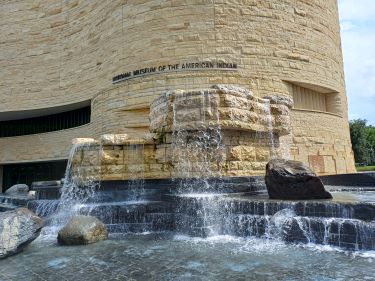
On my first visit to Washington DC ten years ago, I’ll be honest and say I didn’t love the National Museum of the American Indian. I thought I must have missed something in my rush to fit in the whole of the National Mall in just one day so felt it only fair that we should give it a second chance. It is a beautiful building on the outside.
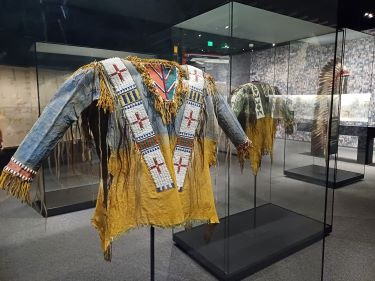


On the inside, however, it remains a bit confusing. To be fair, it is quite a difficult task to do justice to the population of between seven and ten million people living in up to 600 tribes, each with their own language and culture, who lived on the north American continent in the late 15th and early 16th century when the Europeans first arrived. What we learnt was that we needed to do a lot more work on our understanding of these First Americans and the very grave threat the colonists posed to their lives.


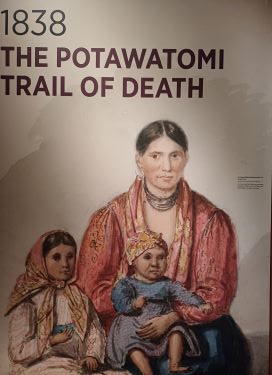

Like, what did happen at the Battle of Little Bighorn? How did the indigenous population end up with only 2.3% of the land they once roamed? What was the Trail of Tears and the Slaughter of the Buffalo?
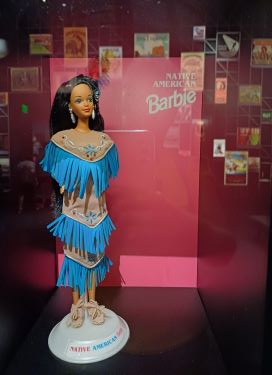


And who was Pocahontas?

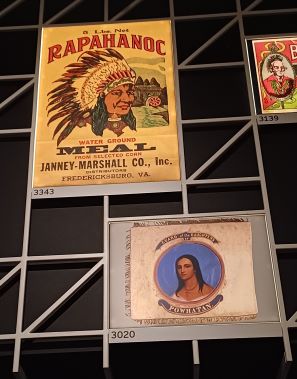

Until we had more time to unpick all that, one of the most thought-provoking galleries made a very clear point about the contradiction between the European colonists near eradication of the First Americans and the nearly everyday use of their imagery and language in popular culture, advertising, even the naming of weapons and military hardware.

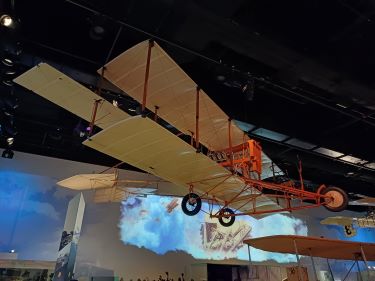
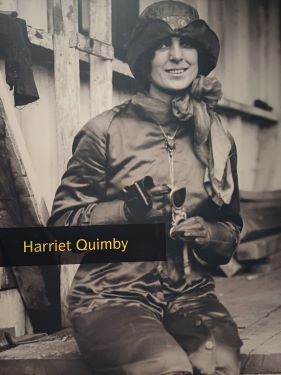

We had higher hopes for the National Air and Space Museum, which had come highly recommended by Meredith’s son, Evan. Unfortunately, we found the museum mid renovation with only about a third of it open and its exhibits somewhat crammed in. Not only that, but our visit coincided with the end of the school holiday and so it was also crammed full of children and their parents. We jostled our way through the exhibits.

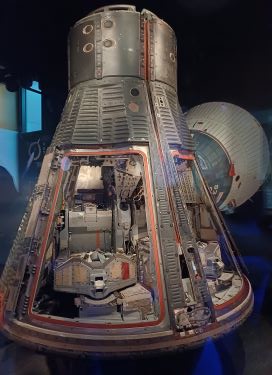


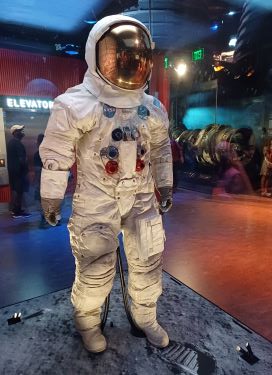

It was fun to see the original lunar modules and other objects from the moon landings
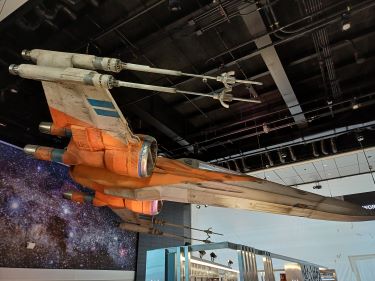
but the boundaries between reality and sci-fi became somewhat blurred by the inclusion of this spacecraft!
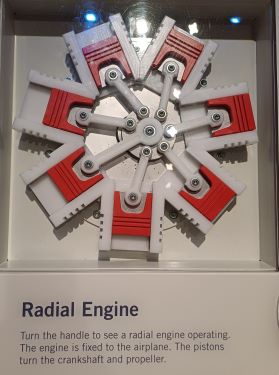
Amongst the hands on exhibits Stefan was delighted to finally understand how a radial engine actually works but this museum was far too busy for our liking so we beat a hastier than usual retreat.
On our second museum day we had an even more optimistic schedule of three museums. We arrived at the National Museum of African American History and Culture at opening time with our pre-booked but free tickets. This museum had been being built on my last visit to the National Mall and after our travels through the South we were keen to see it. However, the weather had other ideas. The museum’s air conditioning system had been taken out by a lightning storm the night before and they would not be opening.
So instead we went next door to the National Museum of American History, our planned second stop of the day.


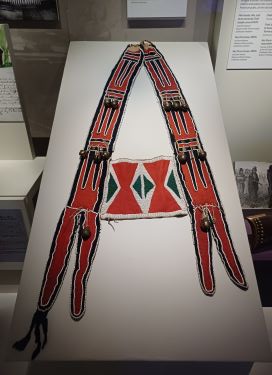


Pacing ourselves, we chose only a select few of the 45 different exhibitions to explore. The first, Many Voices, One Nation, felt timely given current political narratives about immigration. Through 200 objects it demonstrates how so many people have shaped the country – the ones who were here all along, the ones brought in chains, the ones who came in search of gold, the ones who came because they were being persecuted and many more.

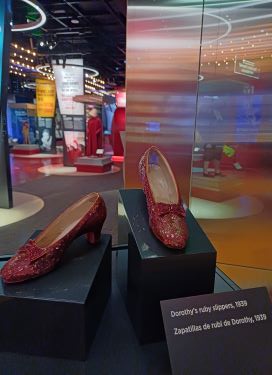

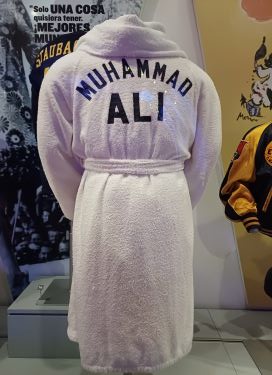

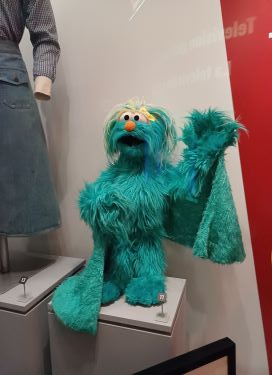
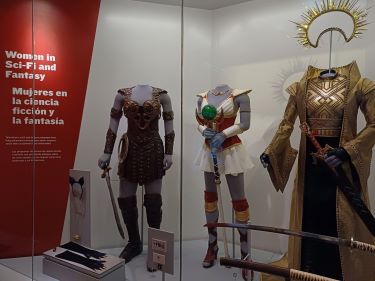
In Entertainment Nation, we found icons, real life and fictional, human and droid, from the worlds of sport, film and television.
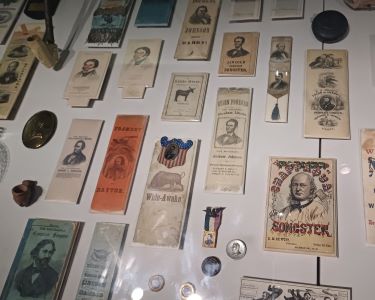
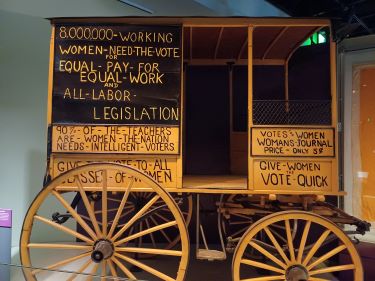


It had not escaped our notice that this is an important election year in the US and we felt it right to learn a little about the history of their democracy and the protest movements that have shaped it so we popped into American Democracy.

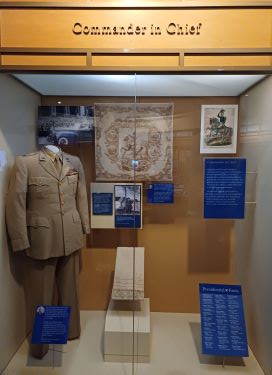

And it followed that we should also learn something more about The American Presidency. What we learnt almost immediately we reached this gallery is that we knew very little to start with. For example, it came as a shameful surprise to us to learn that Abraham Lincoln had been assassinated (I walked out of Spielberg’s Lincoln way before the end!) and we had never even heard of President Warren G. Harding or his penchant for pink silk pyjamas.


I was disappointed to find that since my last visit in 2013 the First Ladies were still only being defined by their clothing and the crockery they chose for the White House. Here’s hoping that come November they’ll be preoccupying themselves with what the First Gentleman wears to the Inauguration Ball.
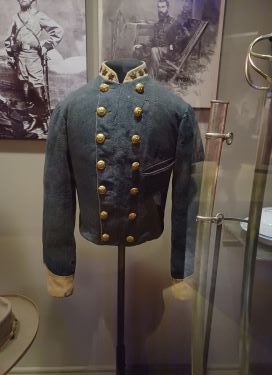


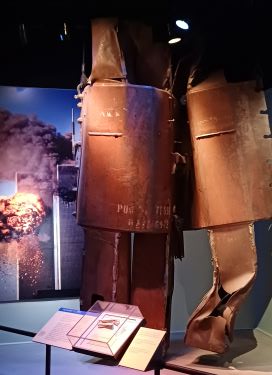
We knew we still needed to do a lot of work on our knowledge of America’s wars – the War of 1812 and the French and Indian Wars were still big gaps. The Price of Freedom gallery didn’t help much with those but did give us a fast rollick through the Civil War, WWII, Vietnam and the War on Terror.


Despite the new museum next door, African American history was not forgotten here. Two very powerful artifacts stood out in driving home the long and ongoing struggle for racial equality in the States: the very Woolworth’s lunch counter that four African American students sat down at in 1960 in Greensboro, North Carolina, in protest at segregation; and the 2006 historical markers remembering the lynching of Emmett Till in 1955, riddled with bullet holes, defaced, stolen or thrown in the river.
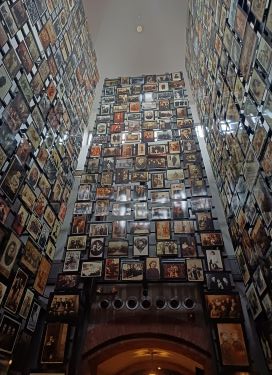
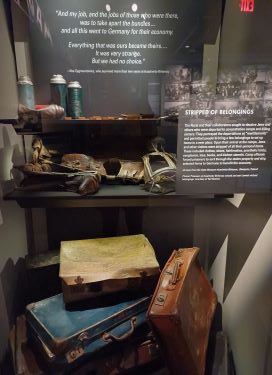


Our should have been third museum of the day was one we knew was not going to be easy, the Holocaust Memorial Museum. The overwhelming scale of the holocaust was brutally but sensitively brought home along with a careful explanation of the events and ideologies that led to it. There was a clear underlying message about just how easily it could happen again.
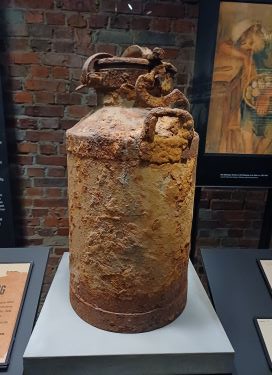


Amongst the unavoidable horrors, we chose to focus on the stories of resistance and survival – the milk can used to conceal important documents and artwork, the ingenious hiding places, the many who risked their lives to help others and the joyful stories of liberation.


At the end of the museum, we were invited to take an ID card, similar to those issued to Jews by the Nazis. We couldn’t bring ourselves to read it until we were back at the boat a few days later and even then the intimate detail of just one of those six million lives brought tears to both our eyes.
With two long days of museum going behind us, our attention was firmly back on the coming storm which was now making its way up through North Carolina and Virginia. We were expecting it to reach us on the Thursday and Friday. Debby was still only a tropical storm and her wind strength nothing to worry too much about but she was bringing extraordinary amounts of rain our way.
The wind was definitely up by Friday morning and I retreated to the Yacht Club lounge to get on with some work.
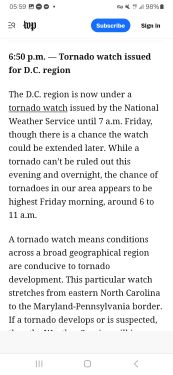


Local media had been warning of tornadoes but it wasn’t until my phone and the lounge TV kept pinging constant tornado alerts that I wondered if Stefan should leave Pintail and join me. The words ‘extreme’, ‘flying debris’ and ‘life-threatening’ didn’t reassure.
In the end, we saw no tornados. Stefan stayed safely on Pintail and I watched the lashing rain from the lounge.
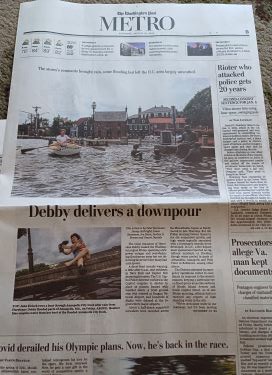
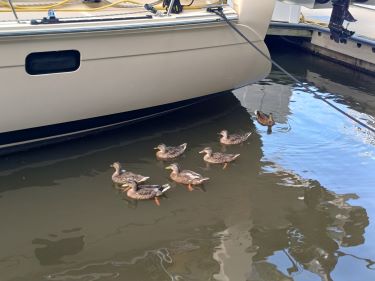

With all that rain, the Potomac almost burst her banks and many neighbourhoods were flooded. The marina ducks didn’t seem to notice and soon the city was back to normal activity. We had survived the curveball of Debby and we still had a few more days to explore the city…
 Adventures with Pintail