18 October to 3 November 2023
Morro Jable, Fuerteventura to Las Palmas, Gran Canaria, 28° 7′ 65″ N 15° 25′ 55″ W, 55nm, 10 hours 30
From our anchorage at Morro Jable, we left Fuerteventura in the late afternoon to cross to Gran Canaria over night to avoid the worst of the acceleration zones that whip the wind around the islands. We negotiated the shipping lanes and the many ferries that traverse the islands and arrived at the anchorage outside the marina at Las Palmas at around 2am. We didn’t have a hope of getting in to the marina itself (that was being monopolised by boats taking part in the ARC, the rally Stefan crossed the Atlantic with in 2021) but we knew we were almost guaranteed to be able to find a space in the anchorage.
In the light of the following morning and after a visit from the marina rib, we moved into the main anchorage. It was busier than any anchorage we had been to and seemed impossible to find a spot. There was barely any room between the boats but eventually we squeezed in on the far side and kept our fingers crossed that we didn’t hit anyone or vice versa.
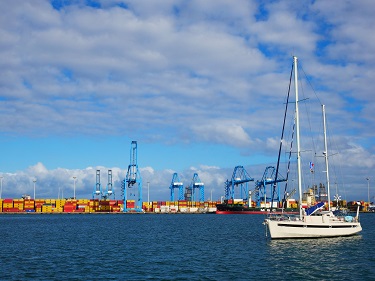

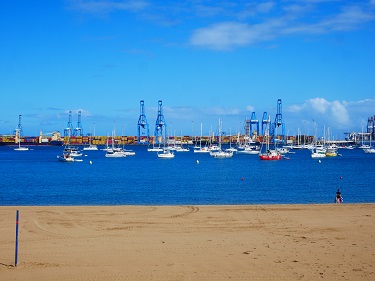

The anchorage sits inside the vast, industrial port of the capital of the Canary Islands. It was a novelty to be sandwiched between the container port, the cruise ship terminal and the naval base. In the afternoons all those vessels were joined by dinghies, windsurfs and kayaks. Despite all this busyness, the anchorage was well protected and generally very calm. We rarely even heard or felt the comings and goings of the enormous cruise ships that came in every day on their tour of the islands.
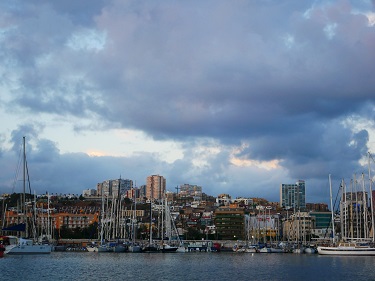

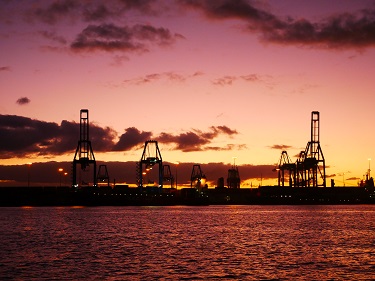
One thing we instantly loved about Las Palmas was its microclimate. It was nearly always a little bit, sometimes a lot, cloudy which after all the heat of the summer was very welcome indeed.
The Lonely Planet is not entirely wrong when it writes that “Las Palmas is not only the largest city in the island’s but palpably the dodgiest”. Despite our built up and industrial surroundings and a slightly sketchy undercurrent in the darker of the city’s streets, we set about enjoying all the trappings of being in the big city. For us that meant easy access to all the supermarkets, chandleries and shops we could possibly need. There is even a Marks and Spencer!

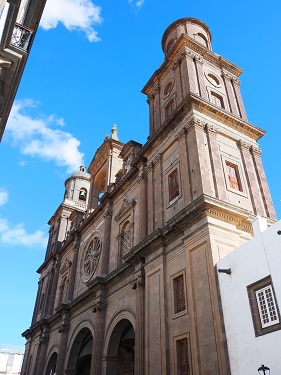

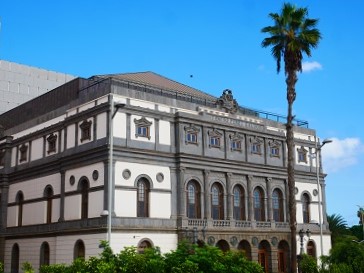
In the area immediately around the port we found nothing but modern buildings. Unusually, we had to walk a very long way south to find the historic old town. There we found the grand old theatre, the imposing cathedral and the charming Plaza Mayor de Santa Ana (hosting a basketball tournament!)
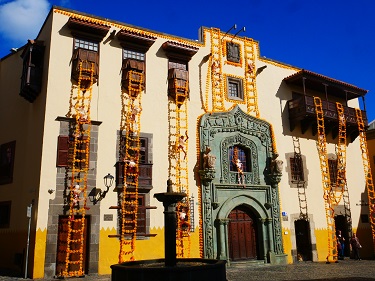
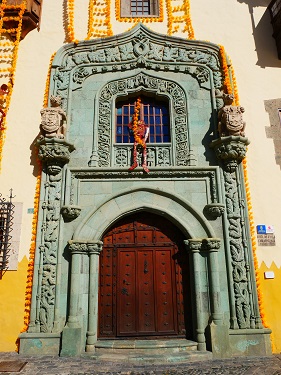

And would you believe it, Christopher Columbus was here too! In 1492 it is said that he stopped in Las Palmas for repairs to be undertaken to his ship’s rudder and that he stayed here at the residence of the island’s governor. This extremely ostentatious building was dressed as though to host an Indian wedding. There is a museum inside but frankly we’ve seen enough of Columbus, so we didn’t go in.
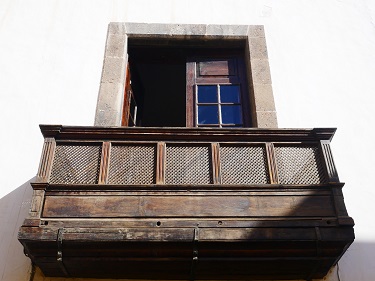
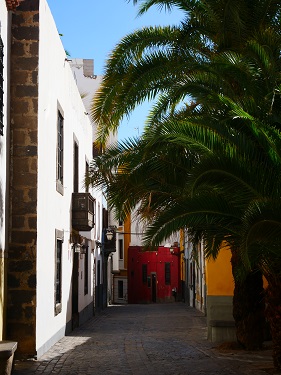

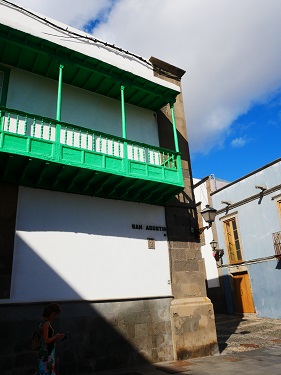

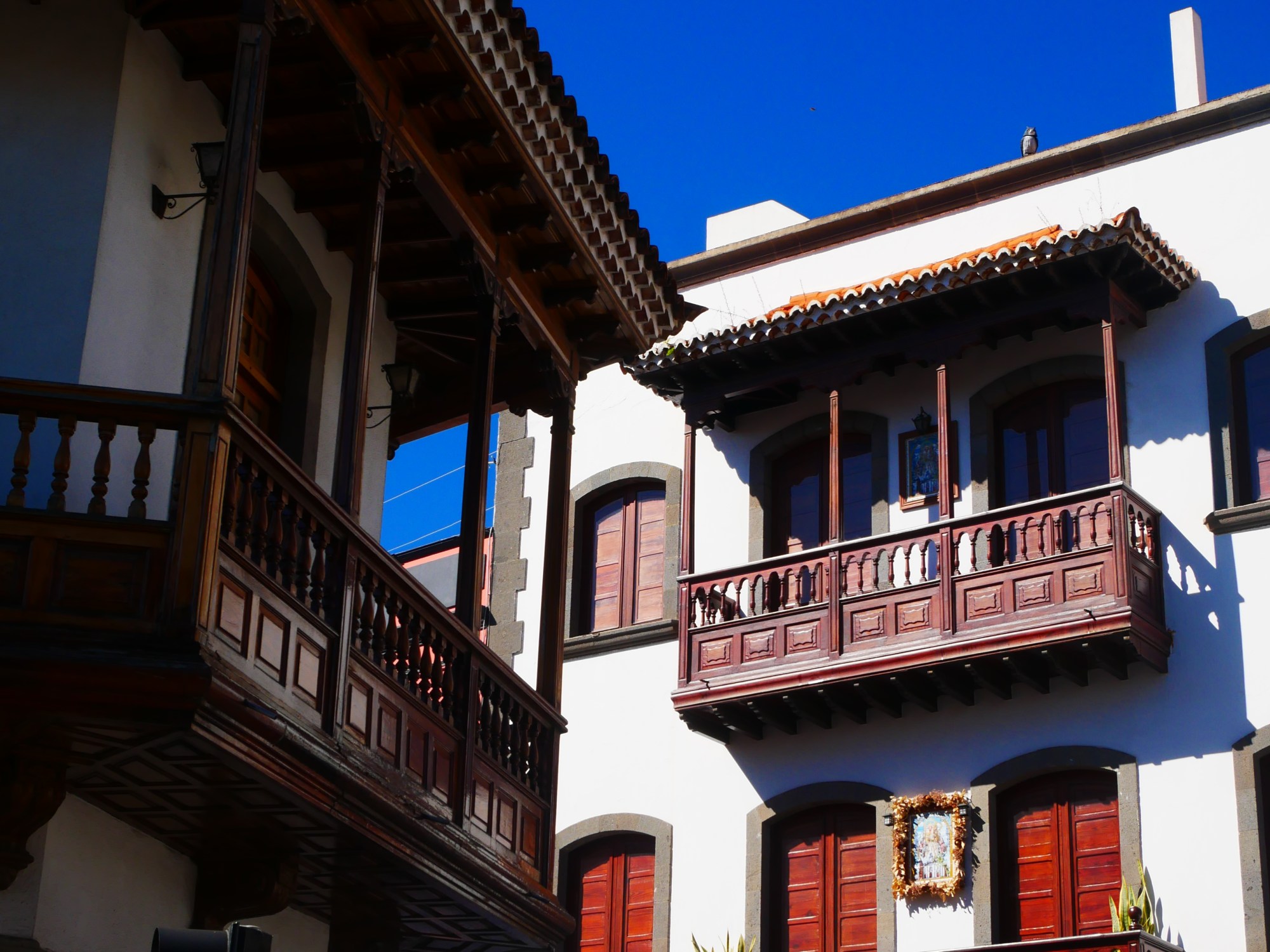
Of much more interest were the ordinary buildings of the narrow lanes and their lovely wooden balconies. We had a good nose around these tiny, quiet streets before emerging back into the concrete and glass of the new town.
To escape from the city and explore Gran Canaria some more we hired a car for a few days and to escape from the sea for a while we headed inland. Driving out of Las Palmas, Stefan found the multi lane traffic systems a bit overwhelming. He’s become too used to driving on quieter roads these days!

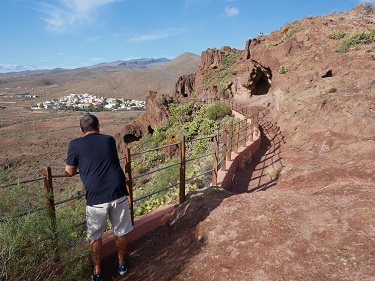

But we soon found ourselves on quieter back roads and climbing higher into the hills. We stopped at the mysterious Cueva de Cuatro Puertas. They didn’t appear in any guidebook. They weren’t really even signposted, just a pin on Googlemaps. We almost missed the turning. Parking the car alongside some others we walked to the top of the hill along a rocky path following a fence. There was no evidence of an official entrance or any real signage to explain the site but soon it became clear that openings in the rocky outcrop on top of the hill had not been hewn by wind or water but by human hands.
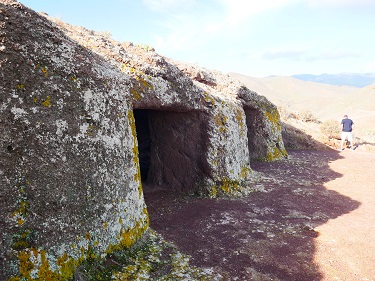
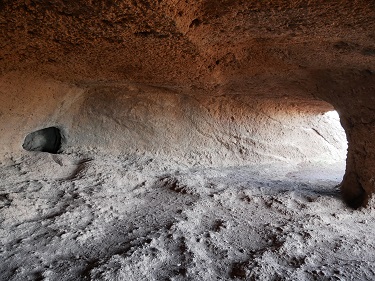
Inside the hill one huge cave, nearly 20 metres long and seven metres deep, had been dug with four entrances (hence the name Four Doors cave). The brief explanation on a board said that no one really knows what the purpose of the cave had been but it is thought that, in the absence of evidence that it was a dwelling place, it was used for ceremonial purposes, perhaps connected to the summer solstice. And there was no information about who had built it or when, just that they were pre-Hispanic.
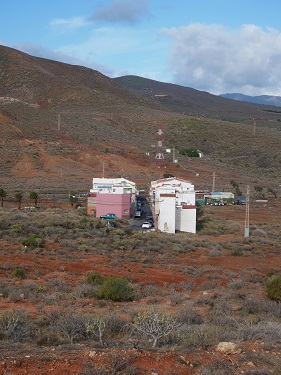

From the top we could look down on more modern dwellings including this rather strangely out of place and very short street, completely apart from the rest!
Frustrated to have stumbled upon something so intriguing but none the wiser as to what we’d really seen we carried on along the road through the hills to somewhere we hoped would give us answers.


At the Museum Guayadeque we found the explanations we needed. In a space suitably carved into the rock, we learnt about the early Canarians and their rock dwelling lives and deaths – there was even a mummy from one of their burial sites. Into the bargain we also learnt a little about the geology and wildlife of the island.

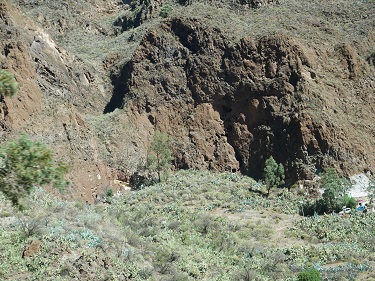

Back in the car we drove deeper into that geology. It was a stunning drive through the bottom of a deep ravine

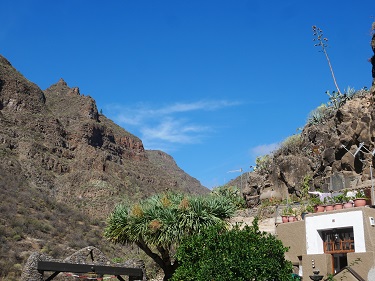
to the obligatory restaurant and cave shop at the end. Along the way we could see caves hewn into the rock, evidence of ancient home, as well as more modern ones.
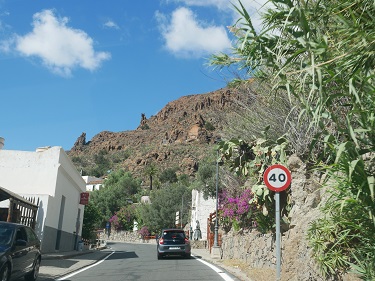

We had been pretty awed by the gorge and that rugged landscape continued as we drove out and starting winding again. Unbeknown to us the scenery was about to get next level spectacular because, completely unplanned, we were heading for the
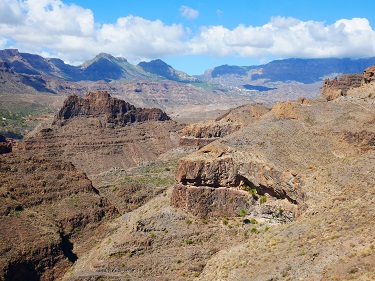
the Barranco de Tirajana.
How, on this relatively small island, they had managed to keep this rival to the Grand Canyon a secret was beyond us.
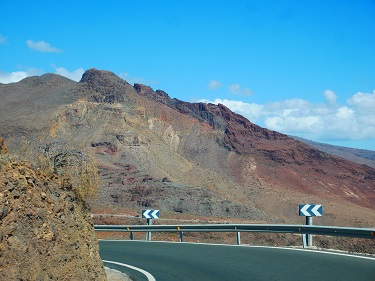
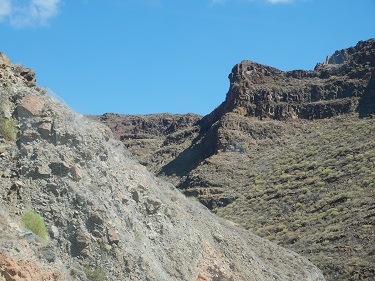

This spectacular drive is up there with Llogoraja Pass in Albania or the road up to Levie on Corsica.
Completely overwhelmed by Gran Canaria’s gorges, for our second road trip we decided to head to two of the island’s old towns for some more urban landscapes.
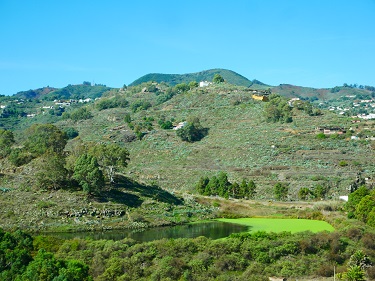
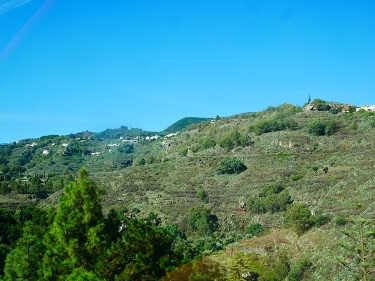
Immediately the north of the island was a contrast to the bare rock of the centre. It was suddenly green and lush.
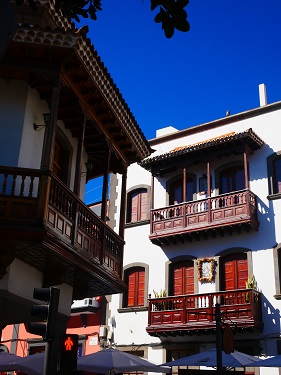

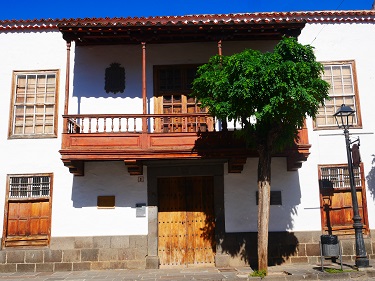

Our first stop was to be Teror, a town which dates back to the 15th century and which I discovered had (some centuries later!) been a stop for my Dad as he made his way to New Zealand by ship in 1970.
Traditional balconied buildings lined the cobbled streets


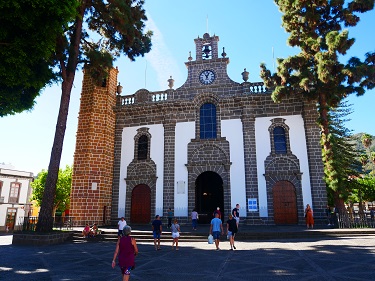
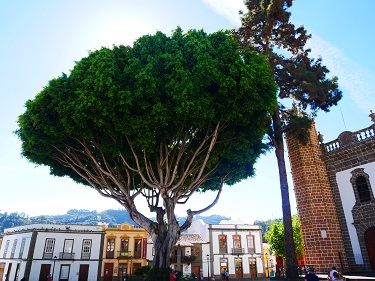
and led down to La Plaza de Teror and the Basilica a la Virgen del Pino. The pine tree that gave the church its name is somewhat outdone by the banyan like tree dominating the square. We sat for a coffee in this gorgeous spot just staring at the tree and watching the people go by.
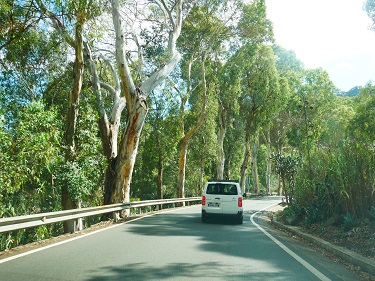

When we dragged ourselves away from the very picturesque Teror we drove back down towards the coast and found ourselves in a landscape that took us right back to our epic road trip in Australia. The road were lined with eucalyptus trees but, unlike Australia’s roads, was full of twists and turns all the way down to the town of Arucas.
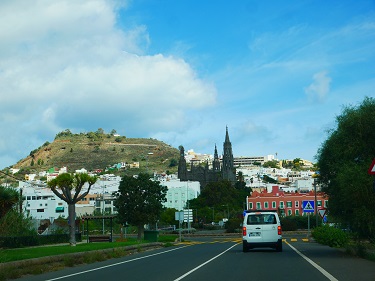


Suddenly, as though some kind of mirage, a small town appeared with the most extraordinarily oversized and imposing church. The neo-Gothic Iglesia de San Juan took 60 years to build in the early 20th century.

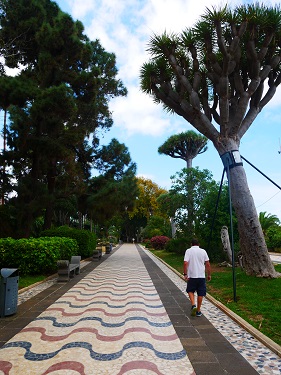
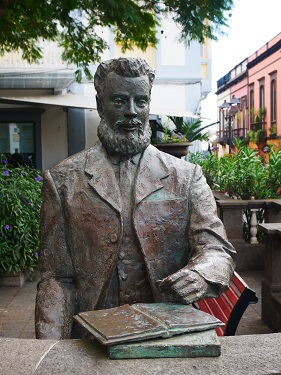

We wandered around the town’s old streets, passed celebrated writers, and through its thoroughly Spanish public gardens before returning to Las Palmas to decide where next on our Canarian adventure…
 Adventures with Pintail
Ahoy dear sailors
As always it is pleasure to read about your trips 😎 and to know that you have a great time…
We are still at the Rosa yard and enjoying our view at the river. Steve is hobbying every day and start even to like the fontaine pajot because inside its looking better and better with a new floor and kitchen which is veneered
We have had several storms here and in the end 3 yachts ended on the beach in Ferragudo. Sad to see 🥴 Even on the yard we were shaking hopefully the spring will come with better weather.
We wish you good sail trips and send you big hugs Steve and Annemieke
LikeLike